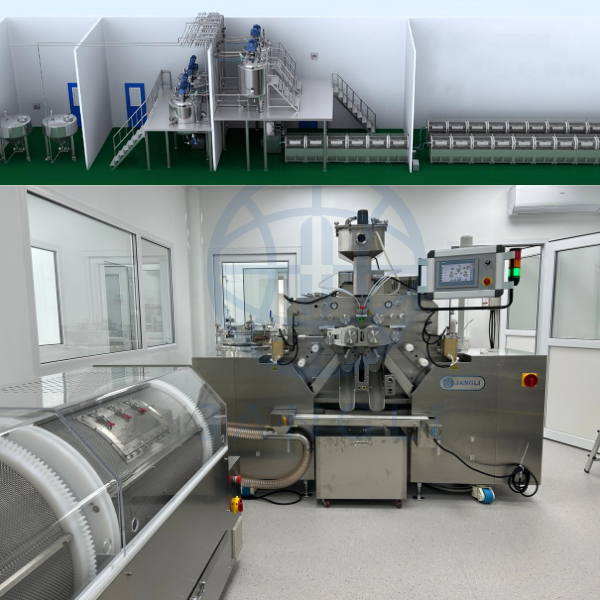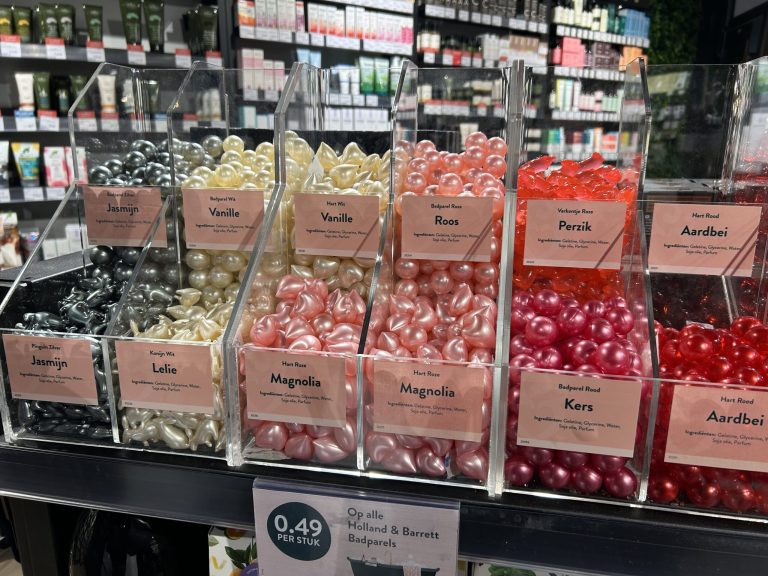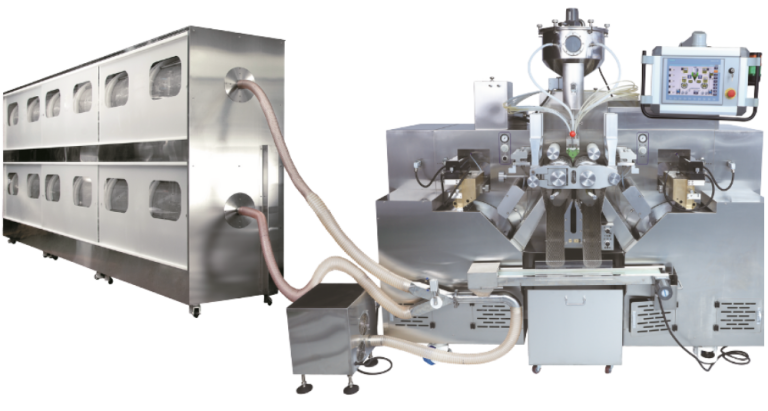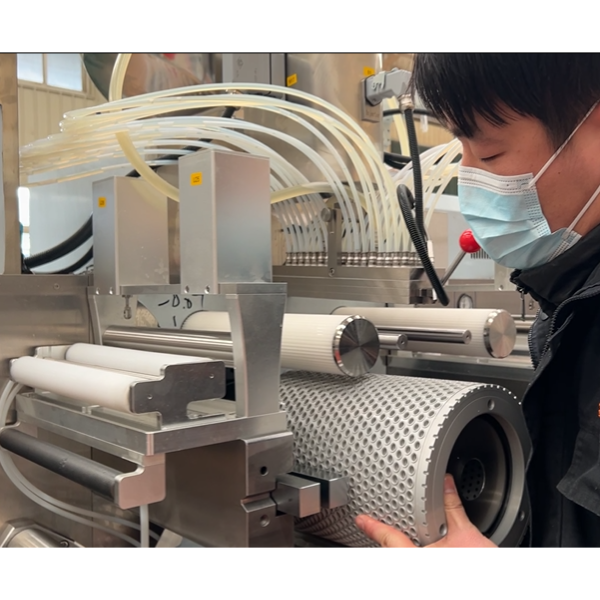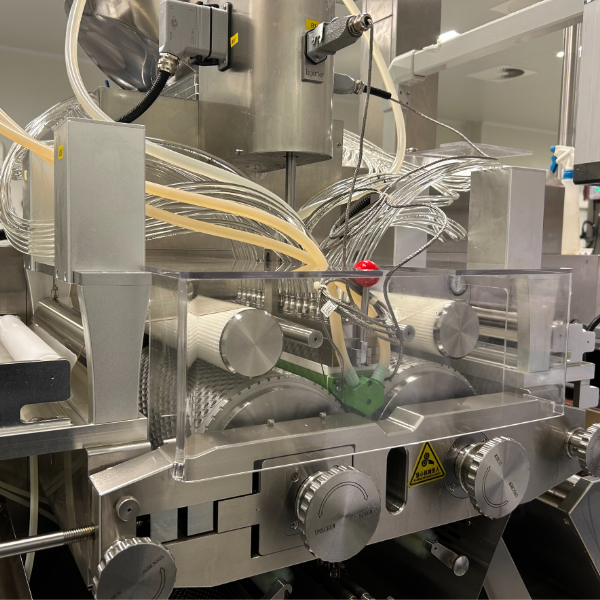
A softgel encapsulation machine is a rotary die machine that forms, fills and seals softgel capsules in one continuous process: two gelatin (or plant-based) ribbons are cast, a pump injects the fill between them, and a pair of die rolls shapes, seals and cuts the capsules. It does only this step. Gelatin preparation, fill preparation, drying, inspection and packing need separate equipment around it. This guide explains the parts, how the machine works, which industries use it and how to choose one.
Key Takeaways
- What it does: forms, fills and seals softgels from liquid, suspension or paste fills.
- Main parts: spreader boxes, casting drums, injection wedge, fill pump, die rollers and a control system.
- Drive type matters: gear-driven machines need manual alignment and timing, while servo-driven machines adjust them from the touchscreen.
- Choose by output, shell and fill, and plan the rest of the line with it.
Most softgel producers want to deliver the right quantity at the right quality, and the encapsulation machine is the part of the line that decides this. The machine is a large investment, so it pays to understand what it does before you compare suppliers.
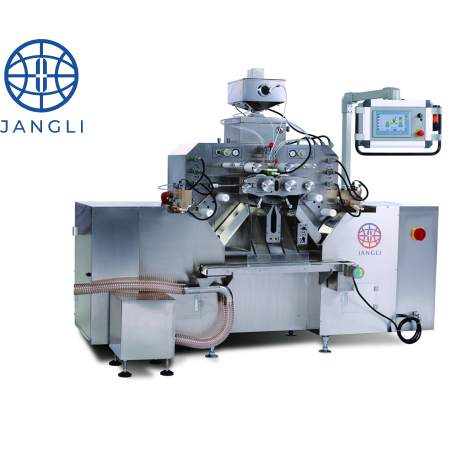
What Is a Softgel Encapsulation Machine?
A softgel is a one-piece, sealed, flexible shell filled with a liquid, suspension or paste. Filling hundreds of thousands of such capsules by hand is not practical, and the machine does it automatically while keeping the fill amount consistent from capsule to capsule. Softgels are a common way to deliver oils and poorly water-soluble ingredients in a form that is easy to swallow.
The machine itself performs one task: encapsulation. The other stages, melting the gelatin, preparing the medicine (fill), drying, cleaning and inspection, are done by separate machines that together form the production line. You still need those machines, so plan the whole line. See our softgel production line equipment checklist and the softgel capsule making process.
What Are the Main Parts of a Softgel Encapsulation Machine?
The parts differ a little by model and by the capsule you make, but most machines share these:
- Gelatin spreader boxes. They hold the melted gelatin arriving from the melting tank and spread it into a thin film on the casting drums. Most machines have two spreader boxes, one for each ribbon.
- Casting (cooling) drums. The ribbon sets as it cools on the drums. Cooling can come from a fan and a chilled liquid circuit, and some machines have an independent chiller.
- Lubrication rollers. They apply a lubrication liquid to both sides of the ribbon.
- Fill (product material) tank. It sits in the upper section of the machine and holds the material you want to encapsulate.
- Fill feeding pump. It draws the fill from the tank and sends it to the injection wedge. Plungers (pistons) on the pump body inject the fill, and the accuracy of encapsulation depends on the amount a single plunger delivers.
- Injection wedge. It injects the fill between the two ribbons just before they reach the die rolls. With animal gelatin the wedge also heats the ribbon to help it bond. For starch shells the wedge does not need to be heated.
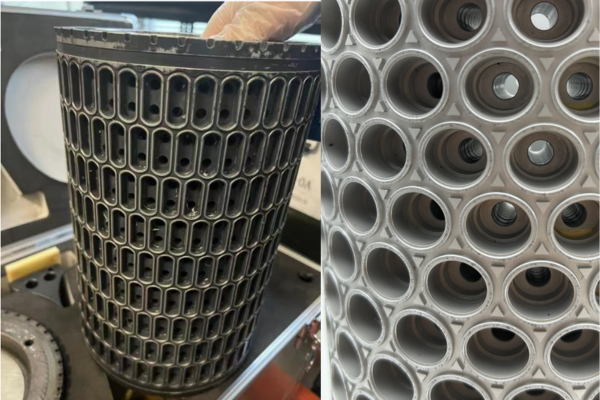
- Tooling: die rollers. Two die rollers rotate against each other, form the capsules and seal them after filling. The cavities in the rollers decide the shape and size of the capsule.
- Discharge chute. It carries the sealed capsules to the conveyor for the tumble dryer.
- Control system. A PLC and touchscreen set speed, temperatures and, on servo machines, alignment and timing.
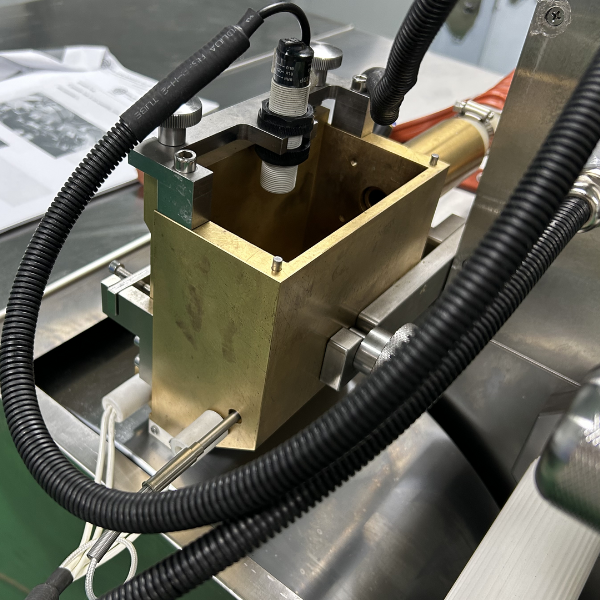
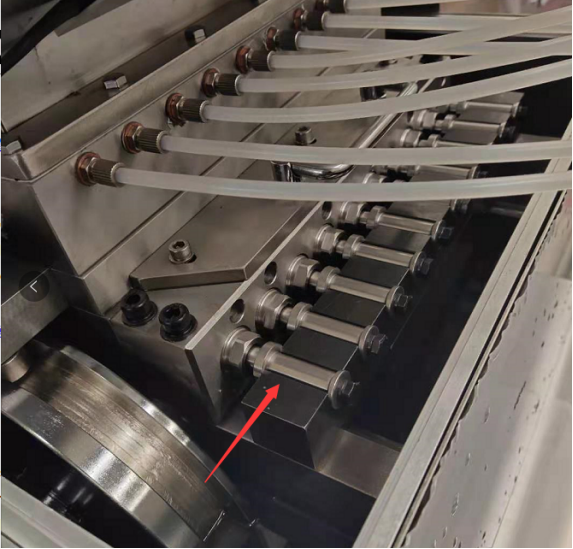
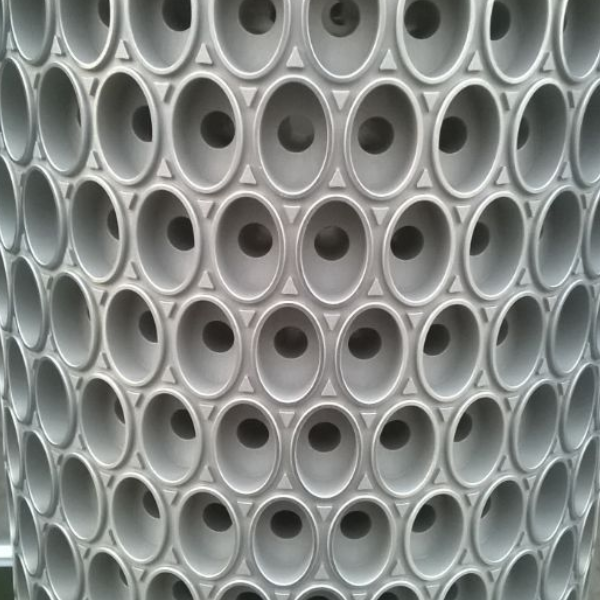
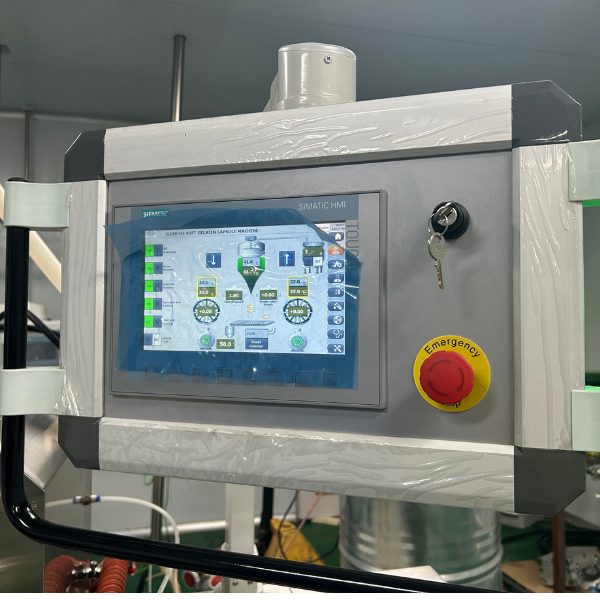
The die rollers are the part you will change most often. Read our softgel die roller guide and how they are installed and aligned. The gelatin melting tank, the medicine preparation tank, the tumble dryer and the drying trays are not parts of the machine but of the line around it.
How Does a Softgel Encapsulation Machine Work?
- Prepare the shell. The gelatin formula is melted in the gelatin melting tank and held in a service tank.
- Prepare the fill. The medicine or supplement ingredients are mixed in a separate medicine preparation tank until the fill is uniform.
- Cast the ribbons. The molten gelatin is pushed to the spreader boxes, which spread it onto the cooled casting drums as two thin ribbons.
- Inject the fill. The pump draws the fill from the tank and sends it to the injection wedge, which places it between the ribbons.
- Form and seal. The ribbons and fill pass between the two die rollers, which form the capsule, seal it and cut it free. The capsules drop into the discharge chute.
- Dry. A conveyor takes the capsules to the tumble dryer, where they shape and begin to dry before they move to drying trays.
Should You Choose a Gear-Driven or a Servo-Driven Machine?
| Point | Gear-driven machine | Servo-driven machine |
| Vibration | The gear drive creates vibration, which can affect stability and speed | Servo motors on the main parts reduce that vibration, and can raise speed, stability and output |
| Alignment and injection timing | Adjusted manually, so operator experience matters | Adjusted automatically from the PLC touchscreen |
| Film thickness | Set by hand | Automatic gelatin film thickness adjustment saves time and shell material |
| Budget | Lower purchase price, suits a limited budget | Higher price, simpler to operate and relatively small for its output |
See the JL-250III servo softgel machine and the JL-250II user guide.
Which Industries Use Softgel Encapsulation Machines?
Different die rollers let one type of machine make many capsule sizes and shapes, so several industries use it. Future Market Insights estimated the global softgel encapsulation machine market at US$104.5 million in 2022 and forecast US$159.6 million by 2032, a growth rate of 4.3% a year. Other research firms publish different figures, so treat all of them as indications.
| Industry | How softgels are used | Read more |
| Pharmaceutical | Delivers non-aqueous liquids, oils and suspensions, covers unpleasant taste and protects the fill. Medicines are regulated. | Softgel making process |
| Nutraceutical and food supplements | Fish oil, vitamins and plant oils, including products with a strong smell or taste | Nutraceutical industry |
| Cosmetics and personal care | Single-dose capsules with silicone and other non-aqueous fills, in custom shapes | Beauty products |
| Veterinary | Supplements and some medicines, given as a measured dose | Agriculture and veterinary |
| Paintball | Round gelatin shells filled with water-soluble dye | Paintball production |
Why Choose a Softgel Machine Over Other Dosage Forms?
A softgel suits some products and not others. The table compares it with a hard capsule and a tablet.
| Point | Softgel | Hard capsule | Tablet |
| Typical fill | Oils, suspensions, pastes | Powders, granules, pellets | Compressed powders |
| Shell | One-piece, sealed, flexible | Two-piece (cap and body) | None, or a coating |
| Equipment | Encapsulation machine with die rollers | Capsule filling machine, filled into ready-made empty shells | Tablet press |
| Fit | Poorly water-soluble ingredients, strong taste or smell, custom shapes | Dry ingredients | High-volume dry products at low cost |
A softgel machine is the better choice when your fill is an oil or suspension, when you want a sealed single-piece capsule that covers taste and smell, or when you want custom shapes through a custom die roller set.
How Do You Choose the Right Machine?
Our machines range from the JL-100II for lab work (up to 22,800 capsules per hour) to the JL-250III for large-scale production (200,000 capsules per hour). Choose by:
- Output. See softgel machines by capacity.
- Shell material. Starch shells need machine changes. See tapioca starch softgel encapsulation.
- Drive type and automation, as in the table above.
- Documents and support. See how to evaluate a machine.
Browse our softgel encapsulation machines. To get a useful recommendation, send us your capsule shape and size, fill type, shell type and target output.
Conclusion
Whatever your output, the encapsulation machine should match your capsule, your shell and your fill, and fit into a complete line. We give you a quote, help with the documentation and assist with installation once the machine reaches your facility. Our machines come with a one-year warranty. Contact JANGLI to discuss your project.
Frequently Asked Questions
What is the difference between softgel and hard capsules?
A softgel is a one-piece, sealed, flexible shell, mostly filled with oils, suspensions or pastes, because water dissolves gelatin. Its shell contains gelatin, water, plasticizer and often color. A hard capsule has two pieces, a cap and a body, and is filled with solids such as powders and pellets. Hard capsule shells are usually bought ready-made and filled on a capsule filling machine, while softgels are formed and filled in one step on an encapsulation machine.
Does a softgel machine need FDA or cGMP approval?
Regulators do not approve or certify machines. GMP rules apply to you as the manufacturer, and equipment helps you meet them. Our machines carry CE marking, and our company is ISO-certified. IQ/OQ/PQ documentation is available on request. Ask any supplier for material certificates, drawings and qualification documents, and check what your market expects.
How many capsules per hour can a softgel machine make?
It depends on the model and the capsule size, from about 5,000 to 25,000 per hour for lab-scale machines up to 200,000 per hour or more for high-speed machines. See our guide to softgel machines by capacity.
Can the machine make plant-based softgels?
Yes, with changes. Starch shells need enclosed spreader boxes, a multi-step die roller, stronger cooling and stainless steel pipes. See our guide to non-animal softgel capsules.
What does a softgel machine cost?
The price depends on the model, the drive type, the die roller sets and the supporting equipment you choose. Send us your capsule, fill and output target and we will reply with a quotation.
Do I need more than the encapsulation machine?
Yes. You need gelatin and fill preparation, drying, cleaning and inspection, and packing equipment. See our production line equipment checklist.
Written by Wendy Yu, JANGLI. Last reviewed: [2026]. Specifications may change, so please confirm details with us before ordering.
Send us your capsule shape, fill and target output and we will recommend a model.