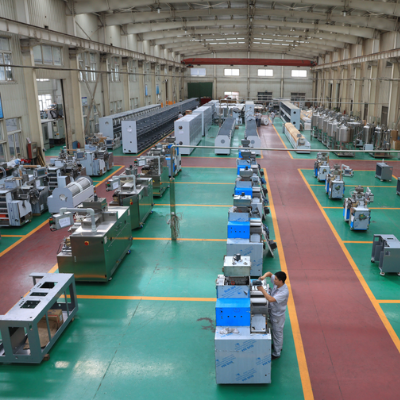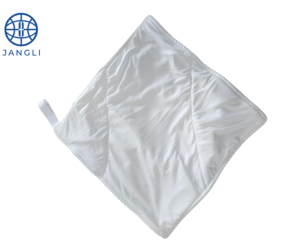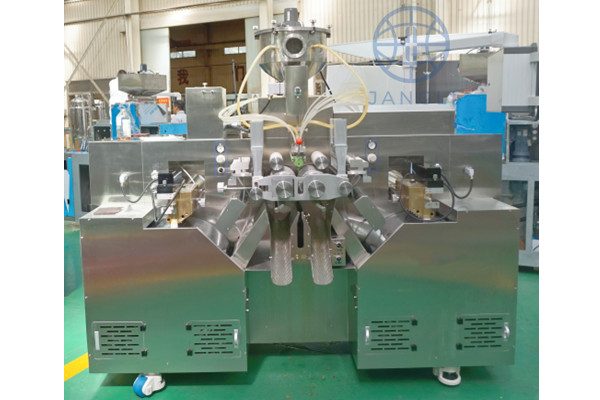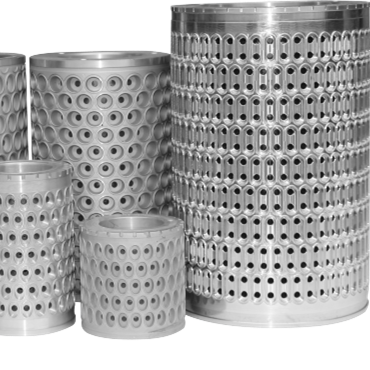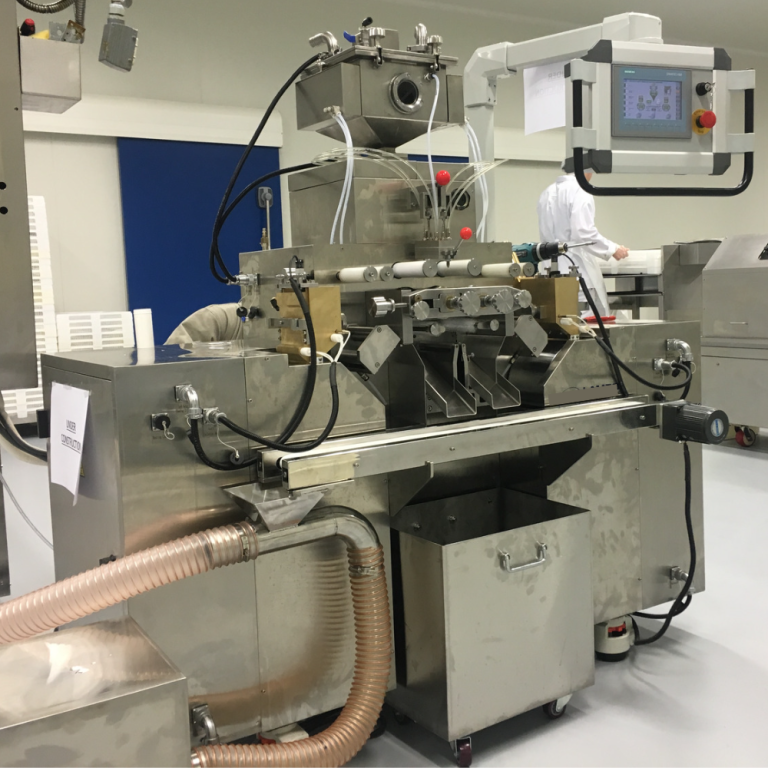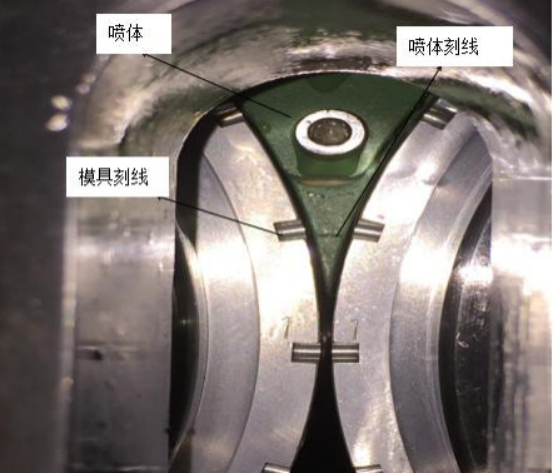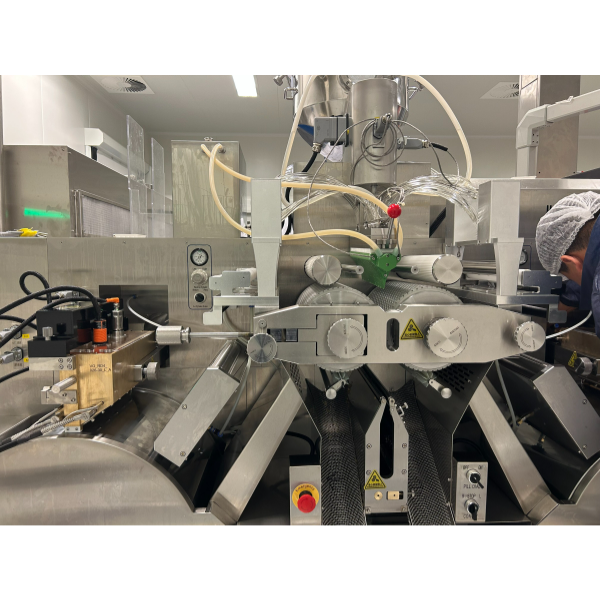
The JL-250II is a large-volume rotary die softgel encapsulation machine from JANGLI. It is used to produce softgels for the veterinary, nutraceutical, cosmetic, paintball and pharmaceutical industries. This guide explains what each part does, what your site needs before installation, how to start, run and maintain the machine safely, and how to troubleshoot capsule quality problems.
Key takeaways
- Site requirements: a level, smooth floor, about 15 kW of power on a 380V and 220V supply, and a room below 25°C (77°F) with relative humidity below 60%.
- Before every start, make sure the liquid paraffin oil is not below ⅔ of the lubricating oil tank height.
- Test run a new machine empty. If any problem appears, stop and repair it, then test again after two hours.
- Most capsule defects trace back to ribbon thickness, die roller segment temperature, ambient conditions and gelatin degassing. See the troubleshooting table below.
- Only trained, qualified personnel should install, operate and maintain the machine. The JL-250II comes with a one-year warranty.
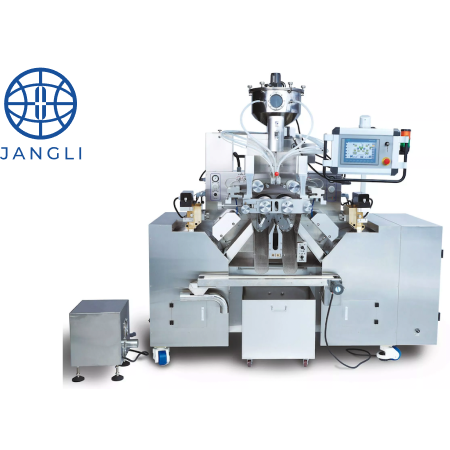
JL-250II Softgel Machine at a Glance
| Item | Detail |
|---|---|
| Power consumption | About 15 kW for the whole machine |
| Power supply needed at the factory | 380V and 220V |
| Room temperature | Below 25°C (77°F), kept by air conditioning |
| Relative humidity | Ideally below 60% |
| Main parts | Main machine, tumble dryer, conveyor, electrical control system, die roller set, cooling system |
| Installation | Done by trained, qualified personnel. When you buy from us, we help you install and perform a test run |
| Warranty | One year |
For where the JL-250II fits in a complete line, see All You Need To Know About Softgel Production Line. For the process settings behind good capsules, read Softgel Capsule Making Process: Steps and Key Parameters.
Terms Used in This Guide
Softgel equipment is described with several names for the same parts. This table matches the terms used in this guide with the ones used in our other articles.
| Term in this guide | Also called | What it does |
|---|---|---|
| Gelatin skin | Gelatin ribbon, gelatin film | The gelatin sheet that becomes the capsule shell |
| Gelatin skin wheel | Casting drum | The drum where the gelatin ribbon forms and is cooled |
| Gelatin box | Spreader box | Applies the gelatin solution evenly onto the wheels |
| Rolling mold | Die roller set | The pair of rollers with capsule cavities that press, seal and cut the capsules |
| Shaping rotary caging | Tumble dryer cage | Holds freshly made softgels for shaping and initial drying |
Overview of the JL-250II Softgel Encapsulation Machine
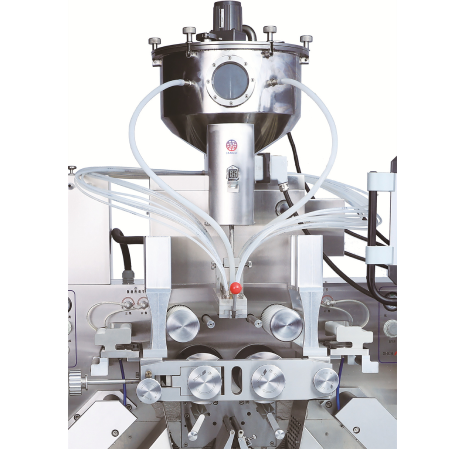
The JL-250II softgel production line consists mainly of the main machine, tumble dryer, conveyor, electrical control system, die roller set (pneumatic mold) and cooling system. It is a high-volume production machine. The sections below describe each part.
Main Machine
The main machine includes the body, the machine head, the feeding system, the right and left gelatin rollers, the encapsulation part, the gelatin box, the lubricating system and the cooling system.
- Machine body: supports the whole equipment. A motor fixed on the left side is the main power source.
- Lubricating system: supplies liquid paraffin oil to the bearings and gears of the machine body and head.
- Machine head: the core of the main machine. It redistributes the power to the feed pump and the rolling molds.
- Feeding system: consists of the material hopper, feed pump, feed pipe and feed plate unit.
- Gelatin box: spreads the gelatin solution evenly onto the turning gelatin skin wheels to form the gelatin skins.
The best way to protect the machine’s lifespan is to have it run by qualified, trained personnel who are familiar with its operation.
Conveyor Unit
The conveyor unit carries the softgels away from the machine. It comprises the conveyor body, a stainless conveyor, a speed-reducing motor and an adjusting mechanism, which tensions and adjusts the stainless conveyor. The delivered softgels are sent to the wind conveyor through the conveyor pipe.
Tumble Dryer
Qualified softgels are sent automatically to the shaping rotary caging for shaping and initial drying. See our softgel drying system for the dryers used after this step.
Electrical Control Cabinet
The cabinet contains the electrical system and the instruments that control the operation of the machine. The cooling system for the gelatin skin wheels sits in the lower part of the electrical control box.
Cooling System
The cooling system has automatic temperature control and pumps coolant into the gelatin skin rollers. This forms a circulation loop that keeps the temperature stable.
How to Install and Set Up the JL-250II Softgel Encapsulation Machine
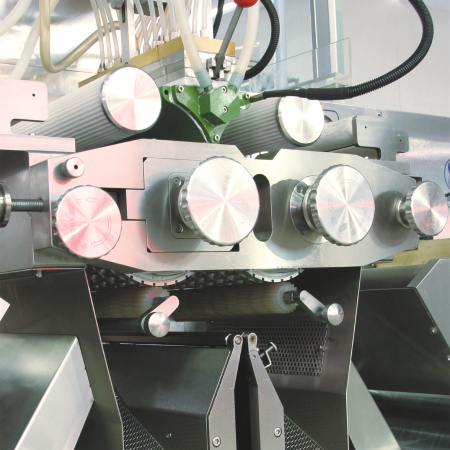
The JL-250II is suitable for large-quantity, commercial-scale softgel production. Installation must be done by well-trained, authorized personnel with the necessary qualifications.
Before installing, make sure the following requirements are met:
- The ground where you place the machine is level and smooth.
- Electric supply and other energy connections are in place. The whole machine consumes about 15 kW, so the factory needs a 380V and 220V power supply.
- The room has air conditioning that keeps the temperature below 77°F (25°C). The relative humidity should also stay below 60%.
- When the machine arrives at your factory, check for damaged parts.
- The necessary mounting tools and materials are ready.
The installation process then runs as follows:
- Once the machine is in place, level it with the screw-supporting jacks under the supporting base. Disconnect the power supply before working on the machine.
- Place the parts as shown in the table below.
| Machine part | Installation position |
|---|---|
| Conveyor unit | At the front of the main machine |
| Air blower | At the upper part of the hopper |
| Gelatin residual barrel | At the front side of the main machine, below the conveyor unit and below the net pulling shaft of the main machine |
| Shaping rotary caging | Fixed at the back left side of the main machine, facing the left side of the main machine |
| Frequency adapter | Connected to the main machine |
| AC voltage stabilizer | Connected to the main machine |
- After confirming that all equipment is in place, connect all cables correctly.
- Switch the power back on and carry out a test run. The machine must be empty during the test run.
- If the test run shows the machine running smoothly, you can start normal operation. If you notice a problem during the test run, stop the machine immediately and repair it, then run another test after two hours. If no more problems appear, the machine is ready for use.
How to Operate the JL-250II Softgel Encapsulation Machine
After installation you can start using the machine. Make sure the people operating the JL-250II are qualified to do so, and never overload the machine while it runs.
Check Before Every Start
- Confirm the liquid paraffin oil is not below ⅔ of the lubricating oil tank height.
- Make sure there is enough paraffin in the casing of the feed pump, the left oil roller box, the gears at the upper part of the machine head, and the paraffin holes at the upper part of the beam.
- Feed the materials for the softgels evenly and appropriately. Uneven feeding jams the machine and stops it working.
While the machine is running, pay particular attention to any rise in temperature and any change in the noise of the motor.
Process Settings That Most Affect Capsule Quality
These are typical reference values. Actual settings depend on the formulation, capsule size and machine model. For the full explanation, see our softgel making process guide.
| Setting | Typical reference value | What to watch |
|---|---|---|
| Gelatin ribbon thickness | 0.8~0.9 mm for softgels of 1 g and above, 0.7~0.8 mm below 1 g | Keep the two ribbons the same thickness, otherwise capsules deform |
| Die roller segment temperature | 35~40℃ | Too low makes sealing difficult, too high distorts the seal line |
| Die roller rotating speed | Set per product | A faster speed stretches the ribbon thinner, so recheck thickness after changing it |
| Gelatin transfer pipe and spreader boxes | 55~60℃ | Keeps gelatin flowing without blocking the pipe |
| Casting drum | Below 20℃ | Lets the ribbon cool and form quickly |
| Ambient temperature | Below 25℃ in this machine room | Too hot and capsules cool slowly and stick, too cold and the ribbon is hard to seal |
How to Prevent JL-250II Machine Failure
Like all machines, the JL-250II needs constant maintenance and cleaning. Without them, failures become frequent. The common causes of machine failure are:
- Power issues: an unstable power supply affects the electrical components. Faulty wiring, incorrect components or any fault in the electrical system can interrupt power and damage the machine.
- Incorrect machine setup: without professional installation, machine components can be misaligned, and dosing pumps, sensors and other critical components can be calibrated inaccurately.
- Mechanical issues: like all machines, softgel encapsulation machine parts wear over time. Parts that are worn or poorly lubricated are likely to suffer mechanical damage.
- Lack of maintenance: inadequate cleaning and irregular maintenance often lead to failure, because build-up and contamination in machine parts cause damage.
- Software or system failures: incorrect use can cause control software errors, and any fault in the electronic control system leads to system or software failure.
To keep the machine working for a long time, carry out these maintenance tasks:
- Always follow the manufacturer’s maintenance manual for specific instructions and schedules.
- Clean the machine parts regularly to prevent residue and contaminants building up. Use approved cleaning agents and follow the recommended cleaning procedures to avoid damage.
- Lubricate moving parts to prevent friction and wear, using the lubricants recommended by the manufacturer and following the lubrication schedule in the manual.
- Inspect machine parts regularly for wear and tear, and replace any that show signs of deterioration. Wearing parts are available in our softgel machine parts range.
- Keep all machine components properly aligned. Misalignment causes operating problems that affect softgel quality.
- Calibrate dosing pumps, sensors and other critical components regularly. Proper calibration keeps the encapsulation process accurate.
- Keep the machine’s control software up to date, and deal promptly with software issues following the manufacturer’s recommended updates.
- Train operators in correct use of the machine and in basic maintenance, and ask them to report any abnormality or issue promptly.
- Keep records of maintenance. They help you track the machine’s performance and identify recurring issues.
Always put safety first when maintaining the machine. If an issue cannot be resolved during routine maintenance, contact our technical support.
Troubleshooting Capsule Quality Problems
Most capsule defects trace back to a few variables: gelatin condition, ribbon thickness, machine settings, ambient conditions and drying. Use this table to find where to look first.
| Problem | What to check |
|---|---|
| Capsules are hard to seal | Ribbon too thick, die roller segment temperature too low, ambient temperature too low, or gelatin moisture too low |
| Seal line distorted or abnormal capsules | Die roller segment temperature too high |
| Ribbon too thin | Die roller rotating speed too fast. Recheck thickness after any speed change |
| Deformed capsules | The two gelatin ribbons differ in thickness |
| Ribbon is difficult to form | Gelatin moisture too high |
| Capsules stick together | Ambient temperature too high, so capsules cool slowly |
| Bubbles in the shell | Gelatin not fully degassed. Let it stand for more than 4 hours after vacuum degassing |
| Clumps or residue in the gelatin solution | Gelatin was put directly into hot water instead of being fed as recommended |
| Inconsistent fill amount | Cut capsules open and weigh the shell to measure fill volume, immediately after sampling |
| Leakage during storage | Check seam quality first. See how to prevent softgel leakage during storage |
Safety Precautions When Using the JL-250II Machine
The best way to run the JL-250II is with specially trained operators. This prevents both serious machine damage and injuries to workers, either of which can cause significant financial loss. Never leave the machine unattended while it runs.
You and your staff need to follow several precautions. The table below lists some of them.
| Personnel | Machine |
|---|---|
| Train machine operators in machine operation and emergency procedures. | Do not modify the machine’s structure or configuration. Contact us and we will connect you with someone who can help. |
| Only competent people should install, operate and maintain the machine. | Use the machine only for encapsulating softgels. |
| Do not allow anyone who is unwell or impaired to operate the equipment or stand near it, because injury or equipment damage is possible. | Make sure every safety device is installed and working before you switch on the machine. Replace any that does not work. |
| Provide sufficient lighting in all working areas. | Do not place the machine in a wet environment or where it can come into contact with water. |
| Operators should not wear loose clothing or jewelry and should tie up long hair. Provide shoes, gloves, helmets and protective clothing. | Operate the machine only at the recommended speed. |
| Post a list of emergency phone numbers, including the fire department, in the working area, and make sure operators know what to do in an emergency. | Take particular care around high-voltage equipment and components under pressure. |
Conclusion
The JL-250II is easy to operate, clean and maintain, provided qualified personnel run it. When you buy from JANGLI, we help you install the machine and perform a test run. We also offer after-sales service for all our machines, and the JL-250II comes with a one-year warranty.
Planning to buy a JL-250II, or already running one and need support? Contact our team.
Frequently Asked Questions
What power and room conditions does the JL-250II need?
The whole machine consumes about 15 kW, so the factory needs a 380V and 220V power supply. The floor should be level and smooth, and the room should be air-conditioned to stay below 25°C (77°F), with relative humidity ideally below 60%.
How do I test run a new JL-250II?
Level the machine with the screw-supporting jacks, disconnect the power before working on it, place the parts correctly and connect all cables. Then switch the power on and run the machine empty. If you notice a problem, stop immediately and repair it, then run another test after two hours. If no further problems appear, the machine is ready for use.
What should I check before starting the machine each time?
Check that the liquid paraffin oil is not below ⅔ of the lubricating oil tank height, and that the feed pump casing, the left oil roller box, the gears at the upper part of the machine head and the paraffin holes at the upper part of the beam all have enough paraffin. Make sure the materials are fed evenly, and watch the temperature and motor noise once the machine is running.
How can I get uniform softgels from the machine?
Measure the ingredients precisely, because any increase or decrease in components can compromise the capsules. Follow the recommended procedure at the recommended temperature and speed. Clean and maintain the machine and its supporting equipment regularly to avoid defective capsules. Operate the tooling system, which uses servo motors and miniature pumps, carefully so production stays under control.
What supporting equipment does the JL-250II need?
Supporting equipment includes drying trays, a tumble dryer, a softgel cleaning (polishing) machine and a softgel inspection machine. For the full set of units around the machine, see our softgel production line guide.
Who should install and operate the JL-250II, and is there a warranty?
Only well-trained, authorized personnel with the necessary qualifications should install, operate and maintain the machine. When you buy from us, we help you install it and perform a test run. The JL-250II comes with a one-year warranty.
Related guides
- Softgel capsule making process: steps and key parameters
- All you need to know about the softgel production line
- Lecithin softgel production: how to prevent leakage during storage
- Softgel oil-absorbing cloth for softgel production
- How to save labor in softgel production
Written by Wendy Yu, JANGLI. Last reviewed: [2026]. Specifications may change with the machine version. Please confirm with us before ordering.