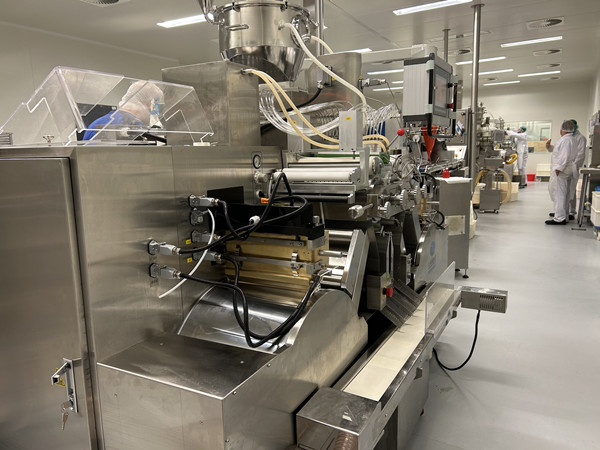
Softgel capsules are sealed capsules made by quantitatively filling oily medicine, a medicine solution or a suspension into a shell made mainly of gelatin. Common preparation methods include dripping and encapsulation. This article describes the encapsulation (die roller) method, its five stages, and the checks to make at each stage.
Key takeaways
- Softgel making has five stages: gelatin melting, medicine liquid preparation, encapsulation, drying, and inspection and sorting.
- Gelatin solution is generally melted at 60~70℃ and held at 50~60℃. After vacuum degassing it should stand for more than 4 hours before use.
- The gelatin ribbon is generally 0.8~0.9 mm thick for softgels weighing 1 g and above and 0.7~0.8 mm for softgels under 1 g, with the die roller segment at 35~40℃.
- Finished softgel shells should end up at 8~12% moisture. Seam rate and filling volume are the main encapsulation checks.
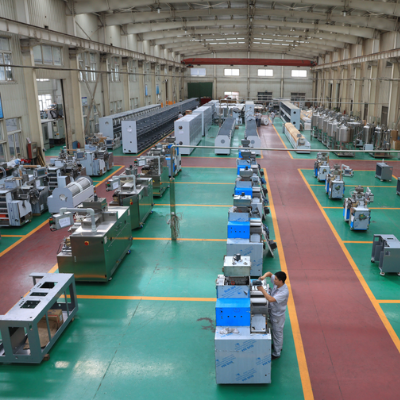
For the equipment side of the whole process, see All You Need To Know About Softgel Production Line.
Basic Principle of Softgel Encapsulation Process
The gelatin ribbon (formed beforehand by the spreader boxes and casting drums) passes between a pair of cylindrical molds (die rollers). The medicine feeding pump injects a set amount of medicine liquid into the gelatin ribbon through the injection segment. The die rollers then turn toward each other, press the two gelatin ribbons together and cut the capsules out of the ribbon, forming completely sealed softgels.
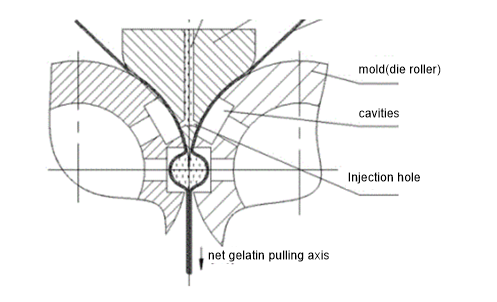
Softgel Manufacturing Process
- Gelatin Melting
- Medicine Liquid Mixing And Preparation
- Softgel Encapsulation
- Softgel Drying
- Softgel Inspection and Sorting
The table below collects the typical reference values given in this article. Actual settings depend on the formulation, capsule size and machine model.
| Stage | Parameter | Typical reference value |
|---|---|---|
| Gelatin melting | Gelatin solution temperature | 60~70℃ |
| Gelatin melting | Vacuum degassing | -0.07 to -0.08 MPa |
| Gelatin melting | Standing time after degassing | More than 4 hours |
| Gelatin melting | Holding temperature | 50~60℃ |
| Gelatin melting | Gelatin solution moisture | 40%~50% |
| Encapsulation | Gelatin ribbon thickness (softgel weight 1 g and above) | 0.8~0.9 mm |
| Encapsulation | Gelatin ribbon thickness (softgel weight under 1 g) | 0.7~0.8 mm |
| Encapsulation | Die roller segment temperature | 35~40℃ |
| Encapsulation | Gelatin transfer pipe and spreader boxes | 55~60℃ |
| Encapsulation | Casting drum | Below 20℃ |
| Drying | Moisture after shaping drying | 25~30% |
| Drying | Final shell moisture | 8~12% |
| Drying | Ambient humidity | Below 60% |
| Inspection | Seam rate | Generally not less than 30% |
Gelatin Melting
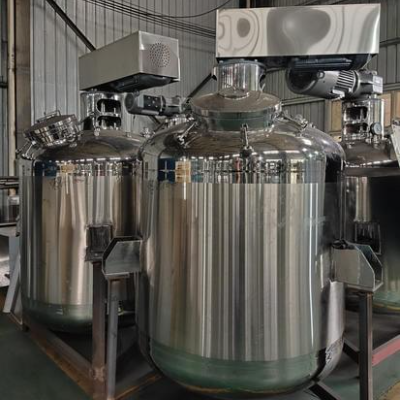
Our gelatin preparation system covers the melting tank, service tank, color mixer and colloid mill used in this stage. For a deeper look at the material itself, see What Is the Role of Gelatin in Softgel Encapsulation Machines.
1. Material Feeding Sequence
Usually, a certain proportion of gelatin, plasticizer and water is added to the gelatin melting tank, then heated and stirred. The gelatin absorbs water and melts into a gelatin solution. The materials can be added at the same time, but it is recommended not to put gelatin directly into hot water. Otherwise, the gelatin that touches the hot water first forms a dense layer, the particles wrapped inside are difficult to dissolve, and the gelatin solution ends up with residue and many clumps, which affects normal production.
In addition, pigments or opacifying agents, such as titanium dioxide and iron oxide, may be added to the gelatin. Grind them in a colloid mill together with some plasticizer and water, then add them to the gelatin after sieving. This avoids pitting or pores in the gelatin ribbon.
2. Temperature Control
The temperature of the gelatin solution in production is generally controlled at 60~70℃. The main component of gelatin is a mixture of polypeptide molecules. Excessive temperature causes these molecules to hydrolyze and affects the quality of the final gelatin solution.
3. Vacuum Degassing
Newly melted gelatin contains many bubbles, so vacuum degassing is required. Generally, the vacuum degree should reach -0.07 to -0.08 MPa. At the beginning, a large number of bubbles roll up and release from the gelatin solution, so relieve the pressure in time to avoid pulling gelatin into the vacuum pump and damaging the equipment.
Watch the state of the gelatin during vacuuming. When no obvious bubbles are released from the surface and the surface flows in a honeycomb pattern, degassing is complete and the vacuum can be stopped. Do not vacuum for too long, otherwise the gelatin loses a lot of water, which affects the later encapsulation.
4. Gelatin Solution Holding
After melting, transfer the gelatin solution to the gelatin service tanks for holding. The holding temperature is generally controlled between 50 and 60°C. If the temperature is too low, the fluidity becomes poor and the gelatin solution has to be reheated during the encapsulation stage, which takes a long time, and the gelatin properties may become uneven.
Do not use the gelatin immediately after vacuum degassing. Let it stand for more than 4 hours so the bubbles in the gelatin are fully discharged. The upper limit of the holding time is determined for each specific project. Monitor the viscosity, freezing force and moisture of the gelatin during holding to decide the holding process.
Medicine Liquid Mixing & Preparation
Prepare the filling contents according to the requirements of the specific softgel project, and control the liquid preparation process with reference to the technical requirements for solutions, suspensions and semi-solid preparations. If the raw materials are unstable to light, heat or oxygen, consider protecting them from light, cooling them or filling with nitrogen. The preparation process varies with each project, so it is not discussed in detail here. Our medicine preparation system is the equipment used for this stage.
Softgel Encapsulation
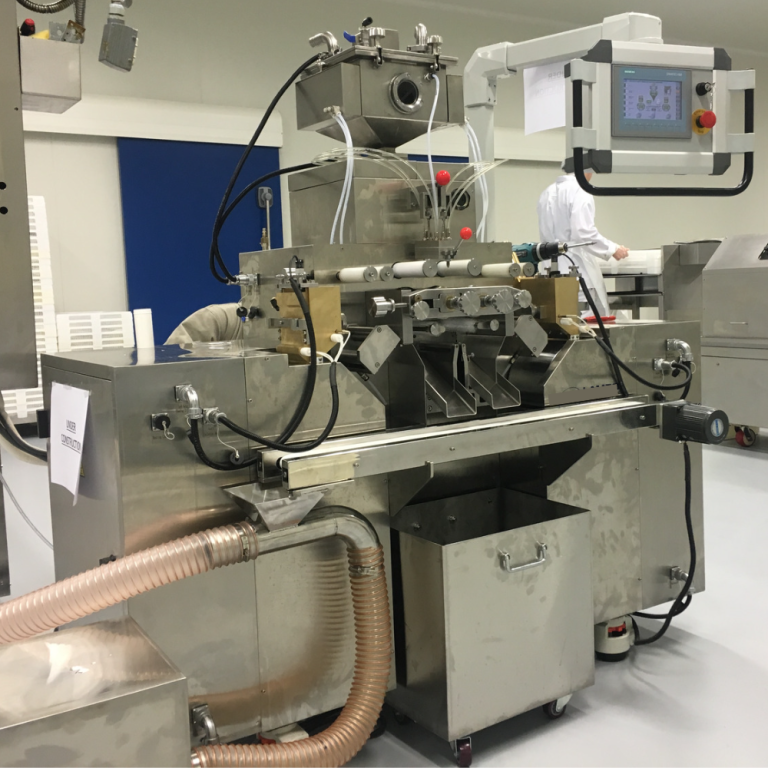
Softgel encapsulation is the core work of softgel production. Add the prepared medicine liquid to the hopper and send the gelatin solution to the softgel encapsulation machine through the hose. The machine forms the gelatin ribbon and fills the content quantitatively, and the die rollers shape the gelatin and content into capsules. To see how the softgel die roller is built, read our die roller guide. The main process parameters to control are as follows:
1. Gelatin Ribbon Thickness
For a generic preparation, the softgel shell thickness is recommended to match that of the reference preparation, to keep the disintegration time consistent. Cast wet gelatin ribbons of different thicknesses with the determined formulation, dry them, and measure the dry shell thickness to set the target ribbon thickness range.
Under normal circumstances, the ribbon thickness is controlled at 0.8~0.9 mm for softgels weighing 1 g and above, and at 0.7~0.8 mm for softgels weighing less than 1 g. If the ribbon is too thick, the die roller wedge may need a higher temperature, otherwise the sealing will be poor. If the ribbon is too thin, the pressure resistance of the softgel suffers, which is not good for storage and transportation. The two ribbons should also be as consistent in thickness as possible, otherwise deformed softgels will be produced.
2. Temperature of Die Roller Segment
Adjust the temperature of the die roller segment (also called the wedge) according to the condition of the gelatin ribbon. If the moisture content of the ribbon is too low or the ribbon is too thick, raise the segment temperature appropriately. If the injection speed is too high, the wedge temperature also needs to be raised to keep a good seal.
Generally, the segment temperature is controlled at 35°C to 40°C. If it is too low, sealing is difficult. If it is too high, the seal line of the softgel may be distorted and abnormal capsules may be produced.
3. Softgel Die Roller Rotating Speed
A higher rotating speed may affect the segment temperature and also the ribbon thickness. A faster speed overstretches the gelatin ribbon during encapsulation and makes it thinner. After adjusting the die roller speed, therefore, check the ribbon thickness to make sure it stays within the target range.
4. Environment Temperature
The ambient temperature during encapsulation also affects the result. If it is too high, the capsules may cool slowly and stick together. If it is too low, the gelatin ribbon is difficult to seal and the segment temperature needs to be raised appropriately.
5. Other Temperatures and Lubricant
During softgel making, also control the temperature of the gelatin transfer pipe, the gelatin spreader boxes and the casting drums. The transfer pipe and spreader boxes are generally kept at 55~60℃ so the gelatin solution flows smoothly and does not block the pipe. The casting drum is generally kept below 20℃ so the gelatin ribbon cools and forms quickly.
Also pay attention to the type and amount of lubricating oil added, and set quality standards for it. There should be sufficient evidence that the lubricating oil does not affect the other components of the softgel. Commonly used lubricants include pharmaceutical grade liquid paraffin and medium chain glyceryl esters.
Softgel Drying
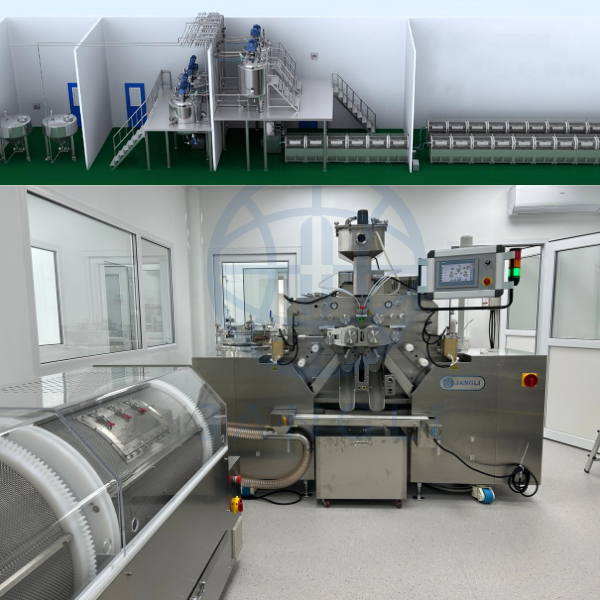
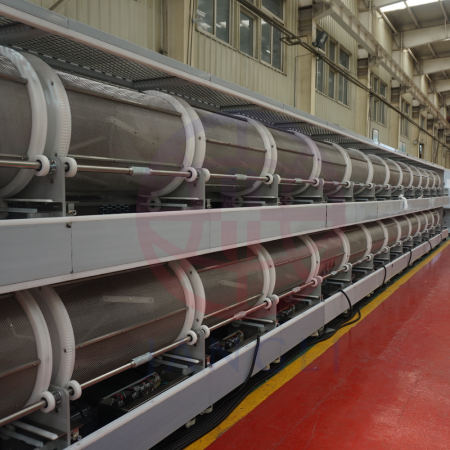
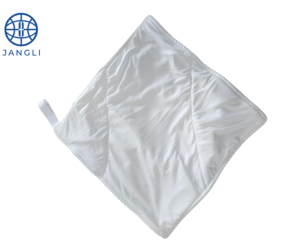
Softgel drying is generally divided into two steps: shaping drying and standing drying. In shaping drying, freshly encapsulated softgels are moved straight into a drying basket and dried until the moisture content falls to 25~30%. At this moisture content the shape of the softgels is basically fixed. To improve production efficiency, the shaped softgels are then moved to trays to continue drying. To clean the lubricating oil off the softgel surface, an oil-absorbing cloth can be added to the drying cage during drying. Our softgel drying system includes the tumble dryer shown below, and the cloth is covered in Softgel Oil-Absorbing Cloth for Softgel Production.
Generally, the moisture content of the finished softgel shell should be controlled between 8 and 12%. If the moisture content is too high, the shell is too soft and prone to mold. If it is too low, the shell becomes brittle, which is not good for storage and transportation. Three main factors affect softgel drying:
1. Ambient Temperature and Humidity
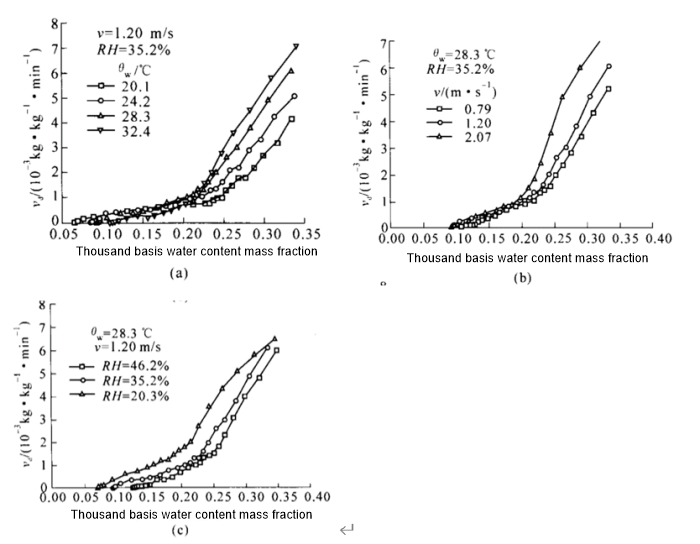
Research shows that the effect of changing drying conditions on the drying rate of softgels is as shown in the figure below . When the drying temperature is high, softgels dry faster in the early stage. In the later stage, the shell surface dries and hardens, which hinders moisture moving out from the inside, and the drying rate drops. As the ambient humidity decreases, the drying rate increases. Under normal circumstances, keep the ambient humidity below 60%, otherwise the softgels are extremely difficult to dry.
2. Drying Air Speed
Increasing the air speed in the drying environment raises the moisture transfer rate and improves drying efficiency.
3. Drying Time
With ambient temperature and humidity under strict control, the moisture content of the dried softgels depends on the drying time. During process inspection, take softgels at different drying times, measure the shell moisture and draw a drying curve to determine the drying end point.
Softgel Inspection and Sorting
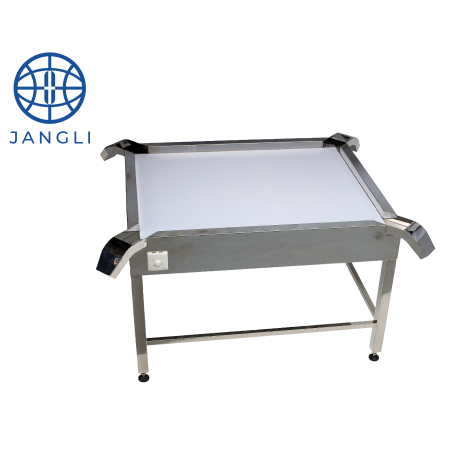
Inspection removes unqualified products from the dried softgels, such as oversized and undersized capsules, flat capsules, bubble capsules and irregularly shaped capsules. The general method is to place the softgels on a light inspection table and pick them out manually. Automatic softgel inspection and sorting equipment is also available now, and it can detect and kick out softgels with bad shapes, sizes or colors automatically.
In-Process Quality Checks for Each Stage
During softgel preparation, evaluate the output material properties of each stage to make sure only qualified products are produced.
In the gelatin melting stage, the appearance, moisture, viscosity and freezing force of the gelatin are generally used as inspection indicators. The gelatin solution should look fine and smooth, without small bubbles. Moisture should be controlled at 40%~50%. If the moisture is too low, sealing is difficult during softgel making. If it is too high, it is difficult to form the ribbon. Viscosity and freezing force reflect the quality of the gelatin. Monitor viscosity and freezing force during gelatin holding to prevent the gelatin quality from declining too much.
In the encapsulation stage, the main indicators are the appearance, filling volume and sealing condition of the softgel. For appearance, check whether there are bubbles on the surface and whether the seams are smooth.
To measure the filling volume, cut the softgel open, wipe off the contents and weigh the shell. Some preparation quality standards recommend cleaning the contents out with ether. The filling volume is the total softgel weight minus the shell weight. Measure it immediately after the sample is taken, because water evaporating from the softgel over a long wait affects the accuracy. If it cannot be measured immediately, store the softgels in an airtight container in a low-temperature environment to prevent moisture loss.
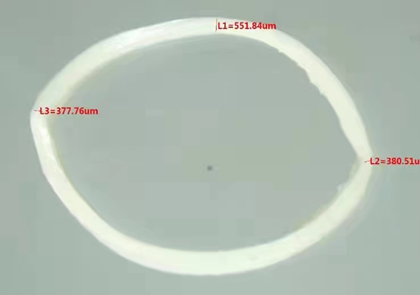
The seam can be observed with a microscope. Cross-cut a newly made softgel, cut a ring of the shell from the middle and observe it under the microscope. Measure the shell thickness and the seam thickness, then calculate the seam rate.
Capsule seam rate = seam thickness / shell thickness × 100%
To measure the seam rate, see our softgel seam inspection equipment in the lab instrument range.
In the softgel drying stage, monitor the moisture content of the shell. Cut the softgel open, blot the contents out of the shell with oil-absorbing paper, and measure the shell moisture content by the drying method. This softgel moisture content tester is a good choice. Measure once every 8 to 12 hours until the moisture content reaches the target range. If there is a proven method for monitoring moisture reliably, it may be used instead.
Frequently Asked Questions About the Softgel Making Process
What temperature should the gelatin solution be at during softgel production?
Gelatin solution is generally melted at 60~70℃, because excessive temperature hydrolyzes the polypeptide molecules and lowers the quality of the gelatin solution. After degassing it is held in the service tank at 50~60℃. The gelatin transfer pipe and spreader boxes are generally kept at 55~60℃.
How long should gelatin stand after vacuum degassing?
Let it stand for more than 4 hours so the bubbles are fully discharged. The upper limit of the holding time is set for each project, based on monitoring the viscosity, freezing force and moisture of the gelatin. Do not vacuum for too long, because the gelatin then loses a lot of water.
What moisture content should a finished softgel shell have?
Generally 8 to 12%. Above that, the shell is too soft and prone to mold. Below that, it becomes brittle and is not good for storage and transportation. Freshly encapsulated softgels are first shaping-dried to 25~30% moisture, and ambient humidity should stay below 60%.
How is the softgel seam checked?
Cross-cut a newly made softgel, cut a ring of the shell from the middle and observe it under a microscope. Measure the shell thickness and the seam thickness, then calculate the seam rate as seam thickness divided by shell thickness, times 100%. Generally the seam rate should not be less than 30%.
Questions about your softgel project? Contact our team.
Written by Wendy Yu, JANGLI. Last reviewed: [2026]. The values in this article are typical reference ranges and may change with formulation, capsule size and machine model. Please confirm with us before ordering.