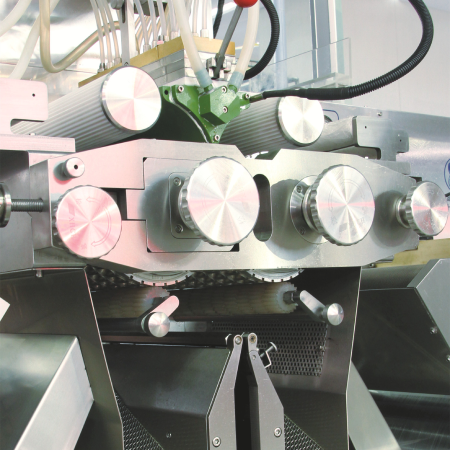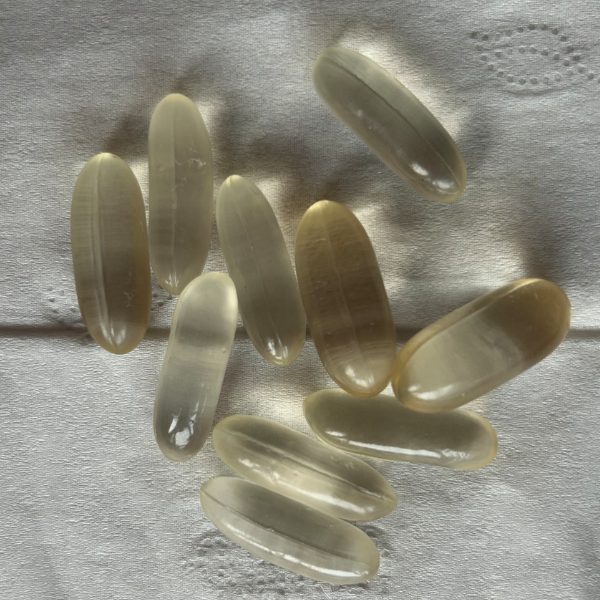
Non-animal softgel capsules (also called vegetarian or vegan softgels) are softgels with a shell made from plant-based materials, such as modified starch, carrageenan or cellulose, instead of animal gelatin. They are filled and sealed on rotary die machines much like gelatin softgels, but the shell formula, die roller design and process settings are different.
Key Takeaways
- Shell: common systems are starch-based (tapioca, pea or corn starch) with a gelling agent such as carrageenan or gellan gum, seaweed-based, or cellulose (HPMC) based.
- Machine: the same rotary die principle applies, but starch films are less elastic than gelatin, so the die roller and temperature settings usually need adjusting.
- Fill: oils and pastes work best. Always test fill and shell compatibility before scale-up.
- Labeling: a “vegan” or “vegetarian” claim depends on the whole formula (fill, glycerin, colors), not only the shell.
Gelatin comes from animal collagen. Because of dietary and religious requirements, and a wider interest in what goes into food and supplements, more brands now ask for non-animal softgels. This guide covers what these capsules are made of, where the ingredients come from, how the machine setup changes, how they are produced, and where they are used.
What Are Non-Animal Softgel Capsules?
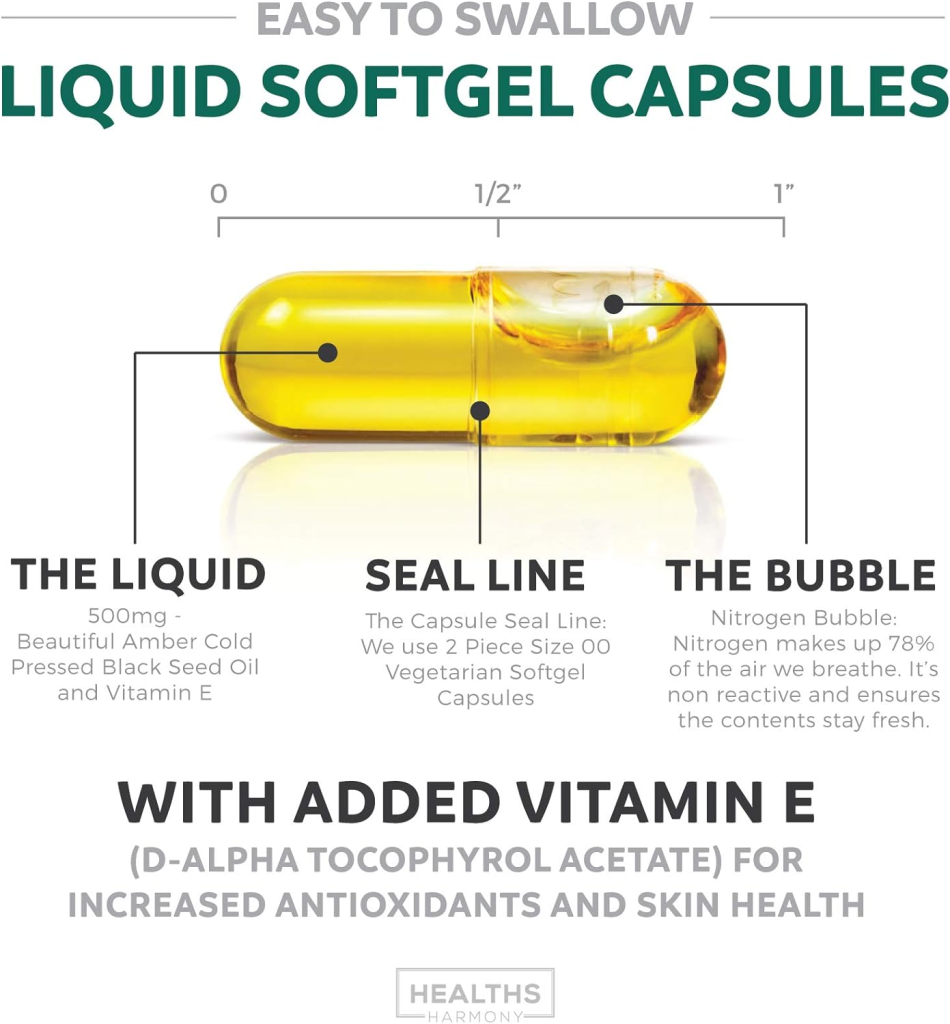
Non-animal softgels look much like standard gelatin softgels: soft, flexible and sealed around a liquid or paste fill. The difference is the shell. Gelatin is made from animal collagen, while non-animal shells use plant or seaweed-derived materials.
Vegetarian shells are not new. Since the 1990s, manufacturers have been able to replace gelatin with modified starch, carrageenan-modified starch and alginate. According to the Wikipedia softgel entry, the first commercially viable type used carrageenan-modified starch and reached the market in 2001, and the first carrageenan-free vegetarian softgel used modified tapioca starch.
Buyers usually choose them for three reasons:
- Diet and belief: they suit vegetarian and vegan products. They can also be made suitable for halal and kosher markets, but that needs documented, certified ingredients.
- No animal-origin shell material: concerns linked to animal sourcing of gelatin do not apply to the shell.
- Formulation: gelatin can cross-link over time with some fill ingredients, which can slow dissolution. Non-animal shells avoid that particular problem. Some shell suppliers also position their systems as more heat-tolerant than gelatin.
Dissolution and absorption depend on the shell formula and the fill. A non-animal shell is not automatically faster-dissolving or better absorbed than gelatin.
Pullulan and hypromellose (HPMC) are the best-known plant-based capsule materials. For softgels, starch- and carrageenan-based shells are also widely used. The table compares gelatin and non-animal softgels.
| Point | Gelatin Softgels | Non-Animal Softgels |
| Shell source | Animal collagen (bones, skin, connective tissue) | Plant or seaweed-derived materials: modified starch, carrageenan, cellulose |
| Diet suitability | Not vegetarian or vegan. Halal or kosher status depends on the gelatin source and certification. | Vegetarian and vegan when the whole formula is animal-free. Halal or kosher needs certification. |
| Shell behavior | Elastic film that seals well under heat and pressure | Starch films are generally less elastic, so die roller design and temperature control need adjusting |
| Cross-linking | Can cross-link over time with some fills, slowing dissolution | No gelatin cross-linking. Other stability factors still apply. |
| Production cost | Lower. Established process and wide supplier choice. | Often higher. Shell materials and process development usually cost more. |
| Typical fill | Oils, suspensions, pastes | Oils and pastes. Test compatibility with each formula. |
What Are Non-Animal Softgels Made Of, and Where Do the Ingredients Come From?
Non-animal softgels are made on the same type of rotary die encapsulation machines as gelatin softgels. A non-animal softgel has four ingredient groups: shell-forming material, plasticizer and other shell additives, preservatives where used, and the fill.
Where to source them: shell starches and ready-made shell premixes come from specialist ingredient suppliers. For example, in 2020 Roquette launched a pea starch softgel system that combines pea starch, carrageenan, sorbitol and salt. When you compare suppliers, ask for the formula and processing guide, the allergen statement, non-GMO, vegan, halal and kosher documents where you need them, and the pharmacopeia grade if the product is a medicine.
Hypromellose (HPMC)
Hypromellose, short for hydroxypropyl methylcellulose, is a cellulose-based shell material. HPMC shows thermal gelation: the solution forms a semi-flexible mass once it passes a critical temperature.
It is made by chemically modifying cellulose from wood pulp or cotton linters. The modification step is called etherification. HPMC is an off-white to beige powder and is widely used as a food and pharmaceutical excipient.
Vegetable Starch
Many non-animal softgels use starch as the main shell material. Tapioca starch, taken from the cassava root, is the most widely used. It has a neutral flavor, which suits a wide range of fills. Starch is combined with glycerin and water to make a shell mass that can be cast into a ribbon. Some tapioca systems are carrageenan-free. Our guide to tapioca starch softgel encapsulation covers this route in more detail.
Pea starch is also gaining ground. On its own it lacks gelling strength, so the shell layer may not form evenly. Most pea starch formulas add a small amount of carrageenan so the mass gels. Gellan gum is another gelling agent used in vegetarian softgel shells.
Plasticizers, Colors and Preservatives
Plasticizers such as glycerin and sorbitol keep the shell flexible. Glycerin can come from plant or animal fats, so ask the supplier for its origin. Non-animal shells are clear by nature. Add colorants for colored capsules, and avoid animal-derived colorants such as carmine.
Preservatives must also be animal-free. Potassium sorbate and sorbic acid are generally made synthetically and are accepted in vegan formulas. Potassium sorbate has GRAS (Generally Recognized As Safe) status in the US and inhibits mold and yeast. Benzoic acid is also used. Which preservatives are permitted depends on your market and product type, so confirm this before you finalize the formula.
Fill Ingredients
Non-animal softgels are mostly used for nutraceutical and pharmaceutical products, with vitamins, oils and plant extracts as typical fills. For a vegan claim, check the source of each fill ingredient:
- Omega-3: fish oil is the best-known source, but algae oil is a plant-based option. Flaxseed and chia oils supply ALA, another form of omega-3.
- Oils: virgin coconut, evening primrose, borage and black cumin oils can be used. Krill oil comes from animals, so it does not fit a vegan label.
- Vitamins D and E: vitamin E softgels are popular. Vitamin D3 is commonly sourced from lanolin (sheep wool), while lichen-based D3 and vitamin D2 are plant-based options.
How Do Non-Animal Shells Change the Machine and Die Roller?
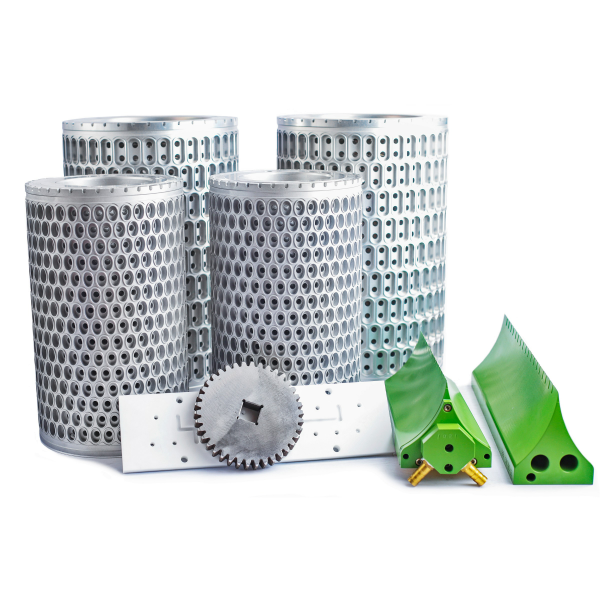
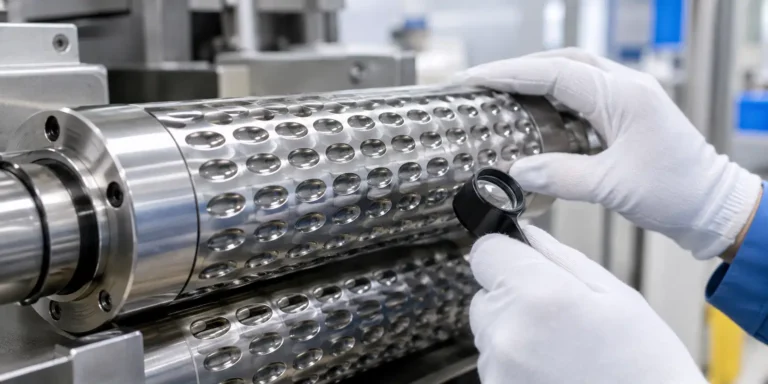
The principle does not change. Two shell ribbons are cast, the fill is injected through a heated wedge, and a pair of die rolls forms, seals and cuts the capsules. What changes is how the shell behaves. Starch-based films are less elastic than gelatin films, so the die roller design needs adjusting, and the temperature control of the shell mass and die rolls matters more.
One example from our own design: the die roller step height is 0.4-0.5 mm for animal gelatin and 0.8-0.95 mm for starch. Details are in our softgel die roller guide and the page on plant-based softgel die roller sets. Exact settings depend on your shell formula, so a trial run with your own material is the safest way to confirm them.
How Are Non-Animal Softgel Capsules Made?
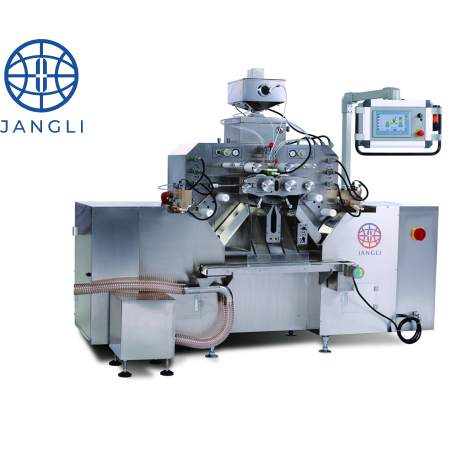
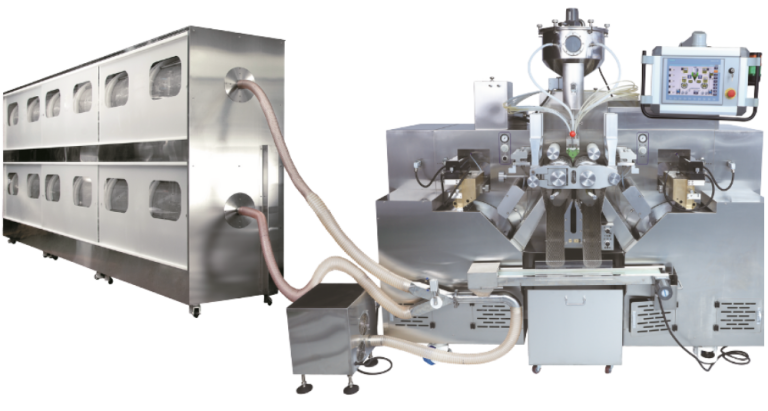
Many producers of vegan softgels face problems in production. Some fill materials do not work with certain shell types because of their physical properties. For example, some powders do not mix well with an oil base. Non-animal softgels also need equipment that can handle the shell material. At JANGLI, we supply softgel encapsulation machines for vegetarian softgel production.
The process has six steps:
Step 1: Prepare the Non-Animal Shell Mass
Prepare the shell ingredients according to your formula. Mix tapioca starch or hypromellose with the gelling agent, plasticizer and water, and heat the mixture in the melting tank. Temperature and time depend on the formula, so follow your shell supplier’s processing guide.
Transfer the shell mass from the tank to the encapsulation machine. There it is cast into two continuous ribbons, one on each side of the machine, which then pass to the die rolls.
Step 2: Prepare the Fill
The fill for non-animal softgels is an oil or a paste. Prepare it in the mixing, melting and processing tanks that your formula requires, then move it to the fill hopper of the machine.
Step 3: Encapsulate the Fill
The fill is injected between the two ribbons as they meet at the die rolls. The machine seals the shell around the fill, cuts the capsules apart and delivers them for drying.
Step 4: Dry the Capsules
Freshly formed capsules are soft and slightly moist. They go into a tumble dryer or drying tunnel to remove surface moisture, and are then spread on trays in a drying room with controlled, low-humidity air flow. See our softgel drying system range.
Step 5: Inspect
After 24-48 hours in the drying room, the capsules are ready for inspection. Some manufacturers remove damaged, empty or malformed capsules by hand. Others use an automatic softgel sorting machine.
Step 6: Polish, Package and Store
Before packaging, the capsules are cleaned and polished to remove surface residue. They are then labeled, packed and stored. Keep the finished softgels in a clean, cool place away from strong sunlight.
This video shows how the JL-150III softgel machine runs vegetarian tapioca starch softgels:
What Are the Advantages and Disadvantages of Non-Animal Softgels?
Most producers still make gelatin softgels, but more are adding non-animal lines. The shell is the main difference. The table lists the trade-offs.
| Advantages | Disadvantages |
| Suitable for vegetarian and vegan products, which opens a wider consumer market. | Shell materials usually cost more than gelatin. |
| No animal-origin shell material, so concerns tied to animal sourcing of gelatin do not apply. | The process window is narrower. Die roller design and temperature control need tuning for each formula. |
| No gelatin cross-linking, which helps with fills that can slow dissolution in gelatin shells. | Fewer shell suppliers and premix options than for gelatin. |
| Plant-based shells can be made halal and kosher compliant with the right certified ingredients. | Vegan, halal or kosher claims need paperwork for every ingredient, not just the shell. |
| Can carry the same oil and paste fills as gelatin softgels. | Not every fill is compatible. Compatibility and stability tests are needed. |
Applications of Non-Animal Softgel Capsules
Non-animal softgels are used in several sectors:
- Nutraceuticals: vitamins, fatty acids, minerals and herbal extracts in vegan-friendly capsules.
- Pharmaceuticals: over-the-counter and prescription products where a plant-based shell is wanted.
- Cosmetics: beauty supplements and ingestible skin-care products. See our guide to softgel encapsulation for beauty products.
Health-conscious consumers and athletes are a common target group for vegan softgels. If you are planning a first vegetarian line, our article on a R&D veggie softgel making machine may help.
What to Send Us Before Choosing a Machine
A machine for non-animal softgels should be matched to your shell and fill, not chosen by capsule size alone. To get a useful recommendation, prepare:
- your shell formula or the shell supplier’s data sheet and processing guide;
- the fill type (oil or paste) and its main ingredients;
- capsule shape and size;
- target output;
- the temperature and humidity of your production room, and any documentation your market requires.
Conclusion: Is a Non-Animal Softgel Right for Your Product?
Non-animal softgels are less common than gelatin softgels, but demand for them is growing, driven mainly by dietary, religious and ethical preferences. They are a good fit when your market needs a vegetarian or vegan product and you accept a higher material cost and more process tuning. The shell, the fill and the machine setup all have to match. Browse our softgel encapsulation machines to see which models suit a vegetarian line.
Frequently Asked Questions
What is the difference between gelatin and non-animal softgel capsules?
Gelatin softgels have a shell made from gelatin, a mixture of proteins and peptides obtained by partially hydrolyzing collagen from animal bones, skin and connective tissue. Non-animal softgels use plant or seaweed-derived shell materials, such as modified starch, carrageenan or cellulose. Both are made on rotary die machines, but the shell formula, die roller design and process settings differ.
Are non-animal softgels automatically vegan, halal or kosher?
No. A plant-based shell is only one part of the capsule. The glycerin source, colorants (carmine is animal-derived), fill ingredients such as fish oil or lanolin-derived vitamin D3, and processing aids all count. For a vegan, halal or kosher claim, collect supplier documents for every ingredient and check which certification your target market requires.
Can I make non-animal softgels on my existing gelatin machine?
Sometimes, with changes. Some shell suppliers say their systems can run on existing gelatin equipment with little modification, but this depends on the machine, the formula and the humidity of your encapsulation room. Starch films usually need die roller adjustments and closer temperature control. Run a trial with your own formula before you commit to new parts. You can send us your formula and capsule requirements, and our team will advise on the die roller set and machine setup.
What fills can go into non-animal softgels?
Oils and pastes are the usual fills. Dry powders alone are not filled into softgels, and fills with a high water content can affect shell strength. Test every new formula for compatibility and stability, and watch for leakage at the seam during storage.
What is tapioca?
Tapioca is a starch extracted from the root of the cassava plant. Cassava flour is made by grinding the whole root, while tapioca is the starch released when the ground root is squeezed with water. The starchy liquid is left to settle and dry into a fine powder. Because it comes from a plant, tapioca is vegan.
Tapioca is used in gluten-free and wheat-free bread, flatbreads, puddings and desserts, and as a thickener for sauces, gravies and soups. It is also a shell material in some non-animal softgels.
How do you store non-animal softgels?
Keep them in a cool, dry place, commonly 14-26 °C (58-79 °F), with humidity no higher than 60%, and away from hot water, strong heat and direct sunlight. Exact limits depend on the shell and the fill, so follow the stability data for your product.
Over time, heat, moisture and light can reduce the quality of both shell and fill. Airtight containers or zip bags are the best way to store them.
Written by Wendy Yu, JANGLI. Last reviewed: [2026]. Specifications and formulations vary by supplier and may change, so please confirm details with us before ordering.
Send us your capsule shape, fill and target output, and we will recommend a model.