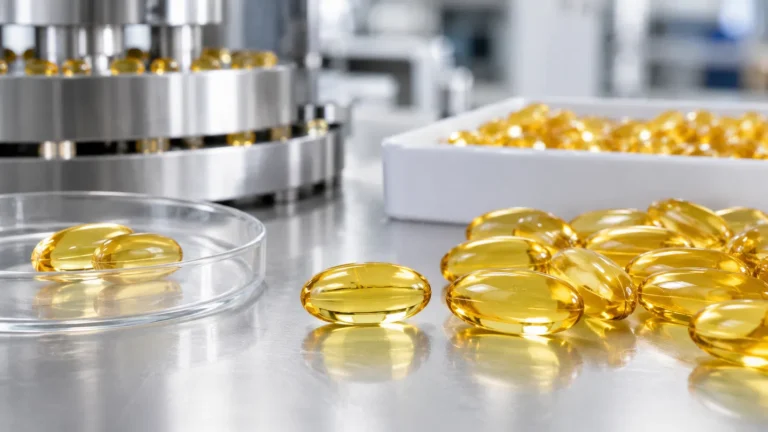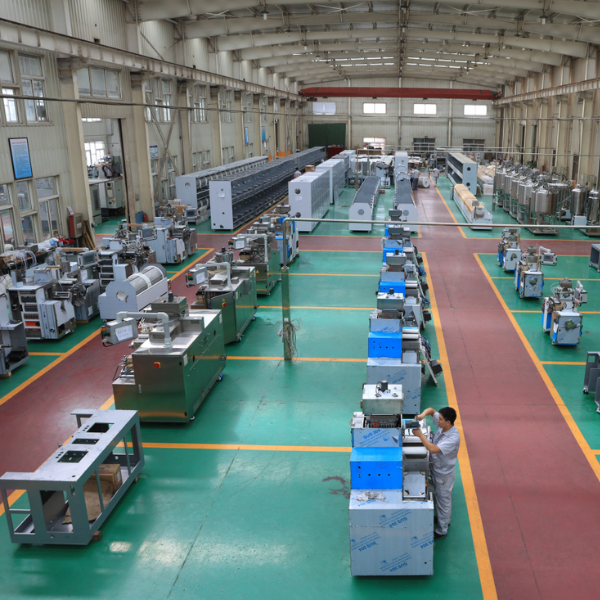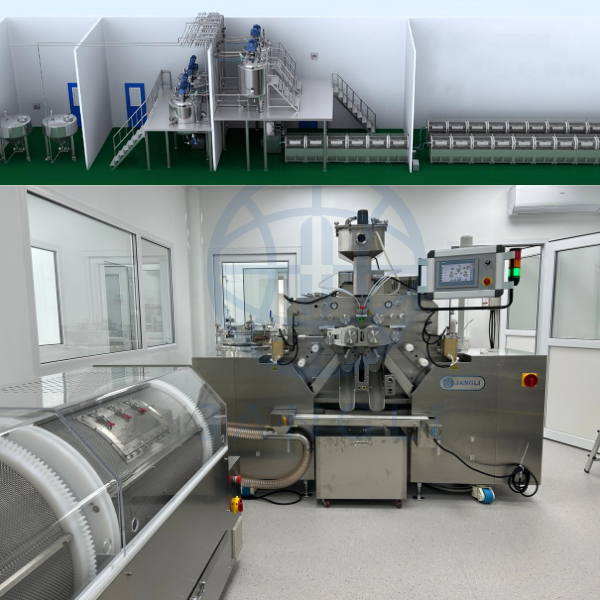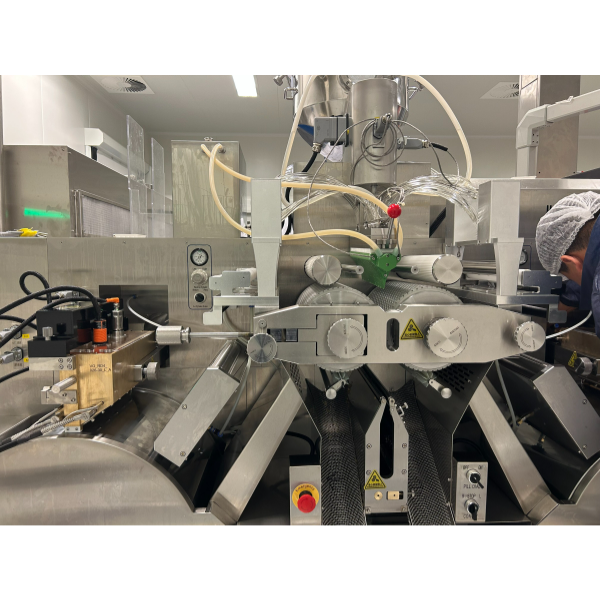
A softgel production line has seven equipment groups: gelatin preparation, medicine (fill) preparation, the encapsulation machine with its die rollers, drying, cleaning and inspection, packing, and the laboratory and utility support around them. The line only performs as well as its weakest stage, so each group must match your output, your shell and your fill. This guide goes through the line stage by stage and tells you what to check and what to send us when you plan one.
Key Takeaways
- Shell and fill are prepared separately. Gelatin preparation (the shell) and medicine preparation (the fill) are two different systems.
- Drying is part of the line, not an afterthought. Fresh capsules need a tumble dryer and then further drying.
- Balance the stages. Drying, inspection and packing must keep up with the encapsulation machine, or they become the bottleneck.
- Plan the room too. Space, power, compressed air, ventilation and room humidity are part of the project.
Starting a softgel business can feel risky. The market is large, but only some producers make high-quality capsules, and one reason is the equipment: the machines and parts in your line decide how well you perform. For an overview of the whole subject, read all about the softgel production line. This article is the equipment checklist.
This video introduces JANGLI as a softgel equipment supplier:
What Does a Softgel Production Line Include?
| Stage | Main equipment | What it does |
| 1. Gelatin preparation | Gelatin melting tank, gelatin service tank, vacuum system, filtration, agitators. See our gelatin preparation system. | Melts and holds the shell mass at the right temperature and viscosity |
| 2. Medicine (fill) preparation | Mixing tank, homogenizer or colloid mill, weighing. See our medicine preparation system. | Prepares the fill |
| 3. Encapsulation | Softgel encapsulation machine and die roller sets. See our softgel encapsulation machines. | Casts the ribbons, injects the fill, seals and cuts the capsules |
| 4. Drying | Tumble dryer, drying trays and trolleys. See our softgel drying system. | Shapes the capsules and removes moisture |
| 5. Cleaning and inspection | Washing machine, inspection and sorting machine. See our cleaning and inspection equipment. | Cleans the capsules and rejects defects |
| 6. Packing | Blister packing and other packing equipment. See our softgel packing system. | Packs the finished capsules |
| 7. Laboratory and support | Gelatin and moisture testing, utilities. See our lab instruments. | Checks quality and keeps the line running |
What Equipment Prepares the Gelatin?
Gelatin melting tank (gelatin reactor)
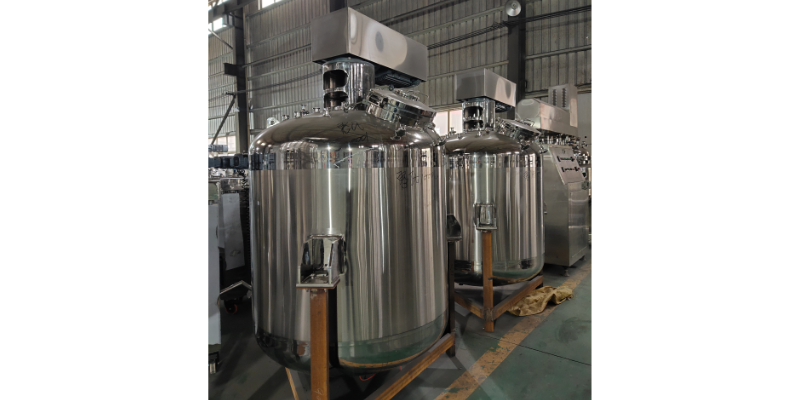
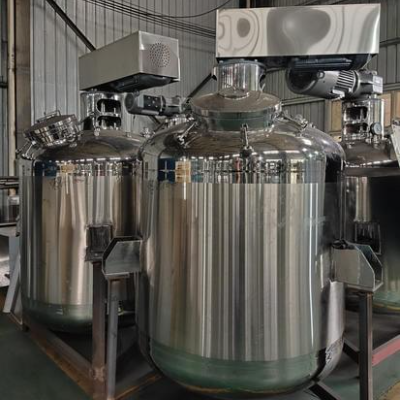
Gelatin is stored and shipped as granules. For encapsulation, the granules must be melted into a gelatin solution, which the machine then casts into a film (ribbon). The melting tank does this. It has three layers and a stirrer: the inner layer holds the gelatin, the jacket circulates hot water to heat the tank, and the outer layer is filled with insulation material, usually rock wool.
The inner layer withstands positive and negative pressure. Negative pressure removes the bubbles from the solution, which protects the quality of the liquid. Positive pressure discharges the melted gelatin. Continuous stirring keeps the solution uniform. Gelatin preparation is explained in our guide to gelatin melting and preparation. For plant-based shells, the melting tank needs a stronger agitator and glycerin or thermal oil heating instead of a hot water jacket. See tapioca starch softgel encapsulation.
Gelatin service tank
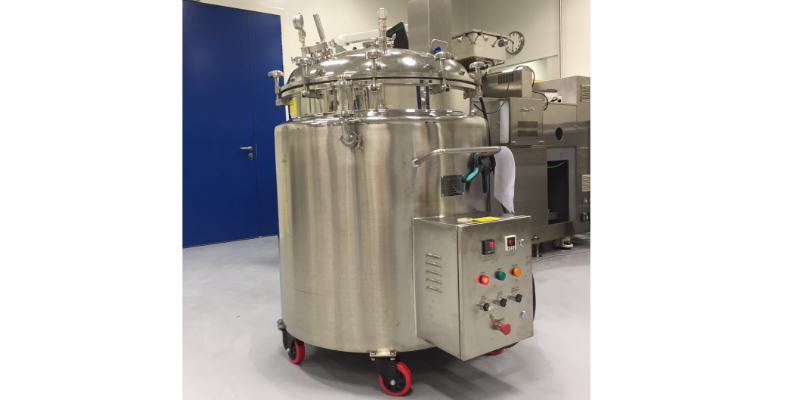
The service tank holds the gelatin at a steady temperature before it goes to the encapsulation machine. It has the same three-layer design: an inner tank, a heating jacket and outer insulation. It can bear positive pressure, which pushes the gelatin liquid to the gelatin spreader boxes on the machine.
Supporting parts
- Vacuum system. It removes air and bubbles from the gelatin. It usually consists of a vacuum pump and a vacuum condenser that collects bubbles and protects the pump.
- Heating and cooling. They keep each stage at the right temperature, so the gelatin melts properly and its viscosity stays stable for even cavity filling.
- Filtration. It removes particles and undissolved material from the gelatin solution, which helps prevent clogging and blockages.
- Agitators and mixers. They keep the mixture moving so heavier components do not settle and the mass stays uniform.
Our automatic gelatin melting system combines these functions: you add gelatin and water, and it heats, stirs and vacuums the mass and removes the bubbles automatically.
What Equipment Prepares the Fill?
The fill (the medicine or supplement inside the capsule) is prepared separately from the shell. A medicine mixing tank blends the active ingredients with oils, excipients, additives, colors and flavors into a uniform fill. Two further items help consistency:
| Equipment | What it does |
| Ingredient weighing and measuring | Measures component quantities accurately, which keeps the fill consistent between batches, reduces human error and supports record-keeping. |
| Homogenizer or colloid mill | Breaks larger particles into smaller ones and spreads ingredients with limited solubility evenly through the fill, which keeps suspensions and emulsions stable. |
See our medicine preparation system and our article on fish oil production and ingredient mixing.
What Does the Encapsulation Equipment Do?
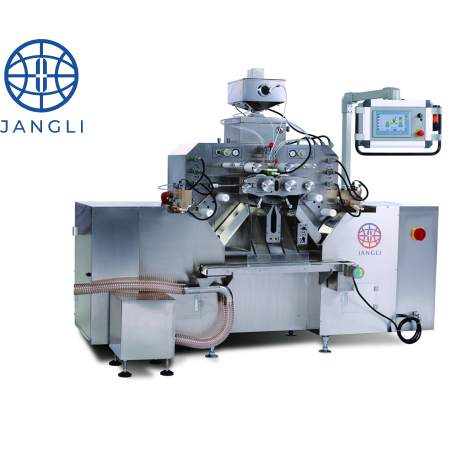
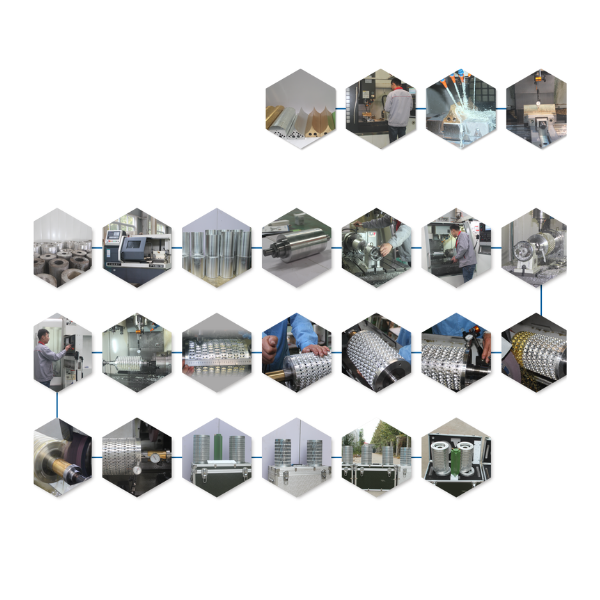
The encapsulation machine is the centre of the line. On our rotary die machines, the gelatin spreader boxes cast two ribbons, the injection wedge delivers the fill between them, and a pair of die rolls forms, seals and cuts the capsules. Regulated heating and cooling set the shell, so the capsules come out consistent and well shaped.
- Die roller sets decide capsule shape and size, and must be matched to your shell material. See our softgel die roller sets.
- Automation. Servo-driven machines align the die rollers and adjust injection timing from the PLC touchscreen, and have an automatic gelatin film thickness adjusting system that saves time and shell material.
- Cleaning and changeover. Look for features that make cleaning and format changes quick, so you lose less time between batches.
To choose the size, read our guide to softgel machines by capacity and our evaluation checklist.
What Drying Equipment Do You Need?
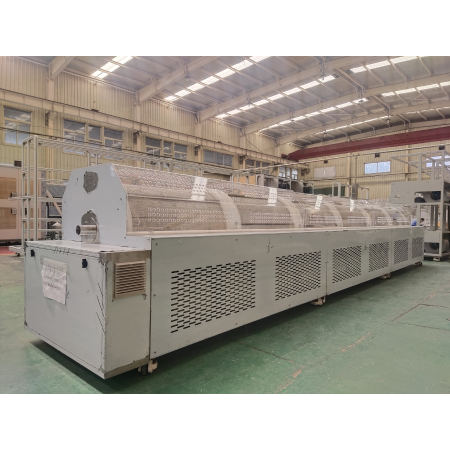
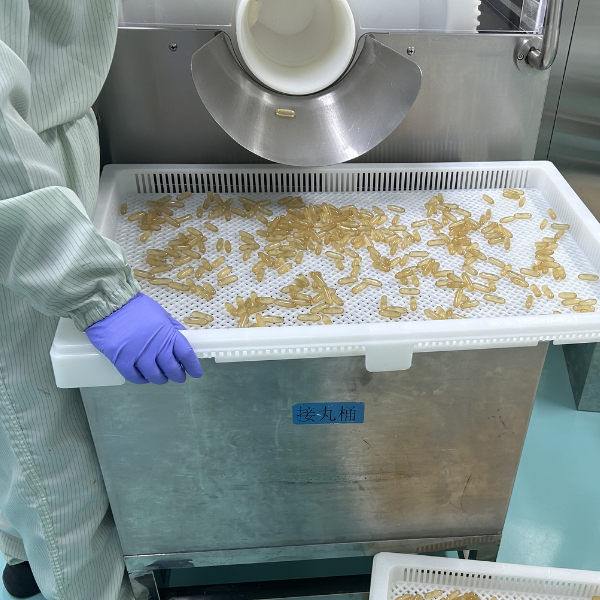
Freshly formed capsules are soft and wet. They go first into a tumble dryer for shaping and initial drying, then on to further drying, which removes moisture and hardens the shell. Good drying protects shelf life and keeps the shape of the capsule.
- JLGZ tumble dryer. It is used for shaping, initial pre-drying and final drying, with a PLC touchscreen, easy-to-remove baskets and four basket styles.
- 3-layer tumble dryer for starch softgels. Fresh starch capsules are fragile and cannot be squeezed or piled, so this dryer has smaller but longer baskets and passes the capsules quickly from one basket to the next.
- Intelligent tumble dryer. It works for gelatin and starch softgels, has a dehumidifier and air conditioner built in, and lets you set humidity and temperature for each basket on the PLC touchscreen, so you do not need to control the whole room.
- Drying trays and trolleys for further drying. See our softgel drying system range.
At high output, tumble dryers plus trays can limit the encapsulation machine. Some suppliers offer a continuous in-line drying system for oil-filled capsules so that capsules leave the dryer ready for inspection. Ask your supplier about drying capacity early.
What Inspection and Cleaning Equipment Do You Need?
After drying, capsules are cleaned and inspected. The JLJW-II automatic inspection and sorting machine identifies and rejects misshapen, spotted, bubbled, broken and out-of-size capsules. Four cameras above the photographing area handle detection, and servo motors drive the machine. Automatic sorting saves time and labor compared with manual checking. The published output of the JLJW-II is 80,000 to 150,000 capsules per hour. See our cleaning and inspection equipment.
What Packing Equipment Do You Need?
The packing equipment depends on your pack format: blister packs, bottles, strips, pouches or cartons.
- Blister packing. The DPB-250J blister packing machine packs softgels of various shapes, including oval, round, fish-shaped and oblong. It has a built-in French Celltech camera inspection unit, a vacuum cleaner and a mechanical hand, a PLC touchscreen, easy-to-change molds and an optional servo drive.
- Counting and filling, printing and labeling, cartoning. A full line also needs counting and filling for bottles, label and batch-code printing, and cartoning or case packing. Labeling gives product identification, traceability and regulatory information.
Tell us your pack format and we will advise on the packing stage. See our softgel packing system.
What Quality Control and Testing Equipment Do You Need?
Testing equipment mostly sits in your laboratory, not on the line. Typical items are:
- Gelatin bloom and viscosity testers. They check the gelatin’s gel strength and viscosity so quality stays consistent from batch to batch.
- Moisture analyzers. They measure the moisture of the capsules. Too much moisture shortens shelf life and raises the risk of microbial growth, while too little makes capsules brittle.
- Microbial testing. It detects mold, yeast and bacteria, so you can check that a batch meets your microbial limits.
- Disintegration and dissolution testing and HPLC. These analytical tools check how quickly the capsule opens and releases the fill, and the identity, concentration and purity of the active ingredient. They are not part of the encapsulation line, but a medicine producer usually needs them.
See our lab instruments.
What Utilities and Facility Support Does the Line Need?
- Power. A dependable supply with proper electrical connections, and backup power or voltage stabilization where needed.
- Water. The connections, temperature control and filtration for the heating and cooling circuits.
- Compressed air. Pneumatic parts such as valves and actuators need clean, regulated compressed air.
- Ventilation and humidity control. Room humidity affects leaking and drying. For tapioca starch softgels we recommend 20 to 26°C and relative humidity below 30% in the encapsulation room.
- Waste handling and safety. Systems for solid and liquid waste, plus emergency lighting, fire detection and security, and compliance with your local building, electrical and water rules.
Measure your workshop before you pick equipment. Different machines need different room sizes, and the tumble dryers and trays need space as well.
Which Documents and Procedures Do You Need?
| Document | Purpose |
| Standard operating procedures (SOPs) | Give step-by-step instructions for operating the machines, set the critical parameters (temperature, time, pressure and speed), and include safety rules. They guide new operators. For starch softgels we provide a standard SOP. |
| Batch records | Record each batch: materials, settings and results. They support quality control, traceability and troubleshooting. |
| Electronic batch records | Replace paper records with collected data, real-time monitoring of process parameters, an audit trail and trend reports. |
| Qualification documents (IQ, OQ, PQ) | Show that the equipment was installed correctly, operates as intended and performs in use. IQ/OQ/PQ documentation is available on request. |
GMP rules apply to your company as the manufacturer. Equipment helps you meet them but does not make you compliant on its own. Check what your own market requires.
How Do You Balance the Line?
Match the stages to the encapsulation machine. Every stage after the machine must handle its output, and the stages before it must supply enough gelatin and fill. A simple check: compare the rated output of each machine. For example, if an encapsulation machine runs at 200,000 capsules per hour, one inspection machine rated at 80,000 to 150,000 capsules per hour cannot keep up on its own, assuming the figures refer to the same capsule. You would plan more than one inspection machine, or run the encapsulation machine below its maximum.
Labor is part of the balance. See how we organize a 5-worker automated production line. For a lab or startup project, a smaller machine is a lower-risk start. Read our guide to the R&D veggie softgel making machine.
What Should You Send Us to Plan a Line?
- capsule shape and size;
- fill type and main ingredients;
- shell type, gelatin or plant-based;
- target output per hour or per day, now and in the near future;
- workshop size and available utilities;
- pack format and the markets you sell in, with any documents they require.
Conclusion
A reliable softgel line is a set of matched stages, from gelatin preparation to packing. We give you a quote, help with the documentation, and assist with installation once the equipment reaches your facility. Our equipment comes with a one-year warranty. Contact JANGLI to plan your line.
Frequently Asked Questions
What equipment do I need for a softgel production line?
You need gelatin preparation, medicine (fill) preparation, an encapsulation machine with die rollers, drying equipment, cleaning and inspection equipment, and packing equipment. Laboratory instruments and utilities support them.
Can I start with a small line?
Yes. A lab-scale machine with a small preparation and drying setup lets you test formulas and make samples before you invest in a full line. Send us your target output and we will advise on the smallest setup that fits.
Do I need a tumble dryer as well as drying trays?
Usually yes. Fresh capsules need shaping and initial drying in a tumble dryer, because they are soft and can stick or deform if left in a pile. Trays or further tumble drying then finish the job.
Is gelatin preparation different from fill preparation?
Yes. Gelatin preparation makes the shell mass in a melting tank and service tank. Fill preparation mixes the medicine or supplement in a separate tank. The two meet only at the encapsulation machine.
Must I buy all the equipment from one supplier?
No, but matching capacity and connections is easier with one supplier. We supply the whole line, from the gelatin preparation system to the packing machine.
What utilities does a softgel line need?
Electric power, water for heating and cooling, compressed air, ventilation with humidity control, and waste handling and safety systems. Room humidity matters most for drying and leakage.
Written by Wendy Yu, JANGLI. Last reviewed: [2026]. Specifications may change, so please confirm details with us before ordering.
Send us your capsule shape, fill and target output and we will recommend a model.