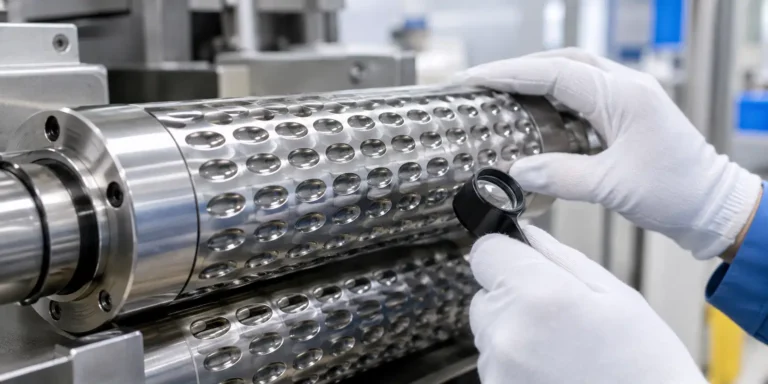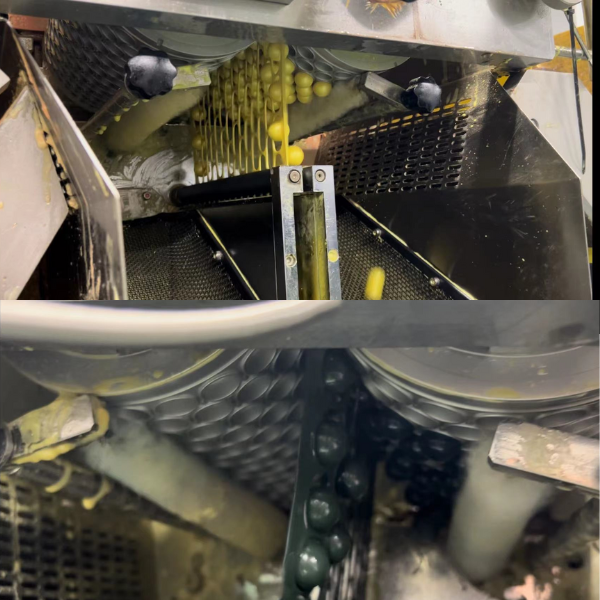
A paintball making machine is a rotary die softgel encapsulation machine set up to form, fill and seal round gelatin capsules filled with a water-soluble dye mixture. The same type of equipment that makes pharmaceutical softgels makes paintballs, with a ball-shaped die roller set and a fill designed for marking. This guide explains how paintballs are made, how the process works step by step, and the specifications of the JANGLI JL-250II and JL-15II paintball machines.
Key Takeaways
- Same technology: two gelatin ribbons are cast, the fill is injected between them, and a pair of die rolls forms and seals the ball.
- Key quality points: shell thickness and brittleness, a round shape, consistent fill weight, and a shell that stays stable with the fill.
- Two models: the JL-15II for small-scale production and the JL-250II for large-scale production.
Most people link softgel encapsulation machines with pharmaceuticals, followed by cosmetics and nutraceuticals. Paintball production is another use of the same technology. In the early days, paintballs were made by pharmaceutical companies because they already had the equipment.
What Is Paintball Production?
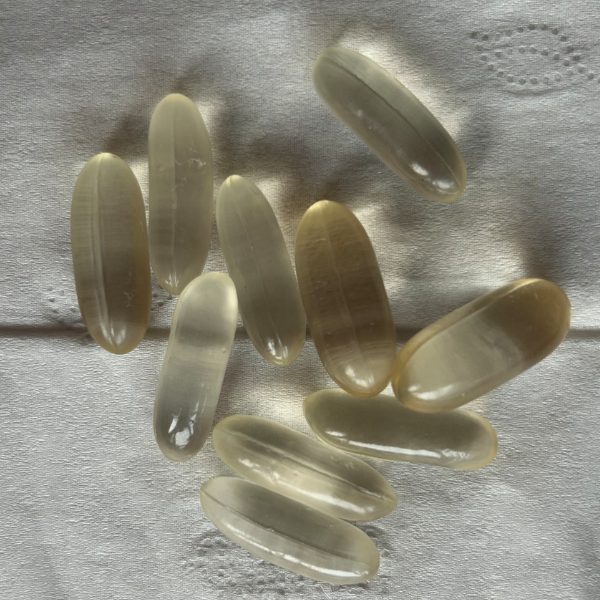
A Paintball Making Machine is a spherical gelatin capsule filled with dye that bursts on impact. The shell is typically gelatin, although some makers use a biodegradable polymer. The fill is usually a mixture of polyethylene glycol (PEG), dye and other additives, and it is marketed as non-toxic, water-soluble and washable. Paintballs are fired from a marker powered by compressed gas.
The marker came first. Charles Nelson of the Nelson Paint Company developed a paint marker for foresters and cattle ranchers, and the first paintball game was played in 1981 in New Hampshire. Early paintballs were made by a pharmaceutical company that already had the encapsulation equipment, and softgel machines are still the standard way to make them.
The table lists the main parts of a paintball machine and what each does.
| Machine part | Function |
| PLC touchscreen | Lets the operator control the die rolls, the fill pump, the casting drums and other parts, view the process and set the output speed. |
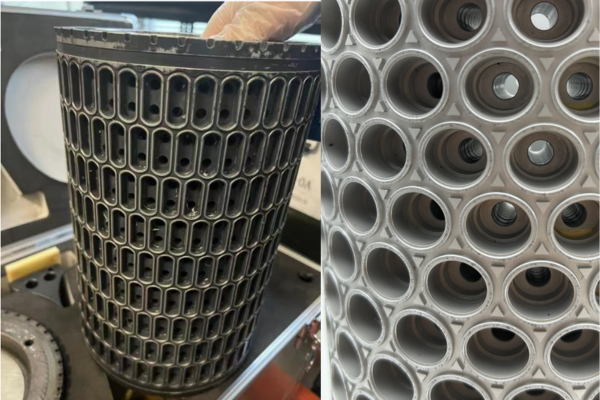
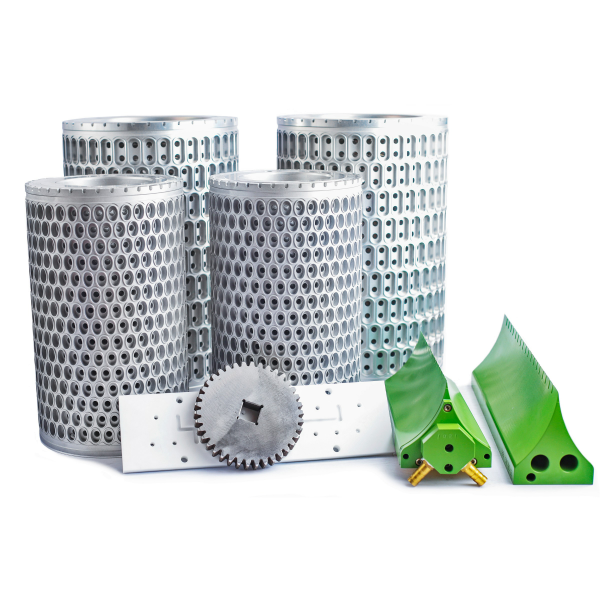
| Die rolls | Form the balls (for example, 0.68 inch caliber) and determine their size, roundness and seam. |
| Hopper | Holds the fill material. A hot water jacket keeps the fill at a steady temperature. |
| Ribbon lubrication and drive unit | An oil roll system on the die rolls lubricates the ribbons with paraffin liquid through a lubrication pump. |
| Spreader box | Receives the molten gelatin mass from the holding tank and spreads it onto the casting drums to form the ribbons. Its size is matched to the die roll. |
What Should You Consider When Choosing a Paintball Machine?
Most softgel encapsulation machines have a PLC controller that manages the process from start to finish. The operator enters the settings at the start of a run. Safety systems cannot prevent every accident, so use the machines with care and have professionals install them.
- Die roll size: usually from 80×100 mm to 150×250 mm. The size can be customized.
- Output per hour: a standard machine makes about 20,000 paintballs per hour at nominal speed and up to 100,000 at maximum speed. Our specific models are listed below.
- Power: a standard machine runs on a 1.5 kW three-phase motor, and a machine built to order can use more power, up to 16 kW.
- Filling accuracy: a standard model has a filling accuracy of 1.5-2.0%. Accurate filling keeps ball weight uniform.
This video shows one of our paintball-making machines in operation:
How Are Paintballs Made on a Softgel Machine?
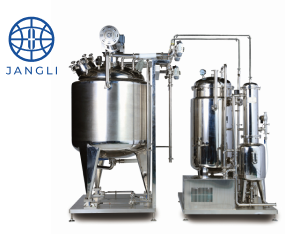
Wear gloves, goggles, a mask, protective clothing and covered shoes when making paintballs. The process has five steps.
Step 1: Weigh and Melt the Ingredients
Weigh the ingredients for the shell and for the fill, and add them to the melting tank. The shell mass is gelatin, a plasticizer such as glycerin or sorbitol, water and color. The fill is typically PEG, water-based dye and additives. PEG also lowers the freezing point of the fill, which helps paintballs in cold weather.
Melting and mixing takes about 30 minutes. One published setting from our process is melting at 248°F (120°C) [[VERIFY: state which material is melted at this temperature]]. Stop mixing once the ingredients have melted, then use a vacuum pump to remove air bubbles. Temperatures and times depend on your formulas.
Step 2: Transfer to the Holding Tank
Pre-heat the holding tank to 185°F (85°C) while melting continues, then move the melted mass into it. Connect the holding tank to the encapsulator’s spreader box with pipes, switch on the encapsulator and set it up on the PLC touchscreen. Compressed air pushes the gelatin mass from the holding tank to the spreader box. Set up the injection wedge, then start encapsulation. The output rate depends on the speed you enter.
Step 3: Form the Paintball
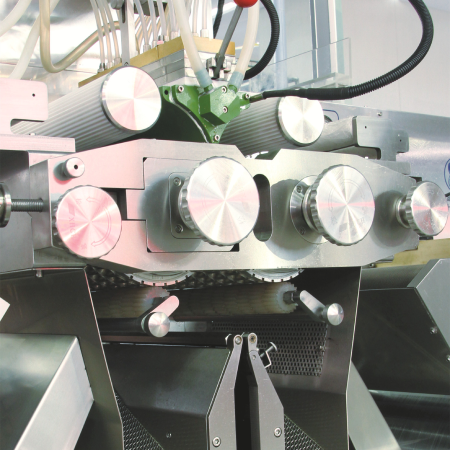
Two gelatin ribbons are carried by two counter-rotating drums. The pockets in the die rolls line up to form the ball shell. The wedge injects the right amount of fill between the ribbons just before the die rolls cut and seal them, which closes the paintball.
Step 4: Dry the Paintballs
A tumble dryer gently turns the balls while the gelatin is still warm, so they cool, firm up and dry evenly. They are then moved to racks to air-dry. Drying time depends on the time in the tumbler and the gelatin concentration. Keep the drying area at a relative humidity of 20-30% at 75.2°F (24°C).
Step 5: Inspect and Pack
Inspect the dried paintballs visually for defects, and use drop tests to check how brittle the shells are. Brittleness matters: the shell must survive the marker but break on impact. Good paintballs go into the hopper of the packing machine, which collects them and packs them. Each container holds 2,410 to 2,510 paintballs.
This video from Insider shows how paintballs are made:
What Affects Paintball Quality?
Four points decide whether a batch is good:
- Shell and fill compatibility. Some low-cost fills have attacked the gelatin shell and made paintballs fall apart inside their packaging, according to patent literature. Test every new fill and shell pair, and store finished balls in a sealed container if the fill contains water.
- Shell thickness and brittleness. Too thick and the ball will not break, too thin and it will break in the marker.
- Roundness and size. These come from the die roll design, so check the die rolls for wear.
- Storage. Heat, cold and sunlight can make the shell brittle or separate the fill, so keep stock cool and out of direct light.
Which Paintball Machine Should You Choose?
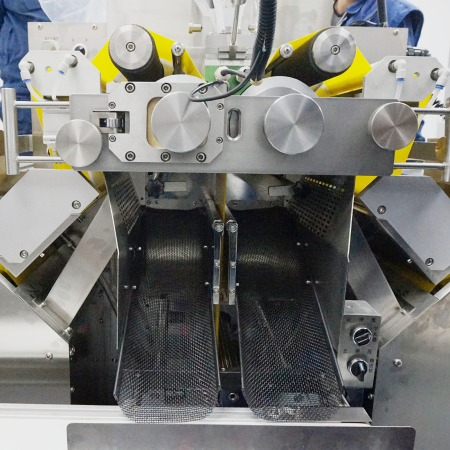
Paintball machines are based on softgel encapsulation machines. JANGLI offers two models.
JL-250II Paintball Making Machine
The JL-250II suits large-scale production and makes about 60,000 balls per hour. Its die rolls are 150×250 mm. It has an independent chiller that cools the gelatin casting drums instead of relying on an air conditioner. See also the JL-250II user guide.
| JL-250II Paintball Making Machine Specifications | |
| Die roll size | 150×250 mm |
| Power consumption | 19 kW |
| Rotating speed | 0-5 rpm (step-less speed change) |
| Output | 60,000 balls/hour (cal 0.68″) |
| Weight | 1,000 kg |
| Dimensions | 2050 x 1200 x 1850 (h) mm |
JL-15II Paintball Making Machine
The JL-15II is our smallest paintball machine and suits small-scale production, with an output of 8,000 balls per hour. Its fill injection pump has only four plungers, and an HMI control system with a PLC touchscreen keeps operation simple.
| JL-15II Paintball Making Machine Specifications | |
| Die roll size | 50×150 mm |
| Power consumption | 2 kW |
| Rotating speed | 0-3.5 rpm (stepless speed change) |
| Output | 8,000 balls/hour (0.68″) |
| Weight | 600 kg |
| Dimensions | 1700 x 810 x 1750 (h) mm |
What Are the Advantages of Softgel Machines for Paintball Production?
- Lower unit cost at volume. An automatic machine produces large numbers of paintballs with less manual labor. Our smallest model makes 8,000 balls per hour.
- Uniform fills. Controlled injection keeps ball weight consistent, which supports consistent performance in the field.
- Consistent quality. Automatic feeding, filling, sealing and ejection reduce manual handling and human error.
Conclusion
Softgel technology is the standard way to make paintballs. Choose the machine by your output target: the JL-15II makes 8,000 balls per hour and the JL-250II makes 60,000 balls per hour. Check that your shell and fill are compatible, and control shell brittleness and roundness. Contact JANGLI for advice on the right model.
Frequently Asked Questions
What are paintballs made of?
A paintball has two parts: a thin gelatin shell and a fill. The fill is usually polyethylene glycol, dye and other additives. The materials are marketed as non-toxic, water-soluble and biodegradable, but check the claims against your local rules and your own formula before using them in marketing.
How are paintballs made?
The shell mass and fill are prepared, two gelatin ribbons are cast, and the fill is injected between them. Die rolls cut and seal the ribbons into balls, which are then dried, inspected and packed.
How can I order a paintball machine?
Contact us with the machine you want, or tell us your requirements and we will advise on a model. We give you a quote and help with the documentation process, and we assist with installation once the machine reaches your facility. Our machines come with a one-year warranty.
Can a paintball machine connect to a production line?
Yes. You can connect supporting equipment such as a gelatin mixing tank, vacuum pump, connecting pipes, conveyor belt, tumble dryer and cooling drum to form a production line.
How do I maintain a paintball machine?
Proper maintenance extends the life of the machine and protects your staff:
Operators should wear protective gear, including safety goggles and safety shoes.
Only qualified personnel should maintain the machines. Maintenance frequency depends on use, and weekly lubrication and greasing of moving parts is recommended.
Both operators and maintenance staff must follow all safety regulations.
Check the electrical earthing of the equipment regularly.
Staff must not operate the machines after drinking alcohol or taking sleep-inducing medication.
Which paintball machine suits my output?
The JL-15II (8,000 balls per hour) suits small-scale production and trials. The JL-250II (60,000 balls per hour) suits large-scale production. Send us your target output and we will recommend a model.
Written by Wendy Yu, JANGLI. Last reviewed: [2026]. Specifications may change, so please confirm details with us before ordering.
Send us your target output and ball size, and we will recommend a model.