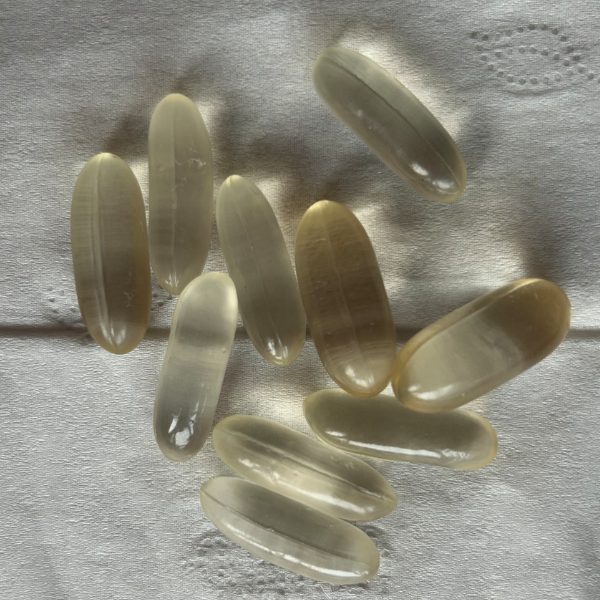
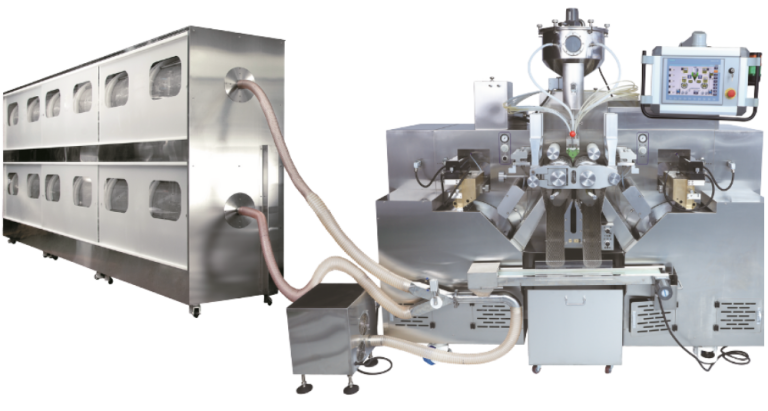
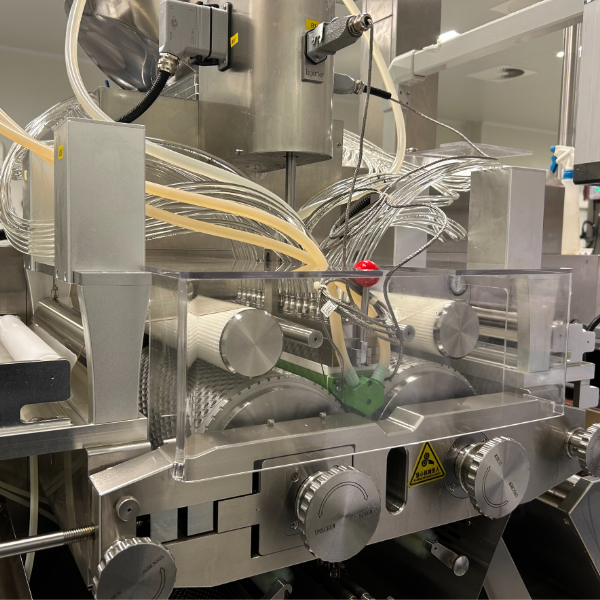
Lecithin softgel tend to leak because lecithin absorbs water from the gelatin shell, which can weaken the seam, and the leaks often appear after long storage. In our experience, four changes reduce leakage: adjust the gelatin and its preparation, make the ribbon slightly thicker, use a die roller and injection wedge designed for lecithin, and dry the capsules at a controlled, slightly higher humidity. This article explains the cause and then gives the settings we recommend.
Key Takeaways
- Cause: lecithin is hygroscopic and draws water out of the gelatin shell. Leaks mainly start at the upper seam.
- Shell and ribbon: bone gelatin of 180 or 200 bloom, a higher gelatin ratio, and a ribbon of 0.8 to 0.9 mm.
- Tooling: a die roller with a larger upper cutting surface and a wider injection wedge with direct injection.
- Drying: a gentle tumbler pre-dry, then controlled drying at slightly higher humidity. Lower humidity is not better.
Lecithin is a mixture of phospholipids and other fatty substances found in animal and plant tissue and in egg yolk, and it is widely sold as a food supplement. Soy lecithin is a common fill. What you may say about a lecithin product’s health effects depends on the rules in your market, so this article deals only with production.
Why Do Lecithin Softgels Leak?
On a softgel machine, the lecithin is injected into a gelatin ribbon. The ribbon contains water, and lecithin absorbs water readily. The lecithin therefore draws some water out of the shell, and this can lead to leaking capsules after long-term storage. In our observation, lecithin softgels mainly leak at the upper seam. A capsule with a low seam rate is the one most likely to leak there.
This is a known industry problem. In a survey of 20 softgel manufacturers, all of them had experienced leaking softgels, 85% saw a link between leaks and the fill, and lecithin was named among the most challenging fills. Most leakers were found during or after drying, in tumblers and on trays. Fill and shell also exchange water: hygroscopic fill ingredients can pull moisture from the shell, which can eventually lead to shell failure. So the answer is to manage the whole system, from gelatin to drying.
What Changes Reduce Lecithin Softgel Leakage?
| Stage | Ordinary softgels | Our recommendation for lecithin |
| Gelatin | Water : gelatin powder at 1 : 1 | Bone gelatin of 180 or 200 bloom, melted at around 65°C, with water : gelatin at 1 : 1.1 or 1 : 1.2 |
| Gelatin holding | – | Send the gelatin to the machine soon. Do not leave it in the service tank overnight |
| Ribbon thickness | 0.7 to 0.8 mm | 0.8 to 0.9 mm |
| Die roller | Standard cutting surface | Larger upper cutting surface |
| Injection wedge | Standard | Wider and larger wedge with direct injection |
| Tumbler pre-drying | – | 15 to 20 rpm, no more than 50% basket load, at least 40 minutes |
| Drying | – | Slightly higher humidity with a staged program (see below) |
1. How Should You Adjust the Gelatin and Its Preparation?
- Choose good gelatin to improve the seam rate. We recommend bone gelatin with a bloom of 180 or 200, melted at around 65°C. Also follow your gelatin manufacturer’s suggestions. See our guide to gelatin melting and preparation.
- Adjust the recipe slightly. The standard gelatin formula is 1 part water to 1 part gelatin powder (1 : 1). For lecithin we suggest a little more gelatin, 1 : 1.1 or 1 : 1.2 water to gelatin. Adapt the ratio to your factory’s own process.
- Do not hold the gelatin too long. After the gelatin solution is made and moved to the gelatin service tank, send it to the softgel machine as soon as possible. Do not keep it in the service tank for a long time or overnight.
2. How Should You Adjust Encapsulation?
Ribbon thickness
For ordinary softgels the ribbon is kept at 0.7 to 0.8 mm. For lecithin softgels we recommend 0.8 to 0.9 mm. A thicker ribbon helps improve the seam rate.
Die roller design
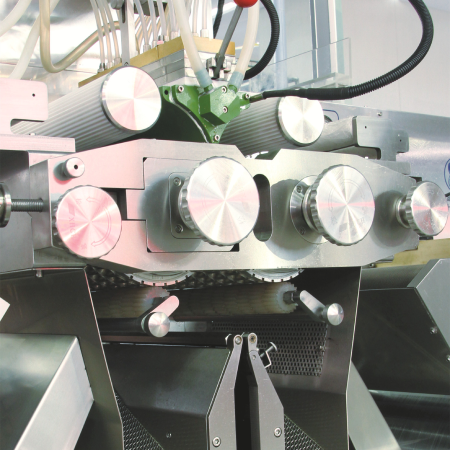
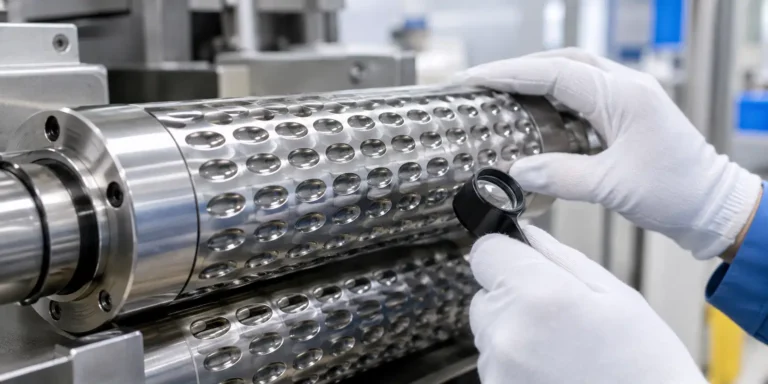
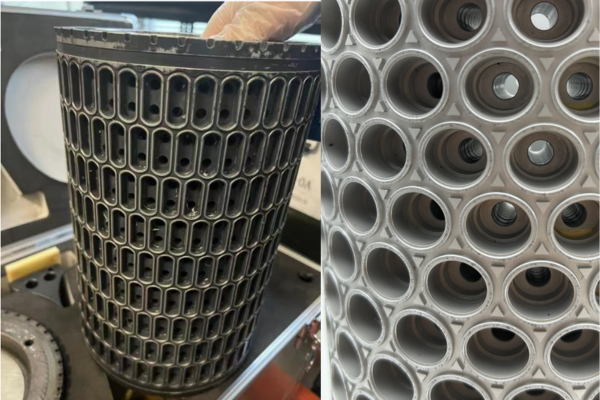
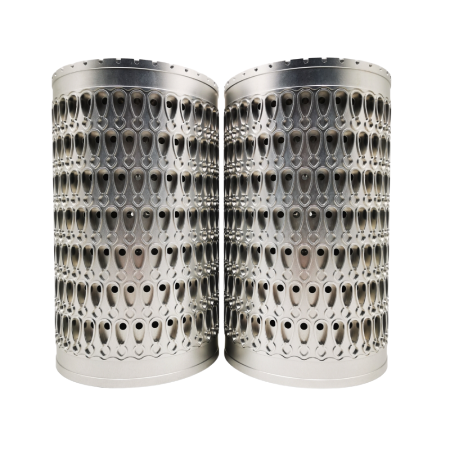
To solve lecithin leakage, JANGLI designed a special die roller with a larger upper cutting surface, shown below. Because lecithin softgels mainly leak at the upper seam, we redesigned the cutting area. A larger upper cutting area fixes the ribbon better and improves the seam rate. For more on die roller design, read our die roller guide and browse our softgel die roller sets.
Injection wedge
The temperature of the injection wedge (segment) strongly affects the seam rate. For lecithin we designed a wider and larger wedge, which heats up more evenly and so improves the seam rate. We also recommend using the direct injection method with this wedge.
Pre-drying in the tumbler
After encapsulation, the capsules are pre-dried in a shaping tumble dryer. Do not run the tumbler too fast: 15 to 20 rpm is enough. Do not load the basket to more than 50% of its capacity, which prevents the capsules from pressing on each other and leaking. Set the drying time a little longer than for ordinary softgels, at least 40 minutes.
3. How Should You Dry Lecithin Softgels?
Lecithin softgels need a specific temperature and humidity during drying, but lower humidity is not always better. If the humidity is too low, the surface of the capsule dries first and the inside does not dry completely, which increases the hygroscopicity of the contents. We suggest letting the inside and outside dry together, at slightly higher humidity. This helps prevent leaks caused by the hygroscopic fill during later storage.
For this, we recommend the JLGZ70-I intelligent tumble dryer. It has a built-in dehumidifier, and the temperature and humidity of each drying basket can be controlled separately. The drying program can be set so the process runs automatically. Based on our current experience and customer feedback, the humidity program is:
| Stage | Humidity setting | Time |
| First | 26% | 4 hours |
| Second | 24% | 4 hours |
| Third | 22% | 4 hours |
| Final | 20% | Until the capsules meet your standard |
Treat these as a starting point and confirm them with your own trial batches, because the best program depends on your fill, shell and climate.
How Do You Check That the Fix Works?
- Run a small trial batch and test for leaks before you scale up.
- Check the seam on sample capsules after encapsulation and again after drying.
- Keep samples in storage and check them again, because lecithin leaks can appear after long-term storage.
- Record the settings and results of every trial.
Many manufacturers accept a small share of leakers. In the survey above, most set limits between one and five percent. Set your own limit in your quality system. If leaks continue, also check the die roller condition and alignment. See our guides to die roller inspection and die roller alignment and injection timing.
What Should You Send Us?
- your lecithin fill specification, including its water content and viscosity;
- the capsule shape and size;
- the gelatin you use and your current recipe;
- your machine model and die roller dimensions, and your target output.
Conclusion
Many manufacturers see leakage in large-scale lecithin softgel production. We worked on it with softgel manufacturers and arrived at four changes: the gelatin and its preparation, the encapsulation settings, the die roller and wedge, and the drying program. The JLGZ70-I intelligent tumble dryer supports the drying program. Contact JANGLI to discuss your lecithin softgel project.
Frequently Asked Questions
Why do lecithin softgels leak?
Lecithin is hygroscopic and absorbs water from the gelatin shell. This can weaken the seam, and leaks often show up after long storage, mainly at the upper seam.
Which gelatin is best for lecithin softgels?
We recommend bone gelatin with a bloom of 180 or 200, melted at around 65°C, with a slightly higher gelatin ratio (1 : 1.1 or 1 : 1.2 water to gelatin). Follow your gelatin manufacturer’s advice and test it with your fill.
How thick should the ribbon be for lecithin?
We recommend 0.8 to 0.9 mm, compared with 0.7 to 0.8 mm for ordinary softgels. A thicker ribbon helps improve the seam rate.
What die roller and wedge changes help?
A die roller with a larger upper cutting surface, because lecithin softgels mainly leak at the upper seam, and a wider, larger injection wedge with direct injection so the wedge heats evenly.
Why is lower humidity not better when drying lecithin softgels?
At very low humidity the surface dries first and the inside stays wet, which raises the hygroscopicity of the contents. Slightly higher humidity lets the inside and outside dry together.
What tumbler settings do you recommend for pre-drying?
A speed of 15 to 20 rpm, a basket load of no more than 50% of capacity and a drying time of at least 40 minutes.
Written by Wendy Yu, JANGLI. Last reviewed: [2026]. Specifications may change, so please confirm details with us before ordering.
Send us your fill, capsule shape and target output and we will recommend a solution.