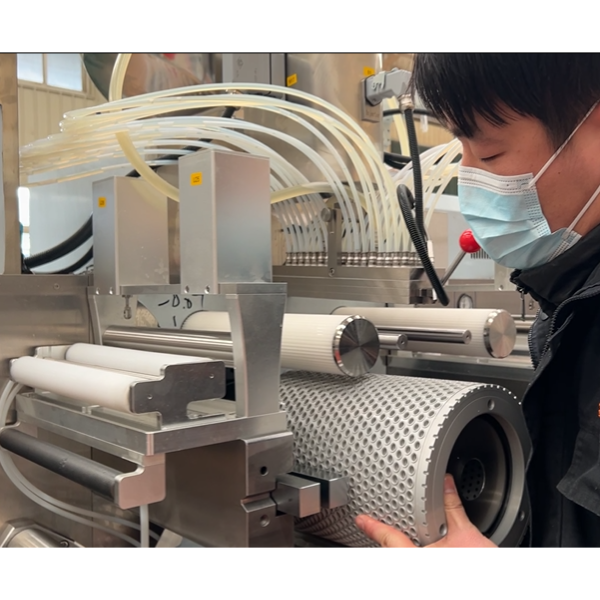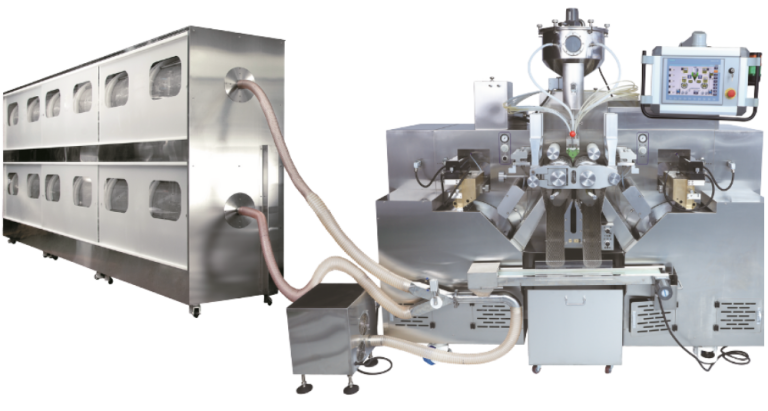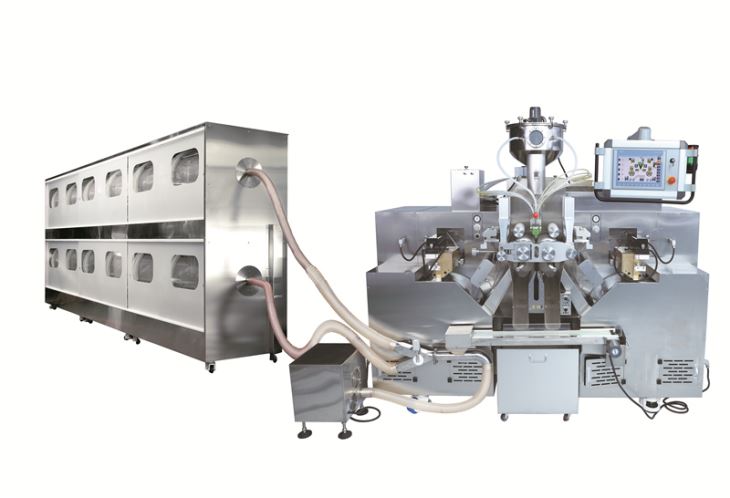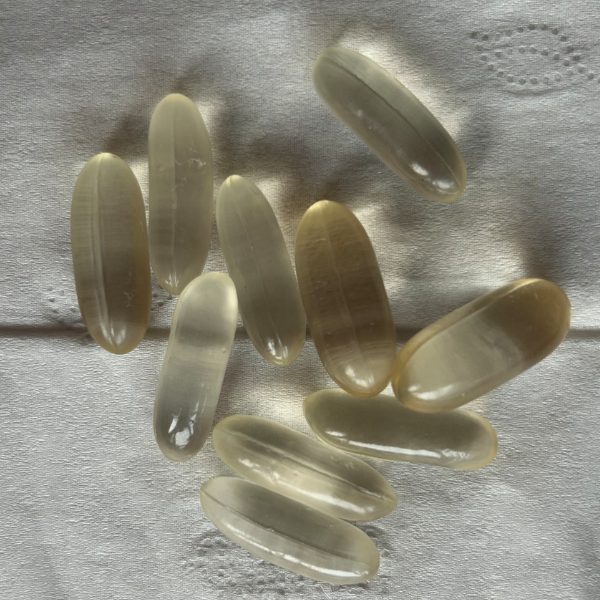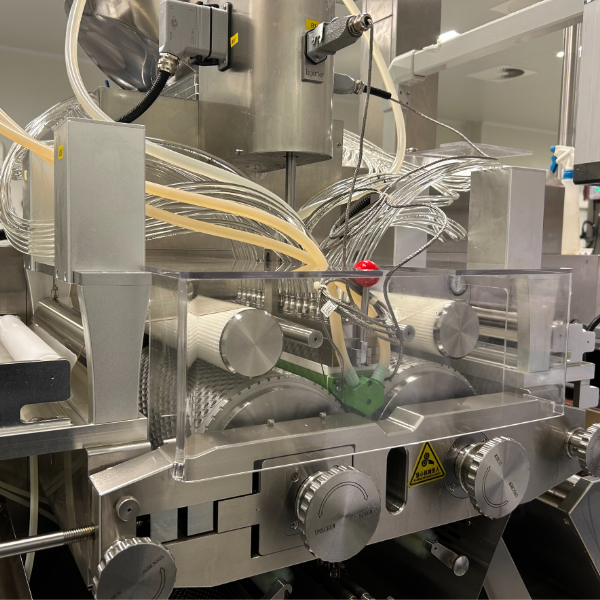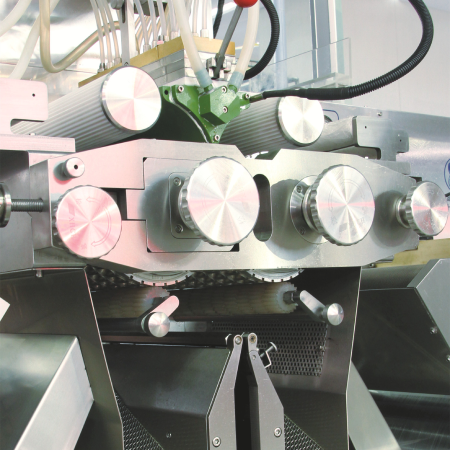
The JL-250III is JANGLI’s servo softgel machine: four servo motors drive the die roller axes, the medicine pump plungers and the reversing plate, so die roller alignment, filling volume and injection timing are set from the PLC touch screen and the machine runs at up to 8 RPM. It also has an automatic gelatin thickness adjusting (AGT) system accurate to ±0.02 mm, micro lubrication, hot water heating, NSK casting drum bearings, and Siemens or ABB electrical components with a 21 CFR Part 11 compliant HMI.
This page explains the main features of the JL-250III softgel machine one by one, for manufacturers who are comparing servo softgel encapsulation machines. To see how this machine fits into a complete labor-saving line, read How to Save Labor in Softgel Production.
JL-250III Servo Softgel Machine at a Glance
| Feature | JL-250III specification |
|---|---|
| Drive system | 4 servo motors: 2 for the die roller main axes (one per axis), 1 for the medicine pump plungers, 1 for the medicine pump reversing plate |
| Running speed | Up to 8 RPM; regular running speed 5–6 RPM |
| Die roller alignment | Automatic, monitored in real time; the machine shuts down automatically if alignment is poor |
| Filling volume | Target volume entered on the PLC touch screen and adjusted automatically |
| Injection timing | Adjusted automatically from the PLC touch screen |
| Gelatin thickness control | AGT system with 4 physical sensors and 2 lifting motors on the spreader boxes; accuracy within ±0.02 mm; copper spreader boxes |
| Lubrication | Precision metering oil pump for micro lubrication; capsules need no further cleaning or polishing after drying |
| Heating | Hot water circulation heating for the die roller wedge; heating layer on the medicine hopper filled with water or oil |
| Medicine hopper | Rounded, no sanitary dead corners; closed design with C clamp for nitrogen filling |
| Casting drums | Japanese NSK bearings; run-out below 0.05 mm; rear air blower fans with a curved air tunnel |
| Electrical and HMI | Siemens or ABB components and HMI; 21 CFR Part 11 compliance; software modification available; whole production process can be monitored |
Servo vs Gear-Driven Softgel Machine: What Changes
| Item | Traditional gear-driven machine | JL-250III servo machine |
|---|---|---|
| Die roller alignment | Two operators: one at the back moves the gear, one at the front watches the die roller position | One click on the alignment button; the machine aligns itself and monitors alignment in real time |
| Filling volume adjustment | Manual knob; at least two operators adjust and weigh capsules repeatedly | Enter the target volume on the touch screen; adjusted automatically |
| Injection timing | Gear-driven cam | Servo motor drives the reversing plate directly; adjusted from the touch screen |
| Vibration and speed | Gear transmission vibration limits stable speed | Vibration greatly reduced; runs faster and more stably, up to 8 RPM |
Servo Motor Driving System: 4 Servo Motors on the JL-250III
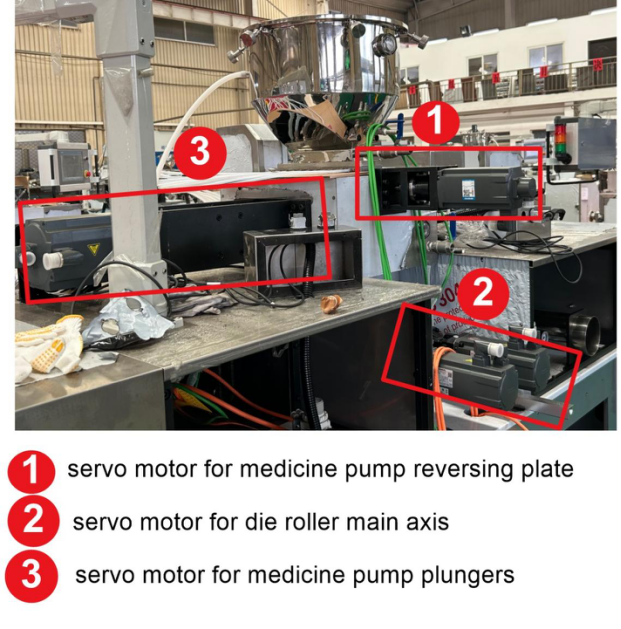
In total, 4 servo motors are used on the JL-250III softgel machine: 2 for the softgel die roller main axes, 1 for the medicine pump plungers and 1 for the medicine pump reversing plate.
Servo Motor for the Medicine Pump Reversing Plate (Injection Timing)
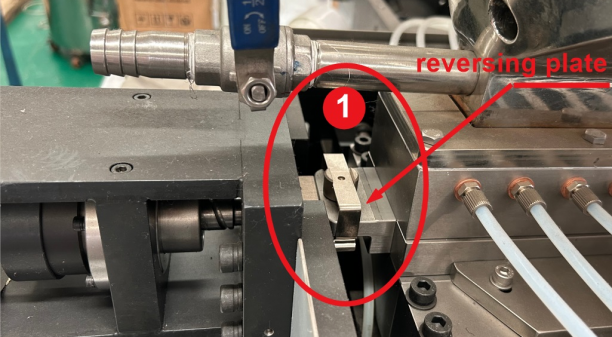
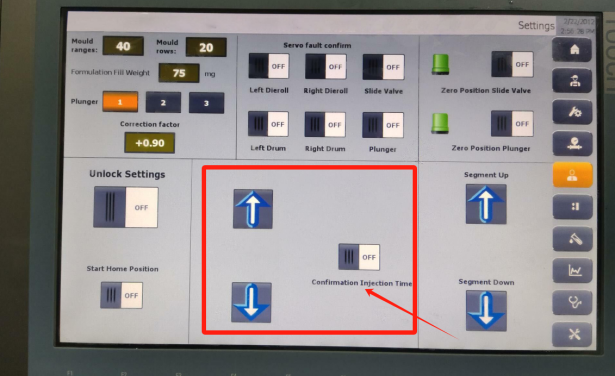
Instead of using a gear to drive a cam connected to the medicine pump, we drive the reversing plate directly with a servo motor. The operator just presses the button on the PLC touch screen and the pump injection timing is adjusted automatically.
Servo Motors for the Die Roller Main Axis (Speed and Automatic Alignment)
One servo motor drives each die roller main axis. This gives three benefits:
- Faster, more stable running. The vibration caused by traditional gear transmission is greatly reduced. The highest running speed can reach 8 RPM and the regular running speed is 5–6 RPM, which increases production capacity significantly.
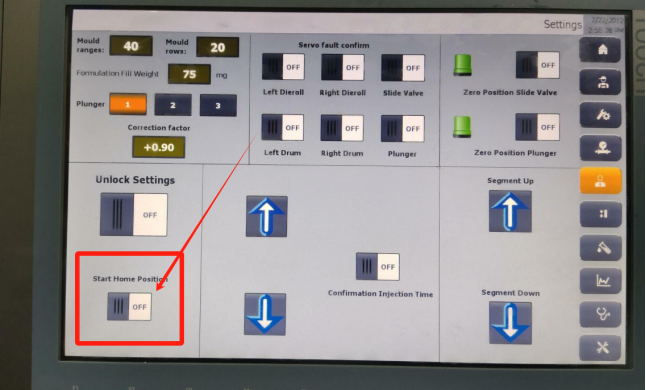
- Automatic die roller alignment. The softgel die roller alignment is done automatically, with no manual adjustment.
- Protection for the die rollers. The operator can monitor the alignment in real time. If the alignment is not good, the machine detects it immediately and shuts down automatically, which protects the die rollers. See our die roller maintenance guide for the damage that poor alignment causes.
Watch the servo softgel machine running at 8 RPM:
Servo Motor for the Medicine Pump Plungers (Automatic Filling Volume)
A servo motor drives the medicine pump plungers directly, so that:
- The filling volume adjustment is more accurate.
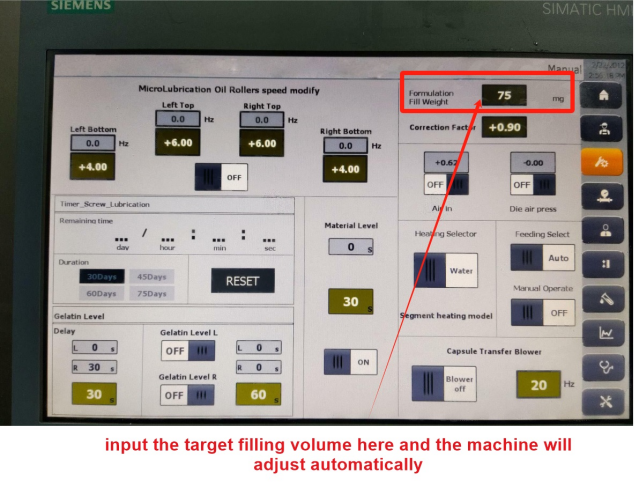
- More importantly, the filling volume is adjusted automatically: the operator just inputs the target filling volume on the PLC touch screen.
Automatic Gelatin Thickness Control (AGT System) for Softgel Machines
The automatic gelatin thickness adjusting system (AGT system) consists of four physical sensors (two on each side) and two lifting motors installed on the spreader boxes (one on each side).
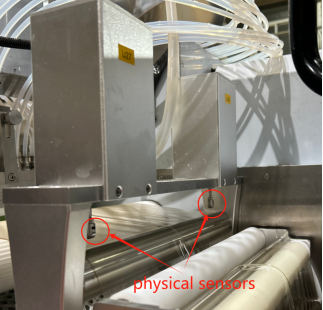
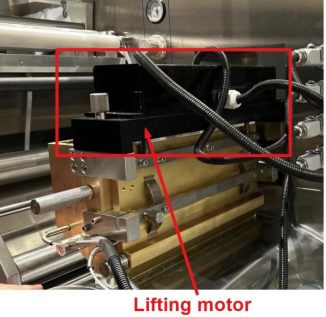
- Physical sensors: they have higher sensitivity and, most importantly, work well on both transparent and colored gelatin film. Laser sensors, which are used on some other softgel machines such as CHANGSUNG and SKY, are less suited to this.
- Copper spreader boxes: we use copper instead of stainless steel, which gives better thermal conductivity and more uniform temperature.
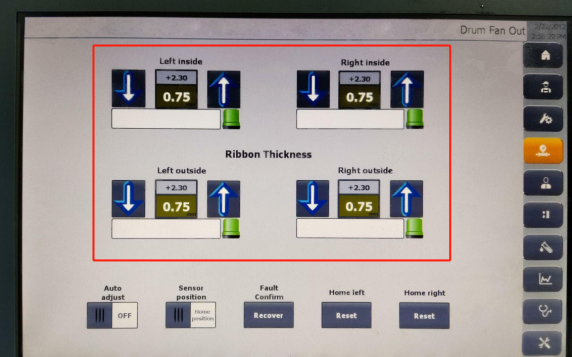
- Automatic adjustment: the operator just inputs the target film thickness on the touch screen and the gelatin film thickness is adjusted automatically, which saves a lot of raw material and production time.
- Accuracy: within ±0.02 mm.
Micro Lubrication System for the Gelatin Ribbon
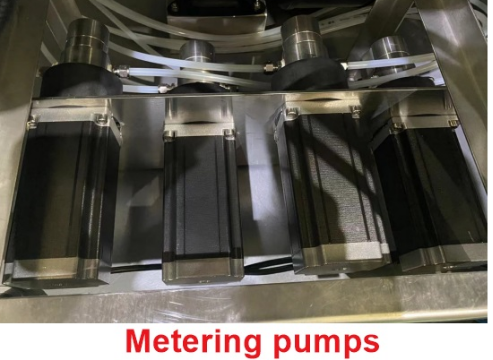
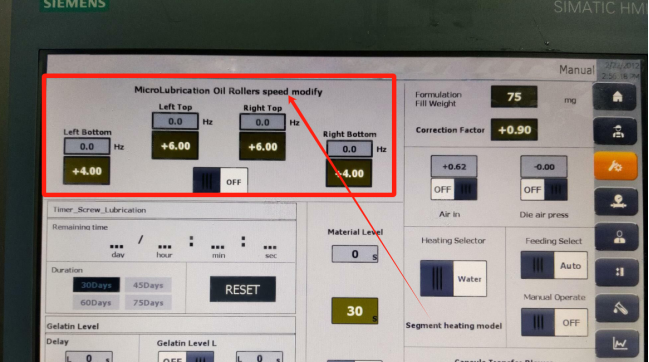
The lubrication system uses a precision metering oil pump. The operator inputs the target oil flow on the PLC touch screen and the oil volume is adjusted automatically and controlled precisely. This is true “micro lubrication” of the gelatin ribbon, and the capsules need no further cleaning or polishing after they are completely dried.
Water Heating System: Die Roller Wedge and Medicine Hopper
Hot Water Heating for the Die Roller Wedge
We use hot water circulation heating for the die roller wedge (segment), so the temperature is more accurate and stable.
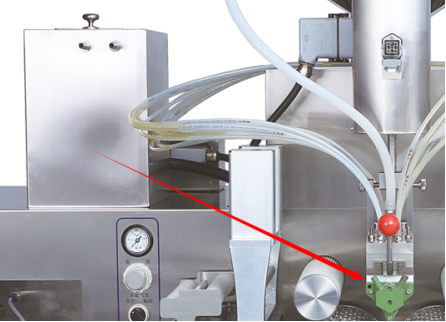
Medicine Hopper: Heated, Hygienic and Nitrogen-Ready
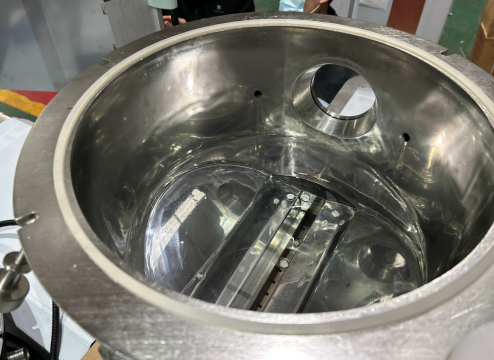
- Hygienic design: the hopper is rounded and the internal welds are carefully processed, so there are no sanitary dead corners.
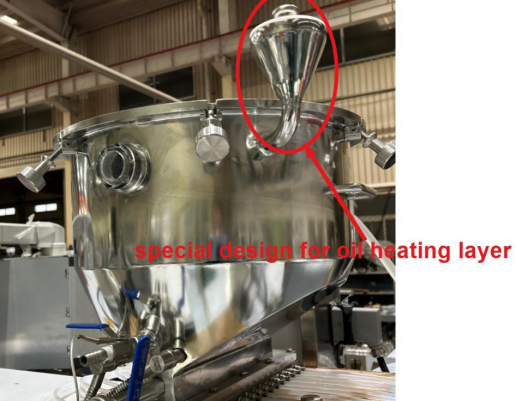
- Even heating: a heating layer on the hopper is filled with water or oil, depending on the client’s material. Hot water heating keeps the temperature of the medicine inside the hopper even and improves its fluidity.
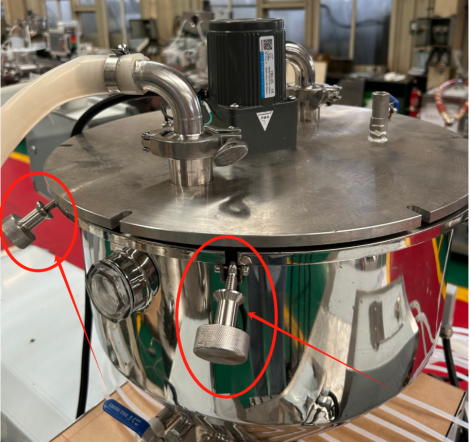
- Nitrogen filling: the hopper has a closed design with a C clamp, so manufacturers can close it and fill it with nitrogen when the filling material is fish oil or another material that oxidizes easily.
Casting Drum System: NSK Bearings and Stronger Cooling
- Japanese NSK bearings are used for the casting drums, the same as on the die roller main axes.
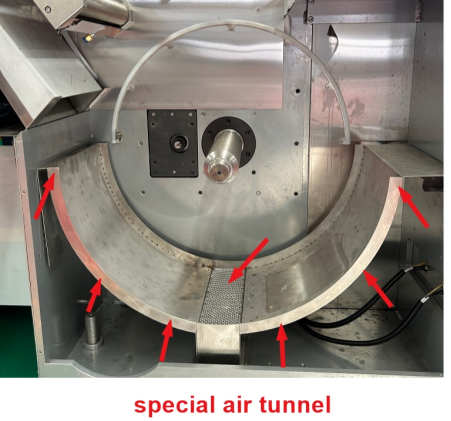
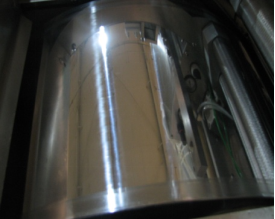
- Stronger cooling: most softgel machine manufacturers put the air blowers under the casting drums. We install bigger, stronger blower fans behind the casting drums and designed a special curved air tunnel for a much better cooling effect.
- Precise surface: the casting drum surface is processed well and the run-out of the drum is below 0.05 mm.
Electrical Components and HMI: Siemens/ABB and 21 CFR Part 11
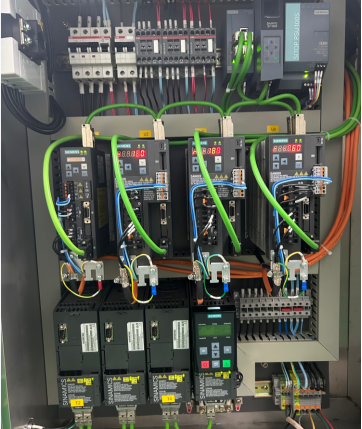
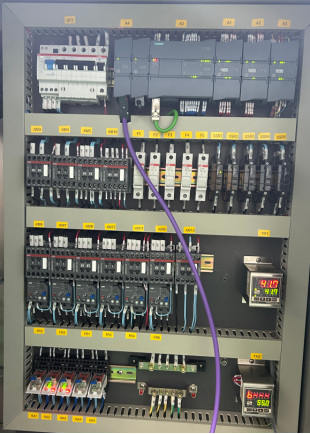
- All electrical components and the HMI are Siemens or ABB brand.
- The HMI is easy to learn and operate.
- 21 CFR Part 11 compliance.
- Modification of the software is available.
- The whole softgel production process can be monitored.
Who Is the JL-250III Servo Softgel Machine For?
- Larger-scale softgel manufacturers that want one operator to run the encapsulation machine and a faster, more stable running speed.
- Producers of fish oil and other oxidation-sensitive fills, thanks to the closed hopper that can be filled with nitrogen.
- Factories using transparent or colored gelatin film, because the physical sensors of the AGT system work well on both.
- Plants that need a controlled, monitorable process, with a Siemens or ABB control system and a 21 CFR Part 11 compliant HMI.
For even higher automation, JANGLI also offers the JL-250X unmanned soft gelatin encapsulation machine. Pair the JL-250III with our fully automatic gelatin melting system and intelligent dehumidifying tumble dryer for a complete line.
JL-250III Servo Softgel Machine FAQ
How many servo motors does the JL-250III softgel machine have?
The JL-250III has 4 servo motors: 2 drive the die roller main axes (one per axis), 1 drives the medicine pump plungers and 1 drives the medicine pump reversing plate. This lets die roller alignment, filling volume and injection timing be adjusted automatically from the PLC touch screen.
How fast does the JL-250III servo softgel machine run?
The highest running speed is 8 RPM and the regular running speed is 5-6 RPM. Because servo motors replace gear transmission, vibration is greatly reduced, so the machine runs faster and more stably than a traditional gear-driven softgel machine.
What is the AGT system and how accurate is it?
AGT stands for automatic gelatin thickness adjusting system. It uses four physical sensors and two lifting motors on the spreader boxes, which are made of copper. The operator inputs the target film thickness on the touch screen and the machine adjusts it automatically, with an accuracy within +/-0.02 mm. Physical sensors work on both transparent and colored gelatin film.
Can the JL-250III run fish oil or other oxidation-sensitive fills?
Yes. The medicine hopper is closed with a C clamp, so it can be sealed and filled with nitrogen when the filling material is fish oil or another material that oxidizes easily. The hopper also has a heating layer filled with water or oil, which keeps the temperature even and improves fluidity.
How does the JL-250III protect the die rollers and save labor?
Die roller alignment is automatic and monitored in real time. If the alignment is not good, the machine detects it immediately and shuts down automatically to protect the die rollers. The operator does not need a second person to align the rollers and only enters the target filling volume and other settings on the touch screen.
What electrical components and compliance does the JL-250III have?
All electrical components and the HMI are Siemens or ABB brand. The HMI is easy to learn and operate, complies with 21 CFR Part 11, allows software modification, and lets the whole softgel production process be monitored.
Written by the JANGLI technical team (WUXI JANGLI MACHINERY CO., LTD., softgel equipment manufacturer since 1996). Last reviewed: October 2026. Specifications may be adjusted for different configurations, so please confirm details with us before ordering.
Get a Quote for the JL-250III Servo Softgel Machine
Tell us your capsule type, fill material and target output, and our engineers will recommend the right configuration. You can also see the JL-250III product page or browse all softgel encapsulation machines.