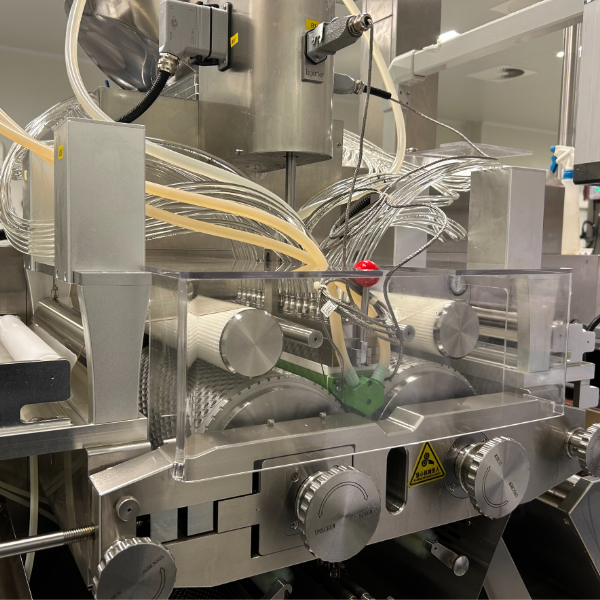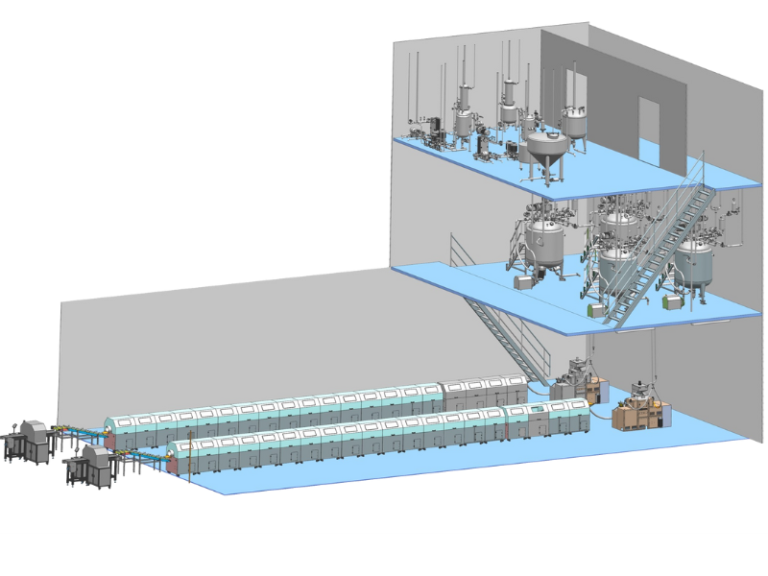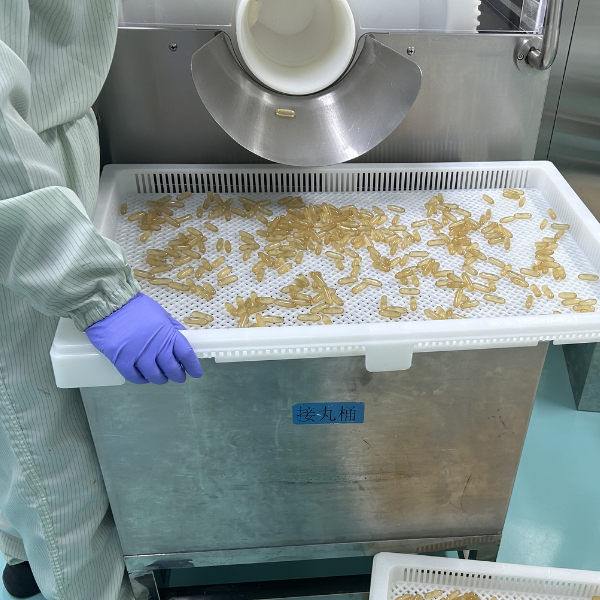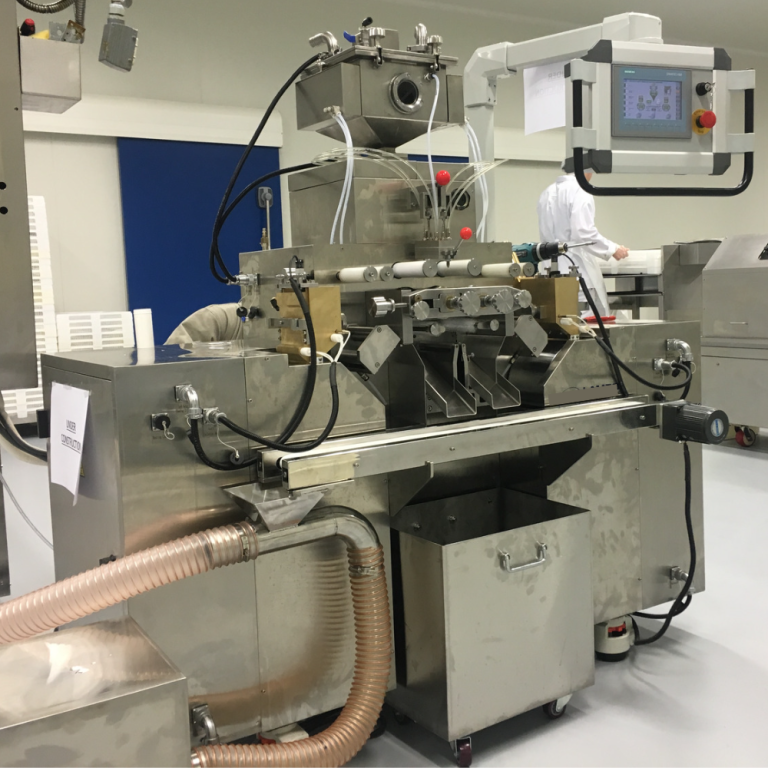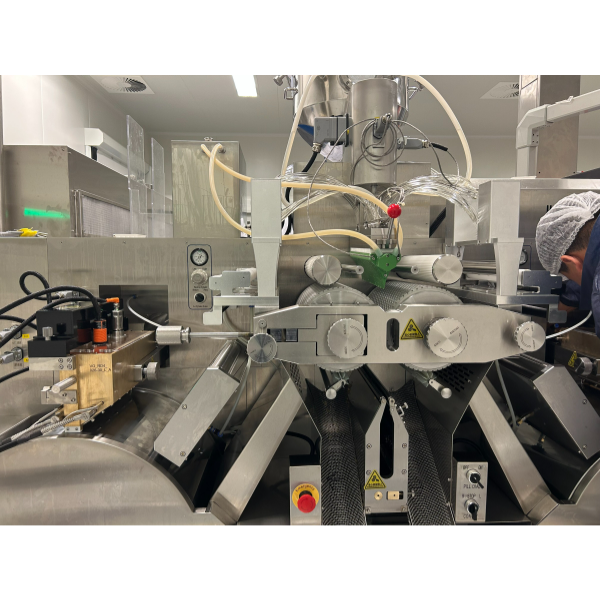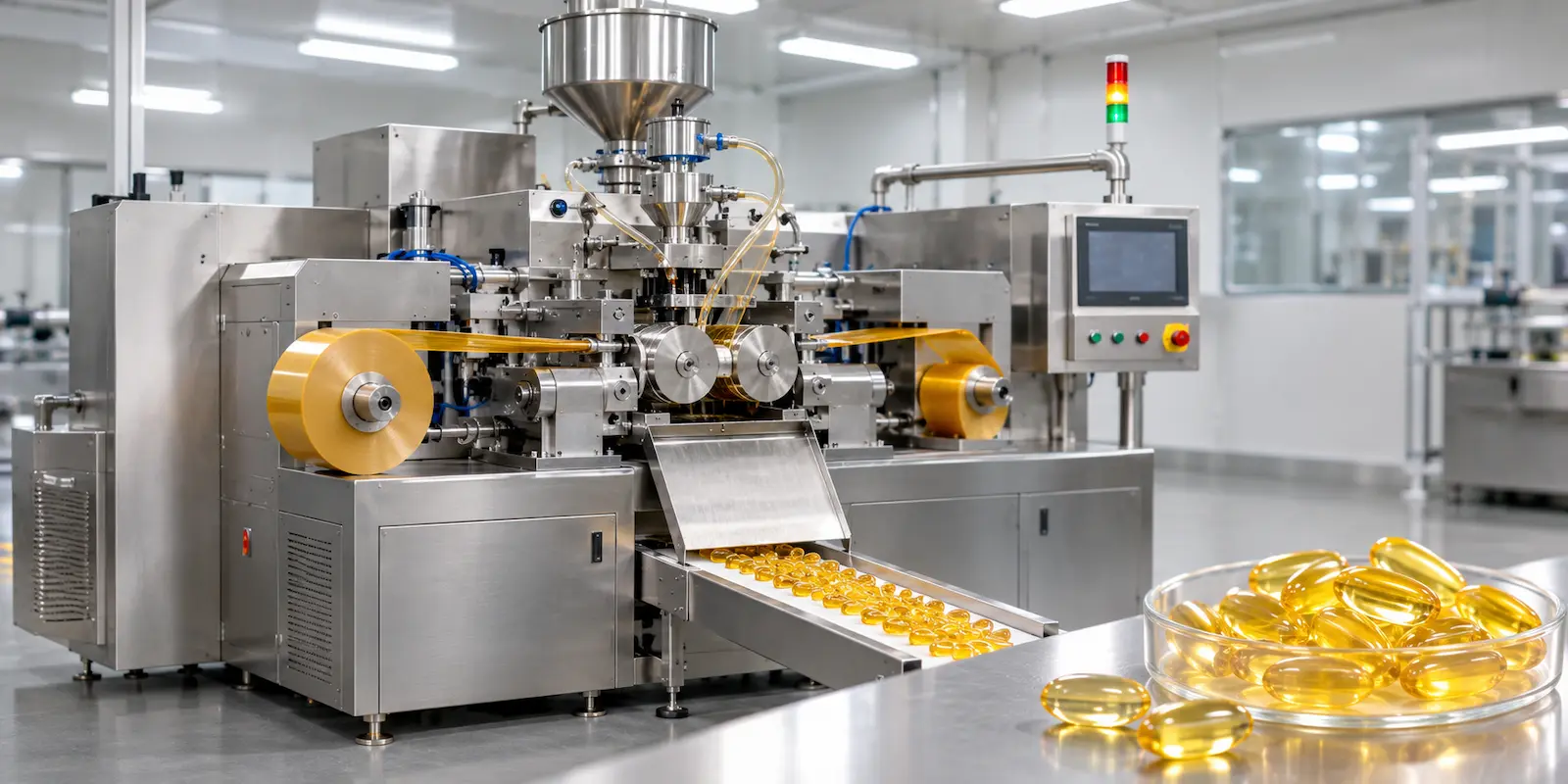
An automatic soft gelatin encapsulation machine is a rotary-die machine that casts two gelatin ribbons, injects a measured fill between them, and seals and cuts finished softgels in one continuous run, with the machine keeping ribbon feed, fill timing and die rotation in step.
On its own, the word “automatic” tells you little when you compare suppliers. It covers the encapsulation step only. Gelatin preparation, drying, inspection and cleaning sit around the machine, and any of them can change your real output and your labor cost. This guide explains what the automation covers, what sets output on a high speed softgel capsule machine, and what to ask before you request quotes.
Key Takeaways
- “Automatic” describes the encapsulation step. Compare complete lines, not machines alone.
- Output depends on the number of pockets on the die roller and the roller speed, so it changes with capsule size and shell type. Ask for output per capsule, not one headline number.
- A commercial softgel machine costs more than the machine itself. Die roller sets, gelatin preparation, drying and inspection all add to the budget.
- Get evidence before you order: documentation, installation and spare parts support, and, if the supplier allows it, a test run with your own fill.
What Does “Automatic” Mean on a Softgel Machine?
It means the machine times ribbon feed, fill injection, sealing and cutting by itself while it runs. The operator sets parameters and watches the process.
On an automatic soft gelatin encapsulation machine, the controls usually handle ribbon thickness and temperature, fill injection timed to die roller rotation, and the seal and cut at the dies. Our JL-250III uses a servo drive; its features are covered in the JL-250III servo softgel machine article.
Beyond the machine, a plant still needs gelatin melting and preparation, fill preparation, loading, drying, cleaning, inspection and packing, and these usually run on separate equipment. A plant can buy an automatic machine and still need many people if the stations around it are handled by hand. The 5-worker automated production line article describes a line laid out to save labor.
Our range includes the JL-100II, JL-150III, JL-250III, JL-300II and the JL-250X, which we list as an unmanned model . You can browse them in our softgel encapsulation machine category.
How Does an Automatic Softgel Machine Make a Capsule?
It forms the shell and fills it together, not as separate operations. The process has four steps:
- Melted gelatin spreads onto two cooled casting drums and sets into two ribbons.
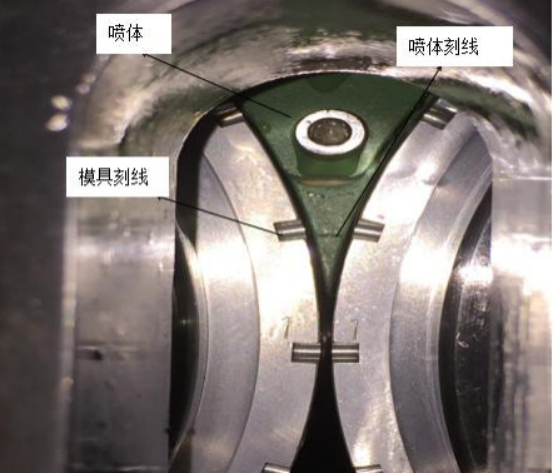
- The ribbons travel to the die rollers. A heated wedge between them injects the fill.
- The die rollers press the ribbons together, form the capsule pockets and seal the seam. The capsules are cut free from the surrounding web.
- The capsules move on to drying. The leftover web is the gelatin you pay for but don’t sell.
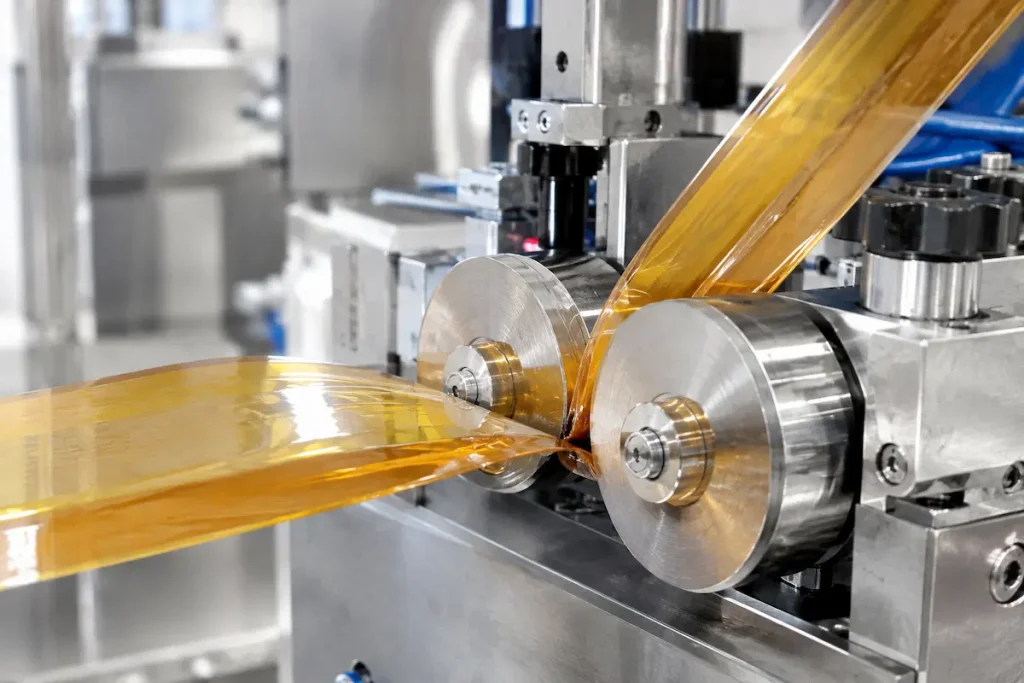
A steady ribbon and a controlled seal temperature keep leaks and rejects down. Leftover web is extra gelatin cost, so put the ribbon thickness question to every supplier.
If you want the wider picture first, our softgel encapsulation machine overview covers the main machine types and parts.
What Decides Output on a High Speed Softgel Capsule Machine?
Output comes down to the pocket count on the die roller and how fast the roller turns. For a theoretical figure in capsules per hour, take the number of pockets, multiply it by the roller’s revolutions each minute, then by 60.
Capsule size changes the pocket count. Die roller design for a 20 oblong capsule. A conjoined layout gives 7 x 36 = 252 pockets at 0.82 mm, against 7 x 34 = 238 pockets at 1.25 mm . At the same roller speed, more pockets means more capsules per revolution.
Real output sits below the theoretical figure. Start-up, ribbon changes and rejected capsules all reduce it. A line also runs only as fast as its slowest station, so check the capacity of your dryer and inspection equipment against the machine’s output.
When a supplier says “high speed,” check what the figure rests on: capsule size, shell material, roller speed, and whether it is a sustained rate or a peak.
Commercial Softgel Machine or Lab Machine: Which Do You Need?
Buy a commercial softgel machine to produce batches you sell. Buy a lab or R&D machine to test formulas with small amounts of material.
If you are planning a first line and your formula is not fixed, a small machine can let you test before you commit to a full line. That route is covered in the R&D veggie softgel making machine article, and the lab instrument category lists related equipment.
For a commercial softgel machine, start from how much you need to make, how many different capsules you plan to run, and how much room and utility capacity the plant has. Each capsule shape needs its own die roller set.
What Should You Compare Before You Buy?
Put the same questions to every supplier and compare the answers side by side. The table below covers the main ones.
| What to compare | What to ask the supplier | Why it matters |
|---|---|---|
| Output | Capsules per hour for your capsule size, shell and fill, and the roller speed behind the number | Decides how many machines you need |
| Gelatin use | How ribbon thickness is controlled and what happens to the leftover web | Gelatin is a recurring material cost |
| Seam quality | What seal rate the supplier sees in production, and under which conditions | Leaks mean rejects and returns |
| Die roller sets | Who makes them, from what material, and how many shapes you need | One set per shape, so the first order costs more |
| Changeover | What it takes to swap a die roller set and reset the machine | Downtime between products |
| Automation scope | Which steps run without an operator and which do not | Operators per shift |
| Line fit | Whether gelatin preparation, drying and inspection are included or separate | The slowest station sets line output |
| Documentation | CE marking, IQ/OQ/PQ documents, manuals | Needed for your own validation and import |
| After-sales | Warranty term, spare parts list, remote support | Downtime if a part fails |
More evaluation points are in the machine evaluation checklist and the guide to machine types by capacity.
Why Do Die Rollers Matter for Cost and Quality?
We make our die rollers in house. Machining each cylinder on CNC equipment takes about 20 hours, and the material is aircraft-grade aluminum, anodized.
The roller forms the capsule and seals the seam, so it has a direct effect on leaks and on how many rollers you must buy. In our production experience, the seam sealing rate can reach 90% to 100%. Actual results depend on your gelatin formula, your fill and the machine setup, so treat that figure as a reference, not a promise.
If you plan to run five capsule products, budget for five die roller sets. Components, materials and manufacturing steps are explained in the softgel die roller guide.
Which Documents Should the Supplier Provide?
Request the CE declaration, the manuals and the IQ/OQ/PQ documents. IQ/OQ/PQ stands for installation, operational and performance qualification, the checks that show a machine is installed correctly and runs to specification.
Our machines carry CE marking and we offer IQ/OQ/PQ documentation on request. Whether your plant meets GMP or any national rule depends on your facility and your validation work, not on the machine alone.
What Should You Ask About Installation and Support?
Ask who installs and commissions the machine, whether operator training is included, how spare parts are supplied, and how a problem is handled after shipping. Get each answer in writing in the quotation.
Output is the number buyers ask about first, and these questions tend to come up after the order , A line that is waiting for a part is not producing capsules, so settle the support terms while you can still compare suppliers. Our standard warranty is 1 year.
What Should You Send Us to Get an Accurate Quote?
Send your capsule shape and size, your fill, your shell type, your target output, and the equipment you already own. With those items we can match an automatic soft gelatin encapsulation machine model and die roller set to your project.
- Capsule shape and size, for example 20 oblong
- Fill type, such as oil or suspension, with viscosity if you know it
- Shell type, animal gelatin or starch
- Target output per hour or per day
- Existing equipment, such as gelatin preparation or drying
- Destination country, for documentation and shipping
Automatic Softgel Machine FAQ
How much does an automatic soft gelatin encapsulation machine cost?
The price depends on the model, the number of die roller sets, and the line equipment you add. We don’t list a price range here because a single figure would mislead. Send your requirements and we will prepare a quotation.
How many operators does an automatic softgel machine need?
It depends on which steps are automated and how the line is laid out. The 5-worker article linked earlier gives one example.
Can one machine make both animal gelatin and starch softgels?
It depends on the die roller set and the setup, because the two shells call for different die roller designs. In our die roller design, step heights are 0.4-0.5 mm for animal gelatin and 0.8-0.95 mm for starch. Please confirm with us before ordering. More detail is in the non-animal softgel guide.
Can I test my fill before buying?
Ask every supplier for a test run or sample production with your own fill, and ask what it costs.
What warranty comes with the machine?
Our standard warranty is 1 year. Confirm spare parts and support terms in your quotation.
Request a Quote for Your Automatic Softgel Machine
Send us your capsule shape, fill and target output and our engineers will reply with a drawing and quotation for your automatic soft gelatin encapsulation machine.
Written by Wendy Yu, JANGLI. Last reviewed: October 2026. Specifications may change, please confirm with us before ordering.