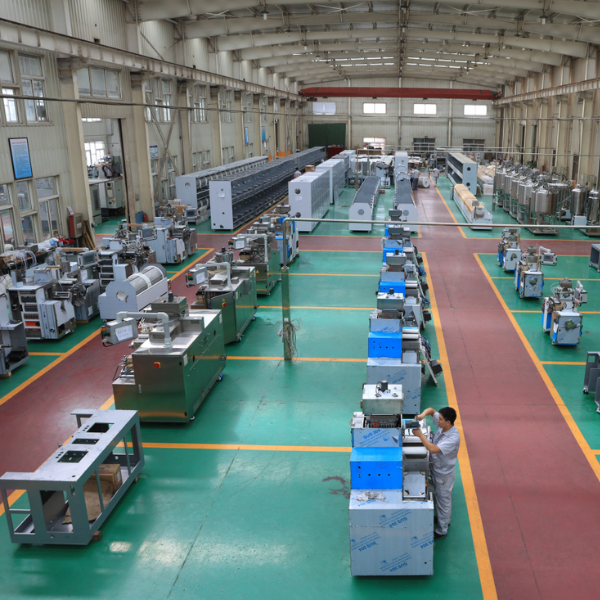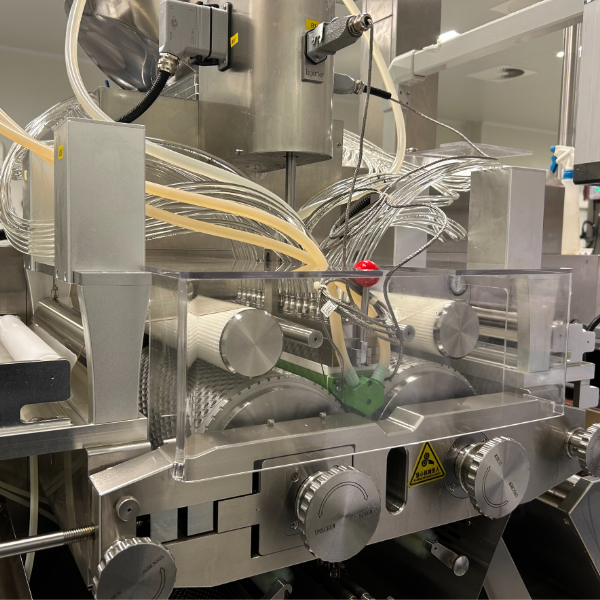
Fish oil softgels are made by weighing and checking the oil, mixing it with oil-soluble ingredients such as vitamin A, filtering it, protecting it from oxygen, and encapsulating it on a rotary die softgel machine. Fish oil oxidizes easily, so how you handle the ingredients and how clean your equipment is decide the quality of the capsules. This article walks through a fish oil softgel production record step by step: inspection, raw material preparation, weighing, mixing, filtration, encapsulation and clean-up.
Key Takeaways
- Oxidation is the main risk. Limit the oil’s contact with air at every step, for example with nitrogen protection and a closed transfer.
- Filter and check. Our record filters the oil through a 100 mesh screen and targets a fill weight tolerance of ±2%.
- Clean-up counts. A cleared line and a clearance certificate protect the next batch from the last one.
The figures below come from one fish oil production record. Your own values will depend on your formula, your fish oil supplier and your quality system.
What Does a Fish Oil Softgel Production Record Contain?
| Item | Value in our record |
| Material | Fish oil, material code YX042 |
| Composition (as recorded) | DHA22, EPA33 |
| Batch target | 1.2 million capsules |
| Fill weight tolerance | ±2% |
| Filtration | 100 mesh filter screen |
| Oxidation control | Packing and transfer arranged to reduce contact with air |
Why Does Fish Oil Need Special Handling?
Marine oils such as fish oil are prone to oxidation, which is why softgel makers work to minimize the oil’s exposure to oxygen from the moment it arrives. Common measures are testing the incoming oil, drawing a vacuum or using a nitrogen blanket during blending, adding a natural antioxidant such as tocopherol, and keeping batch sizes to full drums so the oil sits open for as little time as possible. Oxidation produces compounds that give fish oil a rancid smell and taste, so it shows up in the finished product months later.
What Is Checked Before Production Starts?
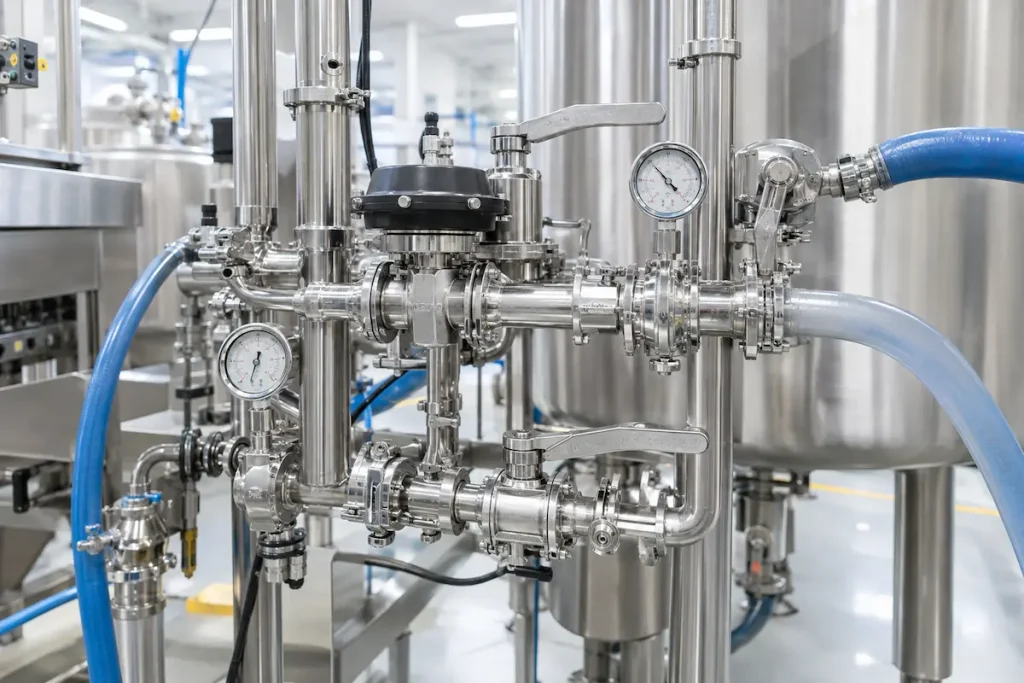
A trained operator inspects the machine and the area before every new batch:
- Enter the production area following the personnel access procedure for the D-class clean area.
- Ventilate the ingredient room so it stays at a relative negative pressure against the clean area corridor.
- Check that nothing is left from the previous batch.
- Check that gelatin melting tanks 1 and 2 and the gelatin service tanks are completely clean, and that the clean site certificate is valid.
- Check that all connecting pipes are well sealed and all valves are normal.
- Check that the electrical equipment and measuring instruments are accurate and operating normally.
How Is the Raw Fish Oil Prepared?
The operator moves the fish oil from the warehouse to the production workshop by logistics elevator, through the outer cleaning room and the buffer room to the preparation room. An air-lock between the outer room and the buffer room protects the purity of the material. In the preparation room the oil is arranged in order, and each material is labeled with its name, quantity, batch number, material code and manufacturer, and given a material status sign.
The weighing room must stay at 18 to 26°C with a relative humidity of 45 to 65%. These conditions help preserve the quality of the raw oil. Every instrument and container that touches the oil, such as the stainless steel bucket, electronic scale, spoon and basin, must be cleaned and calibrated, and the electronic balance must be accurate.
How Are the Ingredients Checked and Weighed?
Ingredients are weighed and checked carefully. The operator or ingredient personnel first check each ingredient’s name, quantity, batch number and manufacturer. Then:
- Place an empty stainless steel barrel on an electronic scale with a 300 kg limit and press the tare button to return the display to zero.
- Add the fish oil to the barrel until the weight matches the production order.
- Confirm the quality assurance (QA) result of the raw fish oil.
- Transfer the weighed oil into the feed barrel under nitrogen protection. The nitrogen is filtered through a 0.22 μm filter.
- Move the protected oil to the encapsulation room and store it there for 36 hours.
How Is the Fish Oil Mixed and Balanced?
In the encapsulation room, the weighed fish oil is mixed with vitamin A according to the material balance formula in the record. Vitamin A is oil-soluble, so it blends into the oil fill. The record maintains the material balance between 93% and 102% throughout encapsulation. Material balance compares the amount of material you used with the amount accounted for in the output, so it shows whether material is being lost or gained.
What Equipment Do Fish Oil Softgels Need?
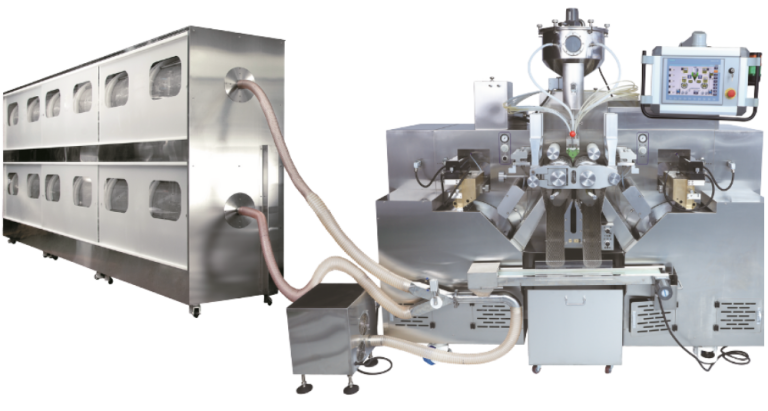
Fish oil is an oil-based fill, which is the best match for a softgel. A fish oil line uses the standard softgel line:
- Medicine (fill) preparation for mixing and weighing. See our medicine preparation system.
- Gelatin preparation for the shell. See our gelatin preparation system.
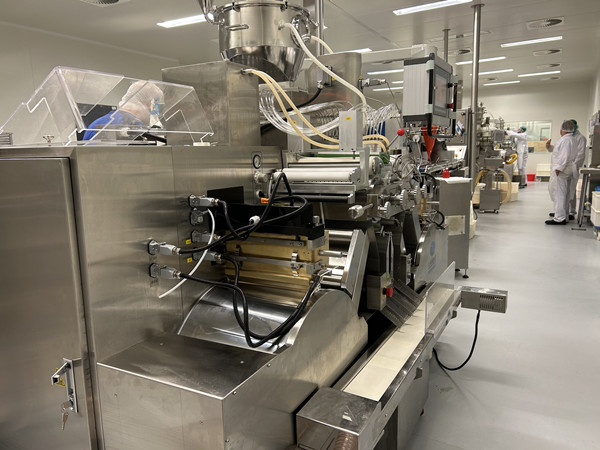
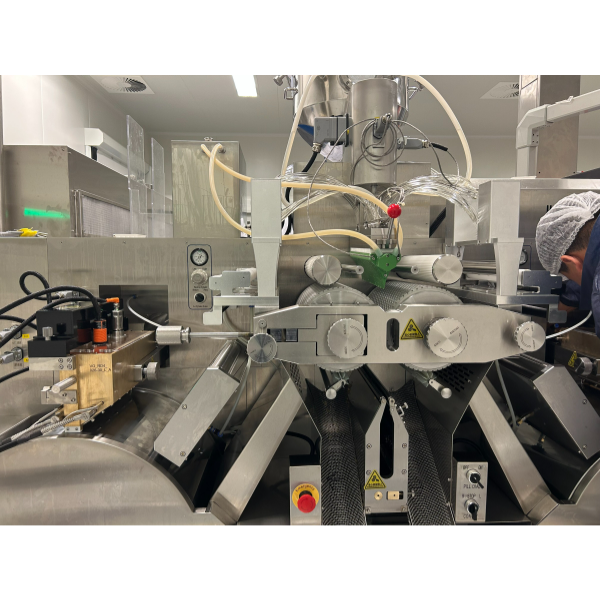
- A softgel encapsulation machine. See our softgel encapsulation machines.
- Drying, inspection and packing. See our guide to equipping a softgel production line.
If you need nitrogen protection or a vacuum on the mixing and feed tanks, tell us so we can advise on the preparation system. For the nutraceutical market, read our article on softgel machines in the nutraceutical industry.
How Is the Site Cleaned After a Batch?
When the batch is finished, the operator clears and cleans the site before anything new starts:
- Remove all stickers and signs from the completed batch, and make sure no items or accessories from it remain.
- Clean the machine following the post-production clearance SOP.
- Clean and disinfect the D-class production area following the cleaning and disinfection SOP.
- Clean the batching cans, the hopper (through the gelatin tank and material tank cleaning SOP) and the containers.
- Have QA personnel check the equipment after cleaning and issue a clearance certificate. In our record, the certificate is valid for 48 hours.
These steps make sure nothing from the previous batch contaminates the next one. Report any deviation to the workshop director promptly. QA personnel then investigate and keep deviation treatment records. After drying and packing, the batch is ready to ship.
Conclusion
A good fish oil softgel batch depends on controlled handling: a checked line, correctly weighed and protected oil, filtration, a balanced formula and a documented clean-up. We supply standard operating procedures for processes such as ingredient handling and cleaning together with our machines. Contact JANGLI to plan your fish oil softgel production.
Frequently Asked Questions
How are fish oil softgels made?
The oil is checked, weighed, mixed with other oil-soluble ingredients and filtered. It is then encapsulated on a rotary die softgel machine, where two gelatin ribbons are cast, the fill is injected between them, and die rolls seal and cut the capsules. The capsules are then dried, inspected and packed.
How do you prevent oxidation in fish oil softgels?
Start with fresh, tested oil, and limit its contact with air at every step, with nitrogen protection or vacuum during mixing and transfer. A natural antioxidant such as tocopherol also helps. Keep the oil in closed containers and avoid heat. Check the formula’s stability in your own tests.
Why is fish oil filtered before encapsulation?
Filtering removes particles that could block the injection system or cause defects. In our record the oil passes through a 100 mesh filter screen.
What does a fill weight tolerance of ±2% mean?
It means the fill in each capsule may vary by up to 2% above or below the target weight. A tighter tolerance needs a more accurate fill pump and stable injection timing.
Can fish oil softgels use a plant-based shell?
Yes, with a plant-based shell such as starch, but the machine needs changes. See our guides to non-animal softgel capsules and tapioca starch softgel encapsulation. Fish oil itself is an animal-derived fill, so a plant-based shell does not make the product vegan. Algae oil is the plant-based alternative for omega-3.
How long is the line clearance certificate valid?
In our record it is valid for 48 hours. Set the period in your own quality system.
Written by Wendy Yu, JANGLI. Last reviewed: [2026]. Specifications may change, so please confirm details with us before ordering.
Questions about your softgel project? Contact our team.