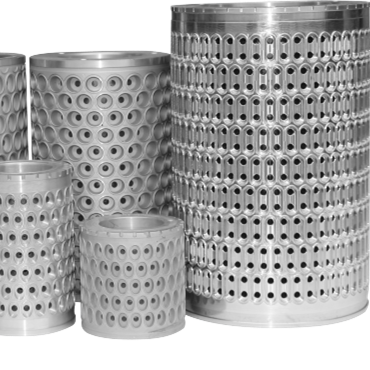
A plant-based (starch) softgel die roller set needs larger pockets, wider spacing between pockets and multi-step edges around each pocket instead of a single step. Starch shells are more viscous, less elastic and shrink more during drying than animal gelatin shells, so tooling made for animal gelatin does not transfer directly.
Key Takeaways
- Three design changes matter most: larger pockets, wider pocket spacing and multi-step edges.
- Our published step heights are 0.4-0.5 mm for animal gelatin and 0.8-0.95 mm for starch.
- The die roller is only one part of the change. Drying and gelatin preparation need attention too.
- Starch formulas differ, so confirm your shell recipe before ordering a die roller set.
Why Does a Plant-Based Shell Need a Different Die Roller?
Compared with animal gelatin, plant-based shell material has high viscosity, low elasticity and shrinks more after drying. A traditional single-step die roller set is therefore not suitable, and the design needs improvement. In practice this affects three things you pay for: seam quality, leakage and gelatin waste.
Industry sources describe the same behavior. A published patent on starch-based soft capsule manufacturing notes that starch capsules shrink noticeably compared with the size of the mold recess. A gelatin producer’s article adds that vegetarian shells can bring mixing and transfer issues from higher viscosity, plus higher processing temperatures and longer drying times. Treat these as general background, since results depend on the formula.
Three Design Changes in a Plant-Based Die Roller Set
1. Larger Pockets
Plant-based shells need a bigger pocket to produce the same capsule size as animal gelatin. Starch gelatin has low elasticity, so at the same fill volume it does not stretch as far. With a larger pocket, enough space is left after filling to prevent a weak seam, which means fewer leaking capsules.
2. Wider Spacing Between Pockets
Pockets on a plant-based die roller should not be arranged as close together as on an animal gelatin die roller. More space between pockets prevents the leftover gelatin net (the ribbon web) from breaking, which would otherwise interrupt production.
3. Multi-Step Edges Instead of a Single Step
Triple steps (multiple steps) around each pocket replace the single step. Multiple steps help raise the seam rate and prevent leakage. Our step heights are 0.4-0.5 mm for animal gelatin and 0.8-0.95 mm for starch. For the full design and materials, read our guide to softgel die rollers.
Animal Gelatin vs Plant-Based Die Roller Sets
| Design point | Animal gelatin | Plant-based (starch) |
|---|---|---|
| Pocket size for the same capsule size | Standard | Larger |
| Spacing between pockets | Closer | Wider |
| Edge around the pocket | Traditional single step | Triple (multiple) steps |
| Step height (as published by JANGLI) | 0.4-0.5 mm | 0.8-0.95 mm |
What Else Changes on a Plant-Based Line?
Switching shell material is not only a tooling change. Because plant-based shells are more viscous, check how your gelatin preparation and transfer equipment handles them, see our gelatin melting and service tanks. Because they shrink more and can need longer drying, check your tumble dryer capacity too. We cooperate with Erkang Starch and adjust our equipment for tapioca starch, so one JANGLI line can make animal gelatin or starch-based softgels. More detail is in our guides to tapioca starch softgel encapsulation machines and non-animal softgel capsules.
What to Send Us to Quote a Plant-Based Die Roller Set
- Your machine model, so we can match the die roller size.
- Capsule shape and size.
- Fill type and fill volume.
- Shell recipe: the starch type and any added gelling agent.
- Target output per hour.
You can see our full range on the softgel die roller sets page, or read the complete die roller set guide.
Plant-Based Die Roller Sets: Frequently Asked Questions
Can I use my animal gelatin die rollers for starch softgels?
Traditional single-step die roller sets are not suitable for plant-based shells. Starch shells need larger pockets, wider pocket spacing and multi-step edges. Send us your capsule and shell recipe and we will advise.
Why are the pockets larger on a plant-based die roller?
Starch gelatin has low elasticity. At the same fill volume it needs a bigger pocket to give the same capsule size as animal gelatin, and it leaves enough space after filling to prevent a weak seam.
What step height is used for starch shells?
Our step heights are 0.8-0.95 mm for starch and 0.4-0.5 mm for animal gelatin. The final value is confirmed against your formula and capsule.
Will output be lower with a plant-based shell?
It can be. Because pockets are larger and spaced wider, a roller of the same size holds fewer pockets. Output also depends on your formula and sealing behavior. Ask any supplier to state output for your capsule and shell recipe, and we will do the same.
Can one machine make both animal gelatin and starch-based softgels?
Our lines can make both, because we adjust our equipment for tapioca starch. The die roller set differs by shell, so tell us which shell you plan to run and we will confirm the setup for your machine model.
Request a Plant-Based Die Roller Set Quote
Send us your machine model and capsule requirements and our engineers will reply with a drawing and quotation.
Written by Wendy Yu, JANGLI. Last reviewed: October 2026. Specifications may change, please confirm with us before ordering.