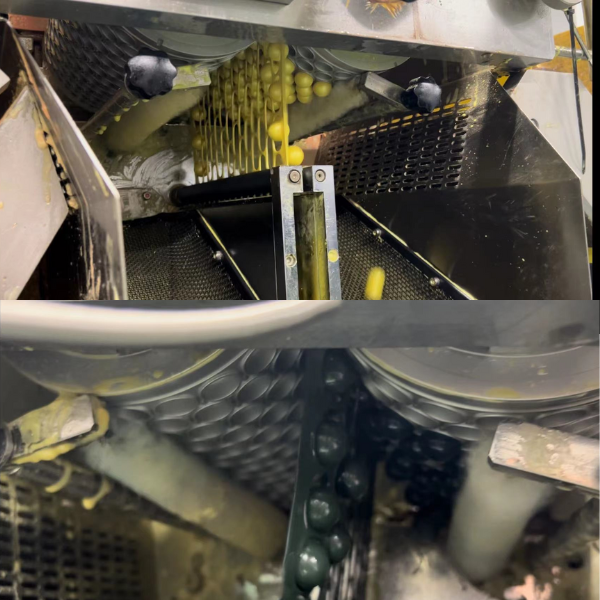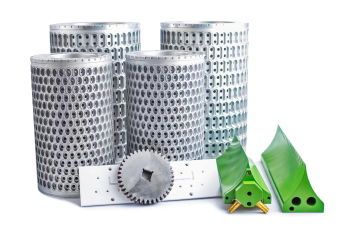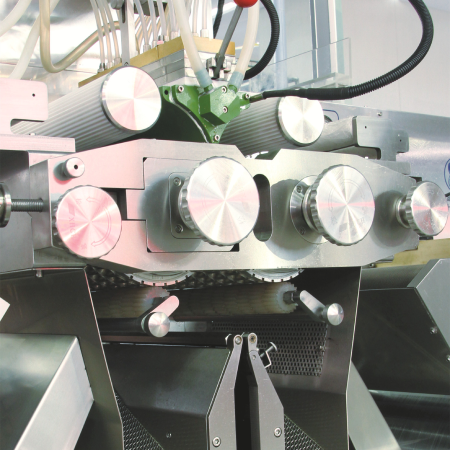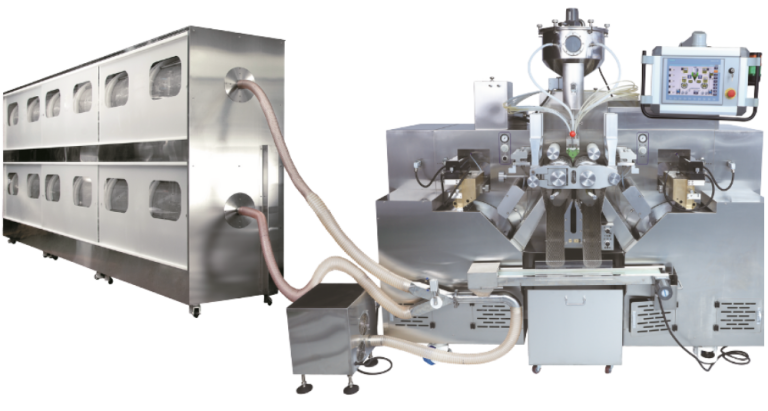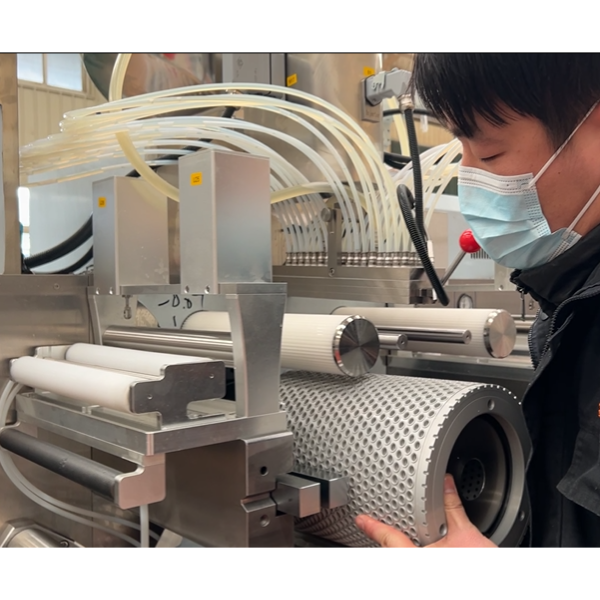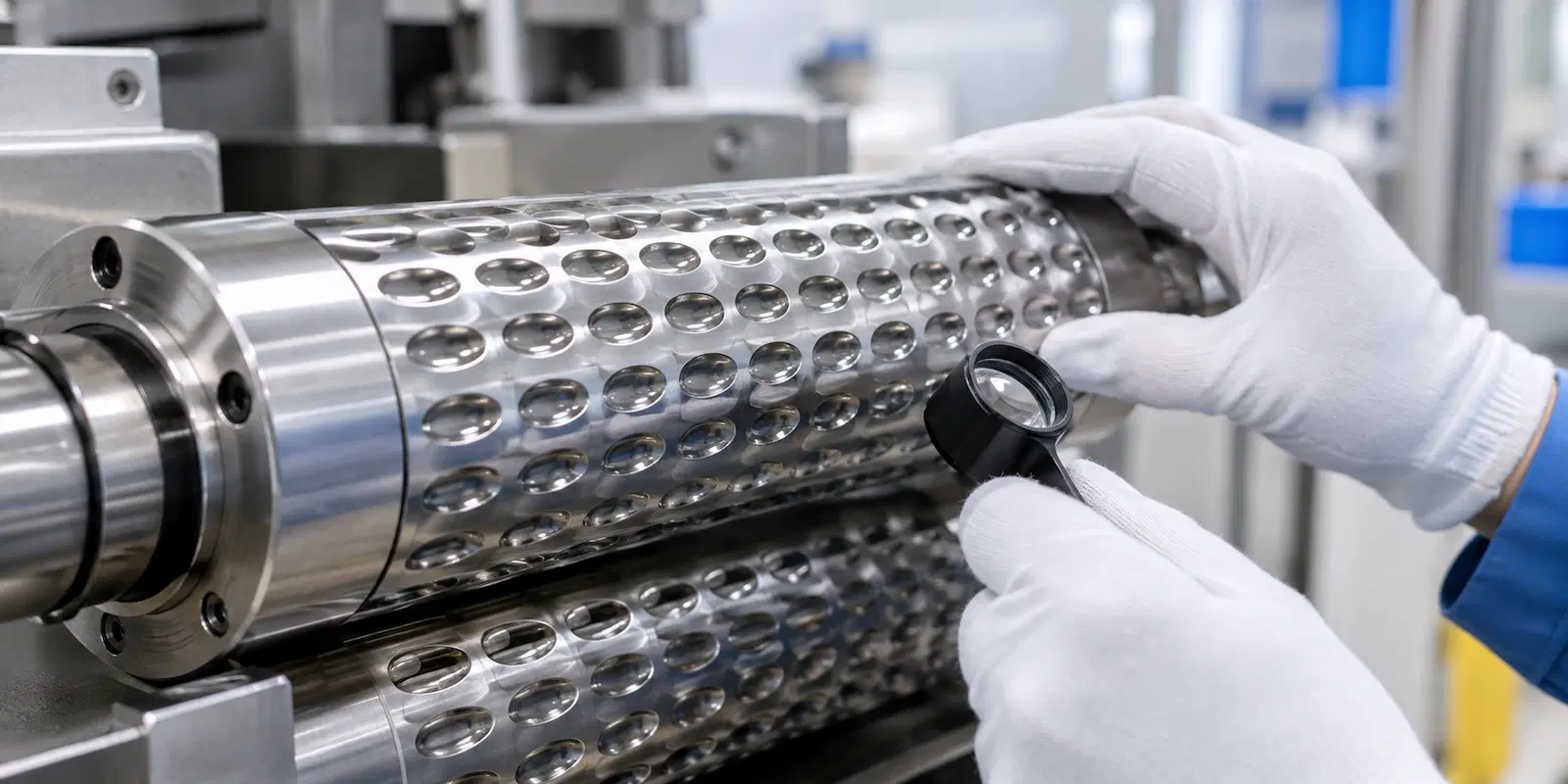
Inspect softgel die rollers when new rollers arrive at the factory, after any accidental bump, when a foreign object falls on them during encapsulation, and whenever an individual capsule leaks. Large die rollers are heavy and awkward to turn by hand, so JANGLI designed a die roller inspection tool with a bracket, a mold fixing plate and a rotating handle that lets you turn the roller with one hand while you inspect it with the other.
Key Takeaways
- Four inspection moments: new arrival, accidental bump, foreign object, leaking capsule.
- Why it matters: a damaged cavity or sealing surface can weaken the seam and cause leaks.
- Big rollers need support: the inspection tool holds the roller so you can rotate it slowly and keep a hand free.
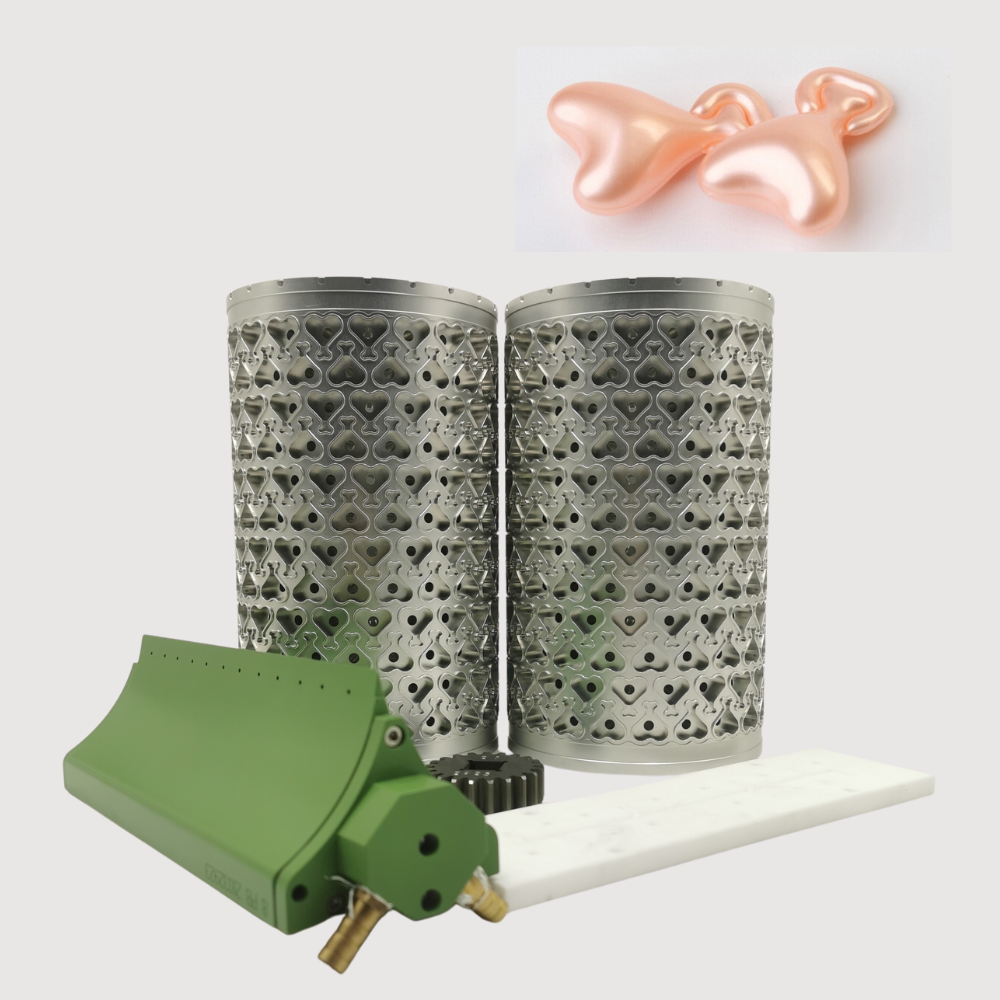
JANGLI designs and supplies softgel die roller sets in many sizes and shapes, and has experience designing, using and maintaining them. This article explains when and how to inspect die rollers, what to look for, and how our inspection tool helps.
Why Does Die Roller Condition Matter?
Die rollers are among the most important tools in softgel production. They set the shape and size of the capsules, and their quality affects capsule quality directly. They also form the seam. Patent literature names poor sealing strength and crooked sealing as two main quality issues in softgel encapsulation, and both can cause the fill to leak. Seam problems are not always a die roller fault, because seal temperature, shell and fill also play a part. But a scratched, dented or contaminated die roller is one cause you can find and fix.
Die rollers are easy to damage, so the people who look after them must handle them carefully. For the full set of care routines, see our die roller maintenance guide and the softgel die roller guide.
When Should You Inspect Softgel Die Rollers?
- When new die rollers arrive at the factory. Check for transport damage and confirm the set matches your order before it goes on the machine.
- When someone bumps the die rollers accidentally. Even a minor knock can dent a cavity edge or sealing surface.
- When a foreign object falls on the die rollers during encapsulation. Stop the machine and inspect before you restart.
- When an individual capsule leaks. A leaker can point to damage at one cavity, so inspect the rollers along with the process settings.
It is also good practice to check the rollers before an important production run or after long storage. Set the interval in your own procedure.
What Should You Look For?
- scratches, dents or chips on the cavity edges and the sealing surfaces around each cavity;
- damage on the surface of the rollers and the segments;
- dried gelatin, fill residue or other contamination in the cavities;
- signs of corrosion or staining;
- differences between the two rollers of a pair that could affect alignment.
Why Use a Die Roller Inspection Tool?
A die roller is a cylinder, so the inspector must roll it slowly to check every cavity. That is easy for the tooling of a small softgel machine. The die rollers of a larger softgel machine are heavy and hard to hold. The inspector can only put the roller on a platform or a desk and move it slowly, which makes careful inspection harder.
JANGLI designed a small tool for inspecting softgel die rollers. It has three parts: a bracket, a mold fixing plate and a rotating handle.
How to Use the Inspection Tool
- Gently fix the die roller to the die roller holder (the mold fixing plate).
- Insert the handle from both ends.
- Place the assembly on the bracket.
- Turn the die roller at will with one hand, and use your other hand to hold inspection tools.
Because the roller turns on the bracket, you do not have to lift it, and you can inspect the whole surface without moving it between a desk and a platform.
What Should You Do If You Find Damage?
Do not run a damaged die roller. Take the set off the machine, record what you found, and contact the die roller supplier for repair or replacement. Do not polish or re-machine a die roller unless the manufacturer has told you how. For leaks that continue with sound rollers, check seal temperature, shell and fill as well. Our article on lecithin softgel leakage covers one common fill-related cause.
If you use plant-based shells, die roller design also changes. See our guide to plant-based softgel die roller sets.
Frequently Asked Questions
How often should softgel die rollers be inspected?
There is no single interval for every plant. Always inspect on arrival, after a bump, after a foreign object falls on the roller, and when a capsule leaks. Add routine checks, for example before important runs, in your own maintenance procedure.
Why do softgels leak?
Most leaks start at the seam. Typical causes are weak or crooked sealing, seal temperature or pressure that is out of range, contamination at the seam, and fill that is not compatible with the shell. Damaged die rollers are one cause among these, so check the rollers and the process together.
What damages softgel die rollers?
The most common causes are accidental bumps, foreign objects falling on the rollers during encapsulation, and rough handling when changing or moving them.
Can I inspect a small die roller by hand?
Yes. Small softgel machine tooling is light enough to roll slowly by hand. The inspection tool helps most with the heavy die rollers of larger machines.
What parts does the die roller inspection tool have?
Three: a bracket, a mold fixing plate and a rotating handle. The roller is fixed to the plate, the handle goes in from both ends, and the assembly rests on the bracket so you can turn the roller with one hand.
What should I do if I find a damaged die roller?
Stop using it, record the damage, and contact the supplier for repair or replacement. Do not try to polish or re-machine it without the manufacturer’s guidance.
Written by Wendy Yu, JANGLI. Last reviewed: [2026]. Specifications may change, so please confirm details with us before ordering.
Tell us your machine model and die roller size, and we will advise on inspection tooling and die roller sets.